What Is Daily Cleaning for Businesses?

A lobby can look fine at 9 a.m. and feel neglected by 3 p.m. Trash builds up, restrooms lose freshness, fingerprints show on glass, and high-touch surfaces collect germs long before the day is over. That is why many facility managers ask the same question: what is daily cleaning, and where does it fit into a smart maintenance plan?
Daily cleaning is the routine, scheduled cleaning work performed every day or on every operating day to keep a space consistently clean, sanitary, presentable, and safe. In a business setting, it focuses on the areas people use most often – entrances, workstations, restrooms, break rooms, floors, touchpoints, and customer-facing surfaces. The goal is not just appearance. It is to support health, reduce disruption, and prevent a building from slipping into a condition that requires constant catch-up.
What is daily cleaning in a commercial setting?
In practical terms, daily cleaning is the baseline service that keeps a facility functioning well between deeper cleanings and specialty work. It is built around repetition and consistency. Instead of waiting until dirt, odors, and clutter become obvious, daily cleaning addresses routine mess before it turns into a larger problem.
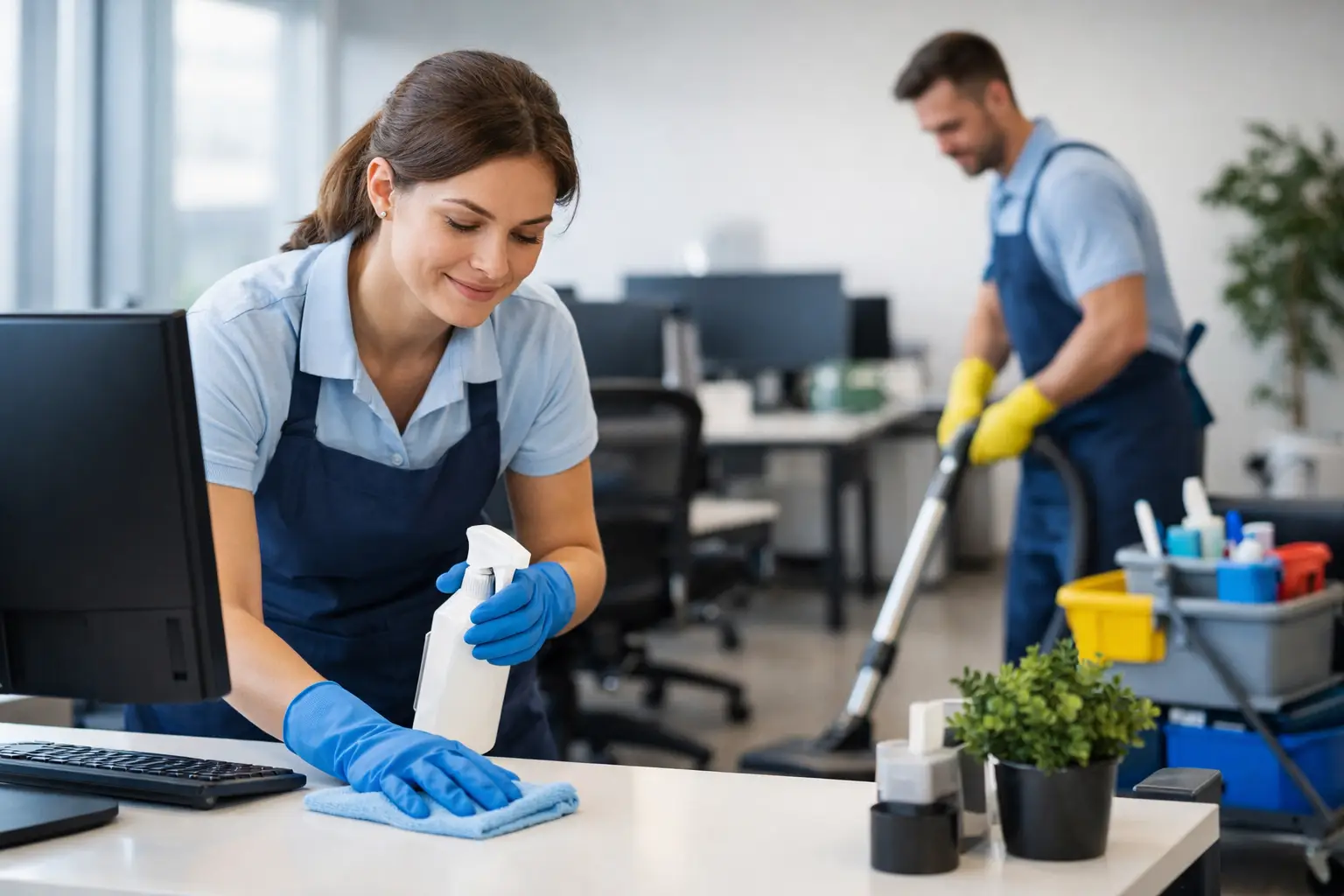
For offices, this may include emptying trash, wiping desks and common surfaces, vacuuming, mopping hard floors, and disinfecting restrooms. In retail, the priority may shift toward entrance glass, fitting rooms, checkout counters, and floor care. In restaurants, daily cleaning usually involves front-of-house sanitation, restroom upkeep, floor cleaning, waste removal, and attention to food-adjacent touchpoints. In dealerships and other showroom environments, appearance standards are especially high, so glass, floors, waiting areas, and washrooms often need close daily attention.
The exact scope depends on the building, traffic levels, business hours, and industry requirements. A small professional office may only need after-hours service once per day. A busy restaurant or retail location may need cleaning during off-hours plus touch-up service throughout the day. Daily cleaning is not one fixed checklist for every property. It works best when it is matched to how the space is actually used.
What daily cleaning usually includes
Most daily cleaning programs combine visible upkeep with hygiene-focused tasks. The visible side matters because customers, employees, tenants, and visitors notice floors, odors, washrooms, and front entrances right away. The hygiene side matters because high-contact surfaces can spread illness, especially in shared workplaces.
A standard daily scope often includes trash removal, liner replacement, dusting reachable surfaces, spot-cleaning doors and glass, vacuuming carpeted areas, damp mopping hard floors, and cleaning and disinfecting restrooms. Break rooms are another priority because they collect spills, crumbs, food waste, and bacteria quickly. Tables, counters, sinks, appliance exteriors, and floors usually need daily attention.
Touchpoint disinfection is a major part of modern routine cleaning. Door handles, light switches, elevator buttons, handrails, shared desks, counters, and restroom fixtures all see repeated contact. Cleaning these areas consistently helps support a healthier workplace and gives employees and visitors more confidence in the environment.
Some facilities also include daily replenishment as part of the service. That can mean restocking soap, paper towels, toilet paper, trash liners, and other consumables. For many businesses, this matters just as much as the cleaning itself because a restroom is not fully maintained if supplies are missing.
Why daily cleaning matters more than many businesses expect
The value of daily cleaning is cumulative. One missed day may not seem serious, but repeated gaps create visible wear, hygiene concerns, and operational friction. Floors break down faster when grit and moisture are left in place. Restrooms become a source of complaints. Dust builds on vents, ledges, and surfaces. Staff notice, customers notice, and eventually management has to respond to a problem that could have been prevented.
There is also a health and attendance angle. Shared spaces are exactly that – shared. When kitchens, washrooms, reception counters, and high-touch surfaces are cleaned consistently using appropriate products, businesses can better support employee wellbeing and reduce avoidable sanitation risks.
Daily cleaning also protects brand presentation. If you manage an office, your workplace reflects your standards to staff and clients. If you operate a retail store, dealership, or restaurant, cleanliness directly affects customer perception. People may not comment on a well-maintained space, but they quickly notice one that feels dirty, sticky, dusty, or neglected.
For property managers and facility teams, routine cleaning supports smoother operations. It reduces emergency requests, helps maintain asset condition, and makes it easier to spot maintenance issues early, such as leaks, damaged flooring, or restroom fixture problems.
Daily cleaning vs. deep cleaning
One of the most common points of confusion is the difference between daily cleaning and deep cleaning. They work together, but they are not the same service.
Daily cleaning handles the routine tasks needed to maintain acceptable day-to-day conditions. It is designed for consistency. Deep cleaning is more intensive and less frequent. It targets buildup and harder-to-reach areas that are not practical to address every day, such as baseboards, vents, grout lines, behind equipment, interior glass detailing, upholstery care, or machine scrubbing in larger floor areas.
If a business relies only on deep cleaning a few times a year, the space often feels neglected in between. If it relies only on daily cleaning without periodic deeper service, grime gradually builds in overlooked areas. The strongest maintenance plans combine both. Daily cleaning preserves standards. Deep cleaning resets the space and extends the life of surfaces and finishes.
How often should daily cleaning happen?
The phrase daily cleaning sounds straightforward, but frequency depends on operations. For some businesses, daily means once every business day after closing. For others, it may mean multiple service touches in a single day.
Traffic is the first factor. A lightly used office with a stable team may need one evening clean. A medical-adjacent office, restaurant, gym, retail store, or public-facing facility may need more frequent restroom checks, disinfection, and floor maintenance.
Second is the type of work happening in the space. If employees eat at desks, handle shared tools, meet with clients often, or move inventory through common areas, cleaning demand rises. Third is expectation. Premium customer environments usually require a higher visual standard than back-office areas.
This is why customized cleaning plans matter. A dependable provider will not force every building into the same routine. The schedule should reflect usage, risk points, and the hours when service can happen with minimal disruption.
What to look for in a daily cleaning plan
A strong daily cleaning plan should be clear, practical, and measurable. It should define which areas are serviced, what tasks are included, how often they happen, and who is responsible for quality checks. Vague service language leads to missed expectations.
Consistency is the first standard. Businesses need to know the work will be completed thoroughly and on schedule. Training is the second. Cleaning teams should understand proper disinfection methods, product use, and site-specific protocols. Safety is another major factor, especially in commercial and industrial settings where there may be compliance requirements, sensitive surfaces, or after-hours access concerns.
It also helps to work with a provider that uses approved products and can adapt the scope as your operations change. Seasonal weather, staffing shifts, special events, renovations, and flu season can all affect cleaning needs. A rigid program often falls short. A responsive one keeps your facility aligned with real conditions.
At HSI Cleaning Services, that approach is central to how daily cleaning is planned – around the building, the people using it, and the standards the client needs to maintain.
Signs your business may need better daily cleaning
Sometimes the issue is not whether daily cleaning exists, but whether it is enough. If trash overflows before the next service window, restrooms lose freshness by midday, or front entrances look worn shortly after opening, the schedule may be too light for the space. If staff are cleaning shared areas themselves just to keep things presentable, that is another sign the routine needs adjustment.
Complaints about odors, dusty surfaces, streaky floors, or missing restroom supplies also point to gaps in execution. In customer-facing industries, even small lapses can affect reviews, retention, and first impressions. In workplaces, they can affect morale.
The best response is not always more cleaning everywhere. Sometimes it means shifting effort toward high-impact areas, adding daytime porter support, or increasing disinfection frequency in targeted zones. Good daily cleaning is not about doing everything all the time. It is about covering the right tasks at the right frequency.
Daily cleaning is the steady work that keeps a facility ready for business every day, not just on inspection day. When it is planned well, people may not talk about it often, and that is usually a sign it is doing exactly what it should.

About Author

Recent Posts

Property Turnover Cleaning That Protects Move-In Dates

8 Insured Commercial Cleaning Benefits for Businesses