

Daily Weekly Cleaning Checklist for Workspaces

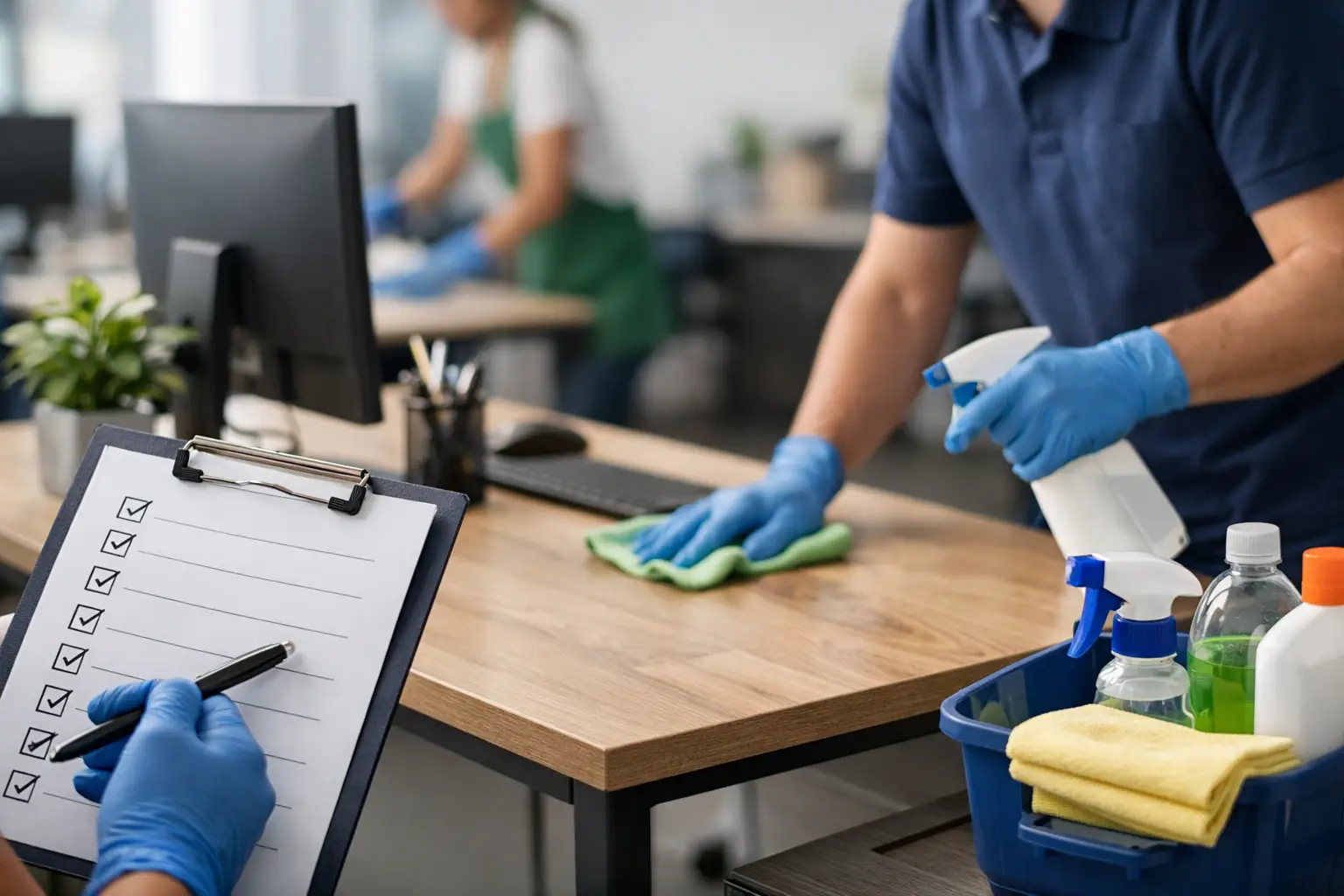
A missed trash pull in the break room turns into odor by noon. Smudged glass at the entrance changes a customer’s first impression before anyone says a word. That is why a daily weekly cleaning checklist matters in commercial spaces – it keeps routine tasks from slipping, protects health standards, and helps your workplace stay presentable every day, not just after a deep clean.
For office managers, restaurant operators, property managers, and retail teams, the real challenge is not knowing what clean looks like. It is keeping standards consistent when traffic, staffing, and operating hours change. A strong checklist gives structure to that process. It also makes it easier to assign responsibilities, verify completion, and spot when routine cleaning is no longer enough.
Why a daily weekly cleaning checklist works
Cleaning problems usually start small. A neglected touchpoint, a floor corner that gets skipped, or a restroom check that happens too late can affect hygiene, appearance, and staff confidence. In customer-facing businesses, those details also influence how professional your operation feels.
A daily weekly cleaning checklist creates rhythm. Daily tasks handle appearance, sanitation, and waste before they become larger issues. Weekly tasks cover the buildup that does not always show up immediately but still affects cleanliness over time. When both are planned together, your team avoids the common pattern of over-cleaning visible areas and under-cleaning critical ones.
That balance matters because every facility has trade-offs. A medical-adjacent office may need heavier focus on disinfection. A retail location may prioritize floors, glass, and fitting rooms. A restaurant has little room for error in food-contact and restroom areas. The checklist should reflect the space, not just follow a generic standard.
Building a daily weekly cleaning checklist by area
The most effective way to structure cleaning is by zone. That keeps teams focused and reduces duplication.
Entrances, lobbies, and customer-facing areas
These spaces set expectations immediately. Daily attention should include glass doors, handles, entry mats, visible dust, spot cleaning on walls, garbage removal, and floor care based on traffic. In wet or snowy conditions, floor monitoring may need to happen several times throughout the day.
Weekly work in these same areas should go further. Baseboards, corners, low vents, detailed dusting, and machine floor care often fit here. If your business depends on presentation, such as retail or dealership environments, this area may need more than a light daily reset. High shine and streak-free surfaces are part of the brand experience.
Offices, desks, and shared work areas
In office settings, daily cleaning usually includes emptying trash, sanitizing common touchpoints, wiping shared desks or tables as needed, and vacuuming or mopping traffic lanes. Break rooms and meeting rooms often need same-day attention because mess builds quickly where people gather.
Weekly tasks should address detail dusting, chair arms, partitions, interior glass, lower ledges, and under-furniture areas that are easy to miss during faster daily service. It also helps to review supply levels weekly so restroom paper, soap, and kitchen products do not become a last-minute problem.
A practical note for managed office spaces: personal desks can be a gray area. Some clients want full surface cleaning, while others prefer a touchpoint-only approach to protect papers, devices, or privacy. Clear scope prevents frustration on both sides.
Restrooms
Restrooms do not allow much flexibility. Daily service should cover toilets, urinals, sinks, counters, mirrors, partitions, dispensers, trash, and full floor cleaning. High-touch points such as flush handles, door hardware, and faucet controls need consistent disinfecting. Supplies should be checked every visit, not only once per day.
Weekly restroom cleaning should go deeper into grout lines, wall splashes, vents, behind fixtures where accessible, and descaling where hard water causes buildup. If odor lingers after daily cleaning, the issue may be drains, grout, or hidden moisture rather than surface cleanliness alone.
Break rooms and kitchens
These spaces affect both hygiene and employee satisfaction. Daily cleaning should focus on counters, sinks, appliance exteriors, tables, cabinet fronts, trash, and floor care. Shared touchpoints such as refrigerator handles, microwave buttons, and coffee stations should never be overlooked.
Weekly attention can include interior microwave cleaning, refrigerator shelf wipe-downs if agreed upon, dusting on top of cabinets, deeper floor edge cleaning, and descaling sinks or fixtures. In busier workplaces, weekly may not be enough for some kitchen tasks. It depends on how heavily the space is used.
Retail, restaurant, and specialized commercial zones
For retail, daily cleaning often centers on floors, fitting rooms, checkout counters, entrance glass, and washrooms. Weekly work may include shelving dust, under-display cleaning, and more detailed fixture care.
For restaurants, daily tasks are more intensive and often repeated across shifts. Dining areas, restrooms, touchpoints, floors, and waste handling need strict consistency. Weekly tasks may include detailed wall washing, edge work, vent cleaning, and targeted degreasing in agreed service areas. In food environments, checklists should align with operational risk, not just appearance.
A practical daily cleaning checklist
Daily cleaning should support health, presentation, and basic reset. For most commercial spaces, that means removing trash, disinfecting high-touch points, cleaning and restocking restrooms, wiping shared surfaces, and maintaining floors in active areas. Entry glass, break rooms, and visible smudges should also be part of the routine.
The key is frequency, not only completion. A restroom cleaned once in the morning may still fail your standard by mid-afternoon in a high-traffic site. A better checklist includes tasks that are scheduled by visit, shift, or traffic level where needed.
Documentation matters too. A checklist should be easy to verify. If a task is vague, it usually gets interpreted differently by different staff members. “Clean restroom” is too broad. “Disinfect sinks, toilets, partitions, mirrors, handles, restock supplies, mop floor” is much harder to misunderstand.
What belongs on the weekly cleaning checklist
Weekly cleaning should address gradual buildup and detail work that supports the daily program. This often includes detailed dusting, edge vacuuming, lower wall spot cleaning, vent and grille dusting, interior glass, under-furniture cleaning, break room detail work, and more thorough restroom descaling or scrubbing.
For some businesses, floor care becomes the most important weekly task. Hard floors may need machine scrubbing, while carpeted offices may need focused vacuuming along edges and in low-reach areas. In retail and lobby environments, weekly polishing or more detailed floor maintenance can make a visible difference.
Weekly reviews are also the right time to inspect cleaning outcomes. If the same complaint repeats every Friday, the checklist may not be the problem. The task may need more time, different equipment, or a change in service frequency.
How to make the checklist realistic
A checklist only works if it matches your building, operating hours, and risk level. Overloaded checklists get ignored. Bare-minimum checklists create quality issues.
Start with the spaces that affect health and perception first: restrooms, entrances, shared surfaces, and food or break areas. Then build in detail tasks that fit your budget and traffic level. A small professional office may only need one weekly detail rotation. A busy restaurant or retail site may need daily work that looks more like another business’s weekly list.
This is where customized planning matters. A dependable provider will not force the same checklist onto every site. HSI Cleaning Services approaches commercial cleaning this way because a dealership, a medical office, and a restaurant do not carry the same cleaning demands, even if they share square footage.
Common checklist mistakes
One common mistake is focusing too heavily on what is easy to see. Floors and trash matter, but so do door handles, dispenser touchpoints, and shared equipment. Another is treating all days the same. Monday morning, midweek traffic, and Friday close often create different cleaning loads.
There is also the issue of ownership. If no one is responsible for confirming completion, even a well-written checklist loses value. Supervision, periodic inspections, and client feedback keep standards from drifting.
Finally, do not confuse routine cleaning with periodic deep cleaning. If surfaces stay dull, grout stays stained, or odors return quickly, the space may need a more intensive service beyond the daily and weekly schedule.
When to update your daily weekly cleaning checklist
Your checklist should change when your operation changes. New staff schedules, seasonal traffic, renovations, public health concerns, or expanded hours all affect cleaning demand. So do customer complaints and recurring trouble spots.
Reviewing the checklist every few months is usually enough for stable office settings. High-traffic commercial sites may need more frequent adjustment. The goal is not a longer checklist. It is a smarter one that supports healthier spaces and more consistent results.
A clean facility should not depend on reminders, catch-up days, or visible complaints. When the right tasks happen at the right frequency, your space feels controlled, healthier, and ready for business every day.

About Author

Recent Posts
Property Turnover Cleaning That Protects Move-In Dates

8 Insured Commercial Cleaning Benefits for Businesses