Best Restaurant Grease Removal Methods That Work

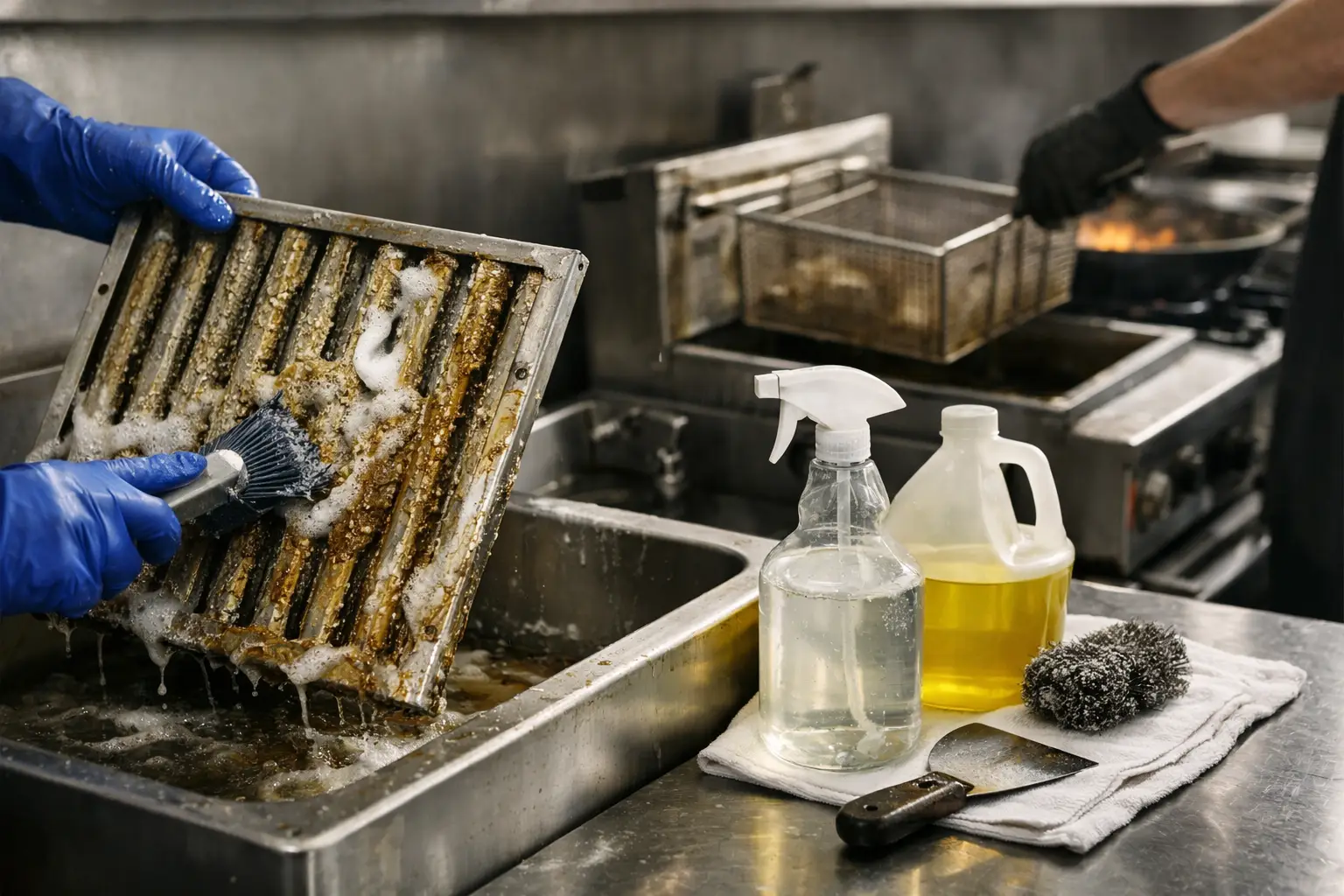
A sticky floor near the fry station, a haze on stainless steel, and residue around a range hood are not minor appearance issues. They can create slip hazards, hold odors, attract pests, affect equipment performance, and make a kitchen feel less sanitary to staff and inspectors. The best restaurant grease removal methods address the source of the buildup, use the right product for each surface, and follow a dependable schedule.
For restaurant owners and facility managers, the goal is not simply to make grease disappear for one shift. It is to maintain a clean, healthy kitchen without damaging equipment, disrupting service, or creating new safety risks.
Why Restaurant Grease Needs a Different Approach
Kitchen grease is a combination of cooking oils, food particles, smoke residue, and heat. Once it cools, it can harden on floors, walls, appliances, vents, and ceiling surfaces. A quick wipe with a general-purpose cleaner may improve the appearance temporarily, but it often leaves an oily film behind.
The most effective approach depends on the surface and the age of the buildup. Fresh grease is usually easier to remove with a food-service degreaser and hot water. Heavy, baked-on grease may require dwell time, agitation, specialized tools, and professional deep cleaning.
Using more chemical is not always the answer. An overly strong degreaser can dull painted surfaces, damage aluminum, leave residue on food-contact areas, or create irritating fumes in a poorly ventilated kitchen. Product selection, dilution, contact time, and rinsing all matter.
Best Restaurant Grease Removal Methods by Area
Start with daily degreasing at the cooking line
The cooking line is where grease begins. Fryers, flat tops, ranges, backsplash panels, prep counters, and surrounding walls should be addressed at the end of every service day. Waiting until residue is visible from across the room makes the work harder and increases fire and slip risks.
First, allow hot equipment to cool to a safe temperature according to manufacturer guidance. Remove loose food debris, then apply a commercial kitchen degreaser that is suitable for the material being cleaned. Give the product time to work before wiping or scrubbing. On stubborn spots, use a non-scratching pad or brush that will not damage the finish.
Follow with a clean-water rinse where required, especially on surfaces near food preparation. A degreaser lifts oils, but residue from either grease or cleaning product can become a sanitation concern if it is not removed properly. Finish with a clean cloth rather than spreading loosened grease to another area.
Treat floors as a safety priority
Greasy kitchen floors are among the most common hazards in a busy restaurant. Oil can travel well beyond the cooking line on shoes, carts, mop heads, and dropped food. The result is often a slippery film that remains even after routine mopping.
A proper floor-cleaning process starts with dry removal. Sweep up food debris before adding water, because wet food particles can clog drains and make mopping less effective. Apply a floor-safe degreaser at the correct dilution, allow adequate dwell time, and agitate high-traffic areas with a deck brush, floor machine, or mechanical scrubber when appropriate.
Mop up the released soil using clean water and clean tools. Reusing dirty mop water is one of the fastest ways to redistribute grease across the floor. Pay particular attention to fryer lines, dishwashing areas, walk-in entrances, floor edges, and corners where residue accumulates unnoticed.
Use the right method for stainless steel and equipment
Stainless steel shows fingerprints and grease quickly, but aggressive scrubbing can leave scratches that trap more soil. For exterior equipment surfaces, use a degreaser approved for stainless steel, wipe with the grain, and rinse or wipe away product residue as directed.
For ovens, grills, fryers, and other heat-producing equipment, follow manufacturer instructions before applying chemicals or water. Electrical components, control panels, burners, and gas connections need care. A cleaning program should never compromise equipment safety or lead to avoidable repairs.
Deep cleaning should include the areas behind and beneath equipment. These locations are easy to miss during daily service but often collect grease, crumbs, and moisture. Moving heavy equipment may require trained staff, proper tools, and a scheduled period outside peak operations.
Do not overlook walls, ceilings, and high surfaces
Grease does not stay at countertop level. Airborne oils can settle on wall tile, ceiling panels, light fixtures, door frames, shelving, and the tops of refrigerators. This buildup can become tacky, discolored, and difficult to remove if left for months.
For vertical surfaces, apply degreaser carefully and work from lower sections upward to reduce streaking. Avoid overspray around electrical fixtures, open food, and sensitive equipment. Use controlled wiping rather than flooding the surface, then rinse as needed.
Ceilings and elevated fixtures require additional safety planning. Ladders, wet floors, overhead electrical components, and chemical drips can create risks. This work is often best completed during scheduled deep cleaning, when the kitchen can be properly prepared and protected.
Grease Traps, Hoods, and Exhaust Systems Require Specialized Care
Some grease removal work belongs in a routine kitchen cleaning program. Other work requires trained specialists and service schedules that meet local fire, health, and operational requirements.
Exhaust hoods, filters, ducts, and fans collect grease-laden vapors from cooking. Filters may need frequent removal and cleaning, depending on menu volume and equipment use. Hood interiors and exhaust systems need professional attention at intervals based on the type of cooking, hours of operation, and the amount of grease produced.
Skipping hood and exhaust cleaning is a serious mistake. Grease in these systems can contribute to fire risk, reduce airflow, create odors, and affect the kitchen environment. Kitchen managers should maintain service records and confirm that work is completed to applicable standards.
Grease traps also need regular maintenance. Harsh chemicals should not be used as a substitute for proper pumping and servicing, since they can interfere with system performance and create downstream plumbing problems. A scheduled maintenance plan is more predictable and less disruptive than an emergency call for a backup or odor issue.
Build a Schedule That Matches Your Kitchen
There is no single schedule that fits every restaurant. A high-volume operation with fryers, charbroilers, and extended hours needs more frequent grease control than a small cafe with limited hot-food production. The right plan reflects the menu, equipment, staff capacity, and inspection requirements.
Daily work should focus on cooking surfaces, splash zones, floors, waste areas, and touchpoints around the kitchen. Weekly work can address wall sections, shelving, cooler tops, floor edges, and equipment exteriors. Monthly or periodic deep cleaning should cover behind equipment, high surfaces, ceiling areas, detailed floor restoration, and other places that routine crews cannot reach thoroughly during service.
Assign clear responsibilities rather than leaving grease removal as a general expectation. Staff need to know which products to use, where to use them, how long they should sit, and how to rinse safely. A simple cleaning checklist creates accountability, but supervision matters just as much. A checked box does not guarantee a clean surface.
Common Mistakes That Make Grease Harder to Remove
The most costly errors usually come from inconsistent routines. Letting grease build up for weeks turns a manageable daily task into a labor-intensive restoration project. Using cold water on heavy grease, applying products without dwell time, and mopping with dirty water also produce poor results.
Another concern is mixing chemicals. Never combine cleaning products unless the manufacturer specifically instructs it. Some combinations can release harmful fumes or neutralize the cleaning action. Keep products properly labeled, store them securely, and provide staff with appropriate training and personal protective equipment.
Finally, do not judge a surface only by how it looks. A floor can appear clean while retaining a slippery residue, and a stainless-steel panel can shine while still feeling tacky. A clean kitchen should look professional, feel non-greasy, and support safe daily operations.
A dependable grease-control program protects more than appearances. It helps staff move safely, keeps kitchen equipment cleaner, supports a healthier work environment, and gives managers confidence that their operation is ready for the next busy service.

About Author

Recent Posts
Property Turnover Cleaning That Protects Move-In Dates

8 Insured Commercial Cleaning Benefits for Businesses