Restaurant Hood Cleaning That Protects Your Kitchen

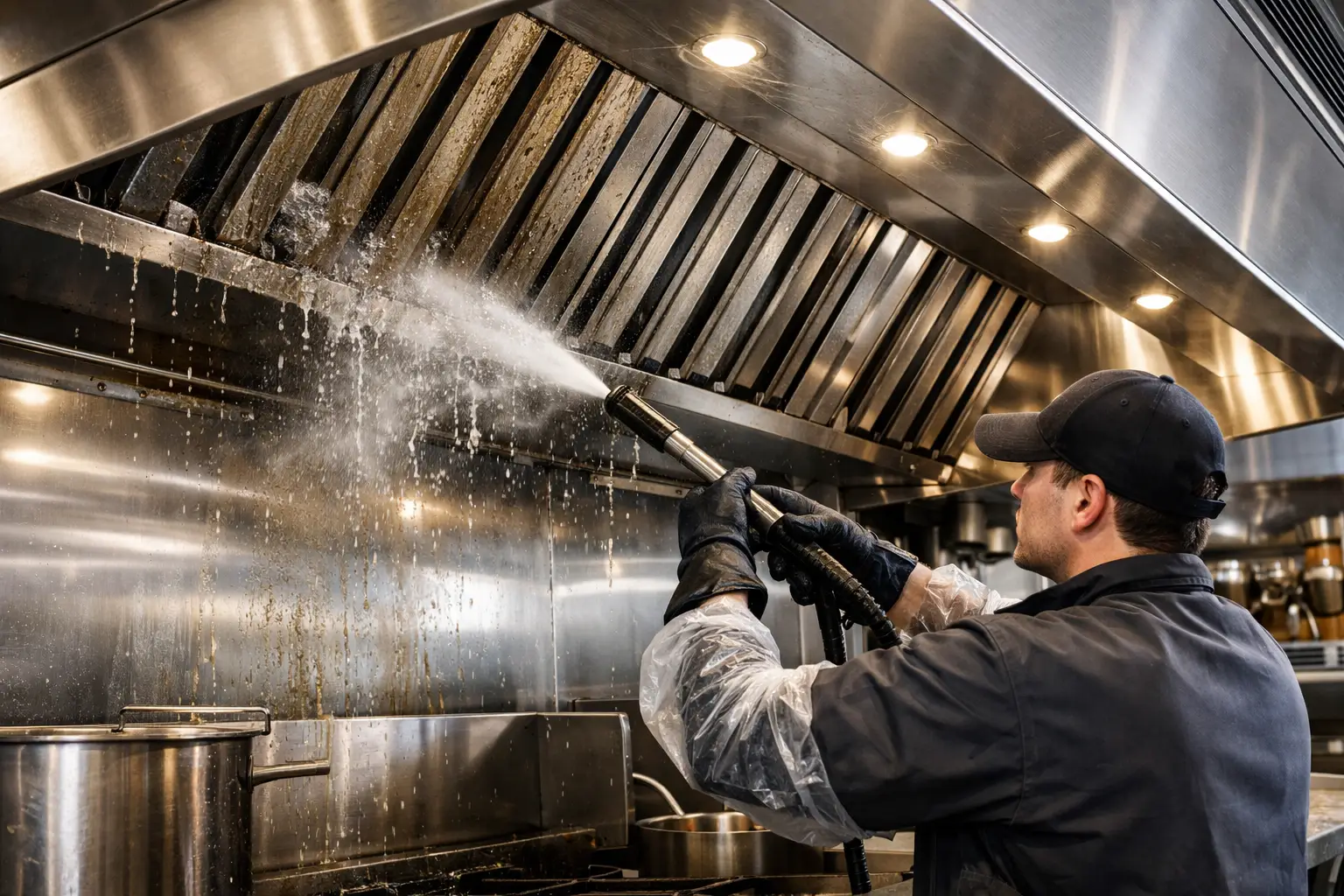
A busy kitchen can look clean at closing time while grease continues to build above the cookline. Restaurant hood cleaning removes the grease residue that accumulates in hoods, filters, ducts, and exhaust components – helping protect your staff, your equipment, and your ability to operate without interruption.
For restaurant owners and facility managers, this is not a cosmetic service. A poorly maintained exhaust system can create fire risk, lingering odors, reduced ventilation performance, and difficult health inspections. The right cleaning plan keeps this critical part of the kitchen on a dependable schedule rather than turning it into an emergency.
Why Restaurant Hood Cleaning Matters
Commercial cooking produces grease-laden vapors. As those vapors rise, the hood captures them and the exhaust system moves air out of the kitchen. Some grease is caught by filters, but residue can still collect on the hood interior, plenum, fan, ductwork, and surrounding surfaces.
Over time, that buildup becomes a safety concern. Grease is combustible, and a fire that reaches an unclean exhaust system can spread quickly beyond the cooking surface. Regular service helps reduce the fuel load inside the system and supports the fire-safety procedures your operation already follows.
Clean exhaust equipment also supports a more comfortable work environment. When airflow is restricted, heat, smoke, and cooking odors can remain in the kitchen longer than they should. Staff may notice a hotter line, haze around the cook area, or odors that carry into dining spaces. These problems do not always mean the hood needs cleaning alone – mechanical repairs, fan issues, or make-up air problems may also be involved – but grease removal is a necessary part of maintaining proper performance.
There is also a business case. A kitchen closure, a failed inspection, a fire incident, or a complaint from neighboring tenants can cost far more than scheduled maintenance. Consistent cleaning gives managers a documented process instead of a last-minute scramble.
What a Professional Hood Cleaning Should Cover
A complete service begins with an assessment of the accessible exhaust system and the cooking equipment it serves. The cleaning crew should protect nearby floors, appliances, and prep areas before work begins. Kitchen cleaning is not complete if surrounding surfaces are left slippery, splattered, or unsafe for the opening shift.
The scope typically includes degreasing the hood canopy, filter area, accessible plenum surfaces, filters, duct access points, and exhaust fan components. Technicians use appropriate degreasers and tools to break down hardened residue without damaging equipment finishes or creating unnecessary mess. Filters should be cleaned thoroughly and returned in proper condition, or identified for replacement when they are damaged or no longer effective.
The exhaust fan deserves particular attention. It is one of the hardest-working components in the system, and grease accumulation can affect its operation. A cleaning provider should never treat the visible hood as the entire job. What is hidden behind and above the hood matters just as much.
Cleaning frequency and exact scope depend on your equipment, menu, cooking volume, local requirements, and the condition of the system. A restaurant with heavy charbroiling, frying, or wok cooking generally needs more frequent service than a low-volume operation with limited grease-producing equipment. Your local authority having jurisdiction and applicable fire codes may also set requirements. A qualified provider can help establish a schedule, but the restaurant remains responsible for meeting the rules that apply to its location.
Signs Your Exhaust System Needs Attention
Waiting until grease is visibly dripping is not a maintenance strategy. By that point, the buildup may be extensive. More often, early warning signs are operational: persistent cooking odors, smoke that lingers, excess heat around the line, greasy residue on hood surfaces, or filters that appear heavily coated soon after routine washing.
You may also notice that cleaning staff are repeatedly trying to remove grease from walls, ceilings, or equipment near the cookline. Surface cleaning is still necessary, but it cannot replace service inside the exhaust system. If the source above the range is not addressed, the same residue can continue to affect the kitchen.
Records are another indicator. If your team cannot quickly confirm the date of the last hood service, the cleaning scope, and the next scheduled visit, there is a gap in your maintenance program. Keep service reports available for management, inspectors, and property representatives when needed.
How to Build a Dependable Cleaning Schedule
The best schedule is based on how your kitchen actually operates, not on a generic calendar reminder. Review your menu, hours, cooking methods, and seasonal volume. A restaurant that adds late-night service, expands fryer capacity, or begins high-volume catering may need to increase the frequency of exhaust cleaning.
Start by assigning one manager to own the schedule and maintain service documentation. This prevents the task from being lost during staffing changes. That manager should know where records are stored, who has access to the roof or mechanical areas, and how the cleaning crew will enter without disrupting food preparation or guest service.
Coordinate hood cleaning with daily restaurant cleaning whenever possible. The hood service itself can leave nearby areas needing detailed follow-up, even when the crew takes careful precautions. Planning kitchen floor care, equipment exterior cleaning, and final sanitation around the same service window helps the team reopen with a cleaner, safer workspace.
A strong provider will also communicate clearly about access, expected downtime, areas that need to be cleared, and any conditions that require follow-up. For example, a technician may identify damaged filters, inaccessible duct sections, a fan concern, or a grease issue outside the agreed scope. These findings should be documented, not ignored.
Questions to Ask a Hood Cleaning Provider
Price matters, but it should not be the only comparison point. A low quote can become expensive if the provider cleans only what is visible, leaves grease behind, lacks appropriate insurance, or cannot provide reliable scheduling and documentation.
Ask whether the company is insured, how it protects kitchen equipment and food-contact areas, and whether its technicians are trained for commercial kitchen exhaust work. Confirm what is included in the quoted scope, including filters, fans, ducts, access panels, and post-service cleanup. It is also reasonable to ask how the provider handles work that must be completed outside normal business hours.
Documentation should be part of the service, not an extra afterthought. After cleaning, your manager should receive a clear record of the completed work and any notable conditions found. If your kitchen is part of a larger property, that record can also support communication with landlords, property managers, and insurance representatives.
Reliability is especially valuable for restaurants. A provider that arrives as scheduled, works safely around your operation, and responds quickly when plans change helps reduce disruption. HSI Cleaning Services approaches restaurant cleaning with this same focus on customized scheduling, supervised service, and healthy working environments.
Keep Daily Habits Separate From Deep Exhaust Cleaning
Kitchen staff should continue routine practices such as wiping accessible hood surfaces, changing or cleaning filters according to the manufacturer’s guidance, cleaning cookline equipment, and reporting unusual smoke or airflow issues. These habits help maintain a professional kitchen between service visits.
However, staff should not attempt to replace professional exhaust cleaning by spraying heavy degreasers into ducts, climbing to reach fan equipment, or working around electrical and fire-suppression components without proper training. The risks include injury, equipment damage, and incomplete cleaning that leaves the actual hazard in place.
A clean hood is one part of a well-run restaurant, but it has an outsized effect on safety and daily comfort. Give it the same attention you give refrigeration, pest control, and fire protection: assign responsibility, document the work, and schedule service before grease buildup gets the chance to run your kitchen.

About Author

Recent Posts
Property Turnover Cleaning That Protects Move-In Dates
8 Insured Commercial Cleaning Benefits for Businesses