Strip & Wax Services for Cleaner Floors

Scuffed entryways, dull hallways, and stained floor finish send a message before anyone speaks to your staff. In busy commercial settings, that message matters. Strip & wax services are not just about shine. They help protect resilient flooring, improve day-to-day cleanliness, and support a healthier, more professional environment for employees, customers, and tenants.
For facility managers and business owners, the challenge is rarely whether floors need attention. The real question is when restoration is worth it, what the process should look like, and how to avoid unnecessary disruption. A proper strip and wax program answers all three.
What strip & wax services actually do
Strip and wax is a restorative floor care service for hard surface floors with a finish layer, most commonly vinyl composition tile, luxury vinyl tile in some commercial settings, and similar resilient flooring. Over time, that finish collects scratches, embedded soil, salt residue, grease, and traffic patterns that routine mopping cannot remove.
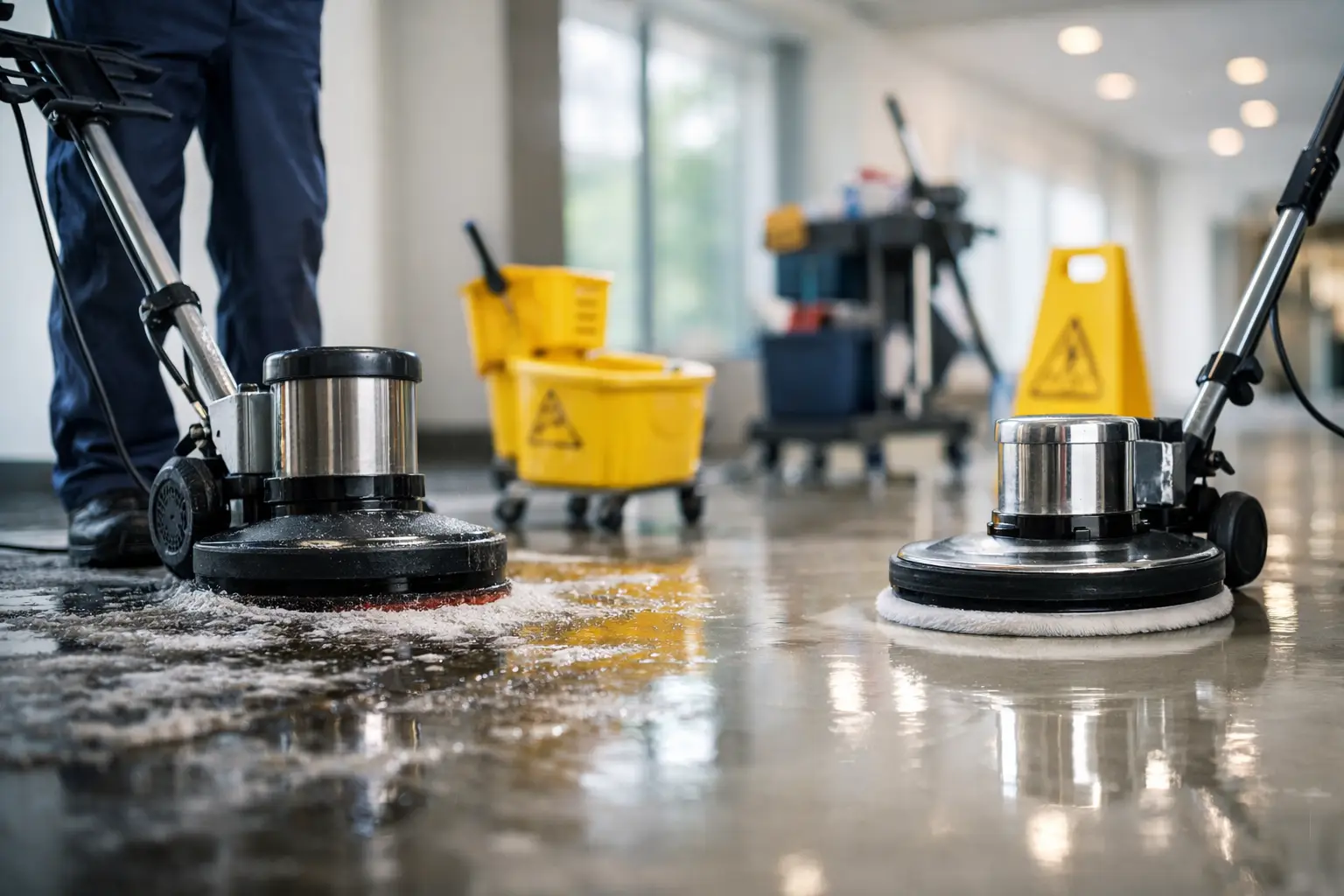
The stripping phase removes old wax, finish buildup, and trapped grime. Once the floor is fully cleaned and neutralized, fresh coats of finish are applied to restore appearance and create a protective barrier. After curing, the floor is easier to maintain and better equipped to handle daily foot traffic.
This is different from a basic mop-and-bucket clean or even a standard machine scrub. Those services improve surface appearance, but they do not reset the floor finish. When the top layers are worn through or discolored, restoration is usually the better investment.
Why commercial floors lose their finish faster than expected
Most commercial floors do not fail because the material itself is poor. They wear down because the environment is tough. Entry points pull in grit, winter salt, moisture, and fine debris that act like sandpaper under shoes and carts. In restaurants and food-service settings, grease and spill residue can break down appearance even faster. In retail and office environments, constant foot traffic creates dull lanes that stand out against less-used areas.
Cleaning habits also play a role. Using the wrong chemicals, over-wetting the floor, or relying on aggressive pads too often can damage the finish layer. On the other side, infrequent maintenance lets dirt embed deeper into the coating, making the floor look permanently dirty even when it has been cleaned.
That is why floor care should be judged by more than immediate shine. A floor that looks bright for a week but wears unevenly a month later has not really been protected.
Signs you need strip & wax services
A floor usually tells you when routine maintenance is no longer enough. You may notice yellowing, gray traffic lanes, scratches that do not buff out, or a patchy finish that looks uneven under overhead lighting. In high-visibility areas, the problem often shows up first near entrances, reception desks, dining zones, checkout areas, and main corridors.
Slower warning signs matter too. If mopping no longer improves appearance, if your team is spending more time trying to keep floors presentable, or if tenants and visitors notice a tired look in an otherwise clean building, the finish may be overdue for replacement.
There is also a safety angle. Floors with heavy buildup or uneven wear can become harder to clean properly. That can leave behind residue, increase slip concerns in some conditions, and make sanitation less consistent.
Where strip & wax services make the biggest impact
Not every facility needs the same schedule, but many commercial spaces benefit from periodic floor restoration. Offices use strip and wax to keep lobbies, corridors, break rooms, and washroom-adjacent flooring looking professional. Retail operators often need it to maintain a polished customer-facing environment, especially in high-traffic aisles and storefront entries.
Restaurants and food-service businesses may require more frequent attention because grease, spills, and repeated washing can wear finishes down quickly. Dealerships often need a clean, reflective floor presentation that supports the overall customer experience. Property managers use floor restoration to improve common areas, support leasing presentation, and reduce the worn look that develops in busy buildings.
Industrial and light manufacturing environments can be more variable. Some areas are suitable for strip and wax, while others may be better served by scrubbing, degreasing, or specialty coatings. The flooring type, traffic level, and operational use always matter.
What to expect during a professional strip and wax process
A reliable provider should start by identifying the flooring material, its current condition, and the level of finish buildup. That assessment matters because not all floors should be treated the same way. Applying the wrong product or using the wrong stripping strength can create avoidable damage.
The work area is typically prepared by moving accessible furniture, posting safety signage, and protecting nearby surfaces. The old finish is then removed using professional stripping solution and floor machines designed to loosen buildup without damaging the underlying floor. Corners and edges are detailed separately because buildup often remains there if the work is rushed.
After stripping, the floor is thoroughly picked up, rinsed, and neutralized. This step is easy to overlook, but it affects how well new finish bonds to the floor. If residue remains, the final result may look uneven or fail sooner than expected.
Once the surface is clean and dry, fresh coats of commercial floor finish are applied. The number of coats depends on the floor condition, the traffic level, and the performance expectations for the space. Higher-traffic facilities often benefit from a stronger finish system rather than a quick cosmetic application.
Dry time and cure time should also be planned carefully. A floor may feel dry before it is ready for full traffic, equipment movement, or furniture placement. Good scheduling prevents avoidable marks and extends the life of the service.
How often should strip & wax services be scheduled?
It depends on the building, the floor, and how maintenance is handled between restorations. A low-traffic office may only need full strip and wax service once or twice a year. A busy retail store, school-like environment, restaurant, or multi-tenant property may need it more often.
Seasonality matters as well. In regions with wet weather, snow, or road salt, floors tend to deteriorate faster through entrances and common paths. Some facilities schedule restoration after winter to remove embedded salt damage, then maintain the finish with periodic burnishing or scrub-and-recoat service during the year.
The best schedule usually combines full restoration with regular maintenance. If you wait until every floor looks heavily worn, service becomes more disruptive and the building appearance suffers in the meantime.
The value of a tailored floor care plan
A one-size-fits-all approach rarely works across commercial properties. A reception area, a back hallway, a restaurant dining floor, and a dealership showroom can all have different traffic patterns and cleaning demands. Treating them the same usually leads to overspending in some areas and under-maintaining others.
A tailored floor care plan prioritizes the spaces that shape first impressions and endure the most wear. It also helps reduce unnecessary downtime. Some businesses prefer after-hours service, phased scheduling, or weekend work so operations can continue with minimal interruption.
This is where an experienced cleaning partner adds real value. HSI Cleaning Services works with commercial clients who need practical scheduling, consistent quality, and service plans built around how their spaces actually operate.
Choosing a strip and wax provider
Price matters, but it should not be the only filter. Floor restoration is a technical service. The provider should understand commercial flooring types, use appropriate products, follow safe application practices, and manage the work with care around staff, customers, and building occupants.
Ask how they assess floor condition, what finish system they use, and how they plan around traffic and dry time. It is also worth confirming that the team is insured, supervised, and equipped for the environment they are servicing. In healthcare-adjacent, food-service, or heavily occupied facilities, product safety and process control matter even more.
The cheapest service can become the most expensive if finish peels early, corners are left dirty, or the floor is reopened too soon and marked up immediately. A dependable result comes from preparation, product knowledge, and disciplined execution.
A cleaner floor supports more than appearance
Well-maintained floors do more than make a building look polished. They support cleaner daily conditions, protect the flooring investment, and help your space reflect the standards you expect from your operation. When strip and wax service is timed properly and performed professionally, the result is not just a better-looking floor. It is a space that feels cared for, healthier to maintain, and ready for the pace of business.

About Author

Recent Posts
Property Turnover Cleaning That Protects Move-In Dates
8 Insured Commercial Cleaning Benefits for Businesses