Restaurant Deep Cleaning Services Explained

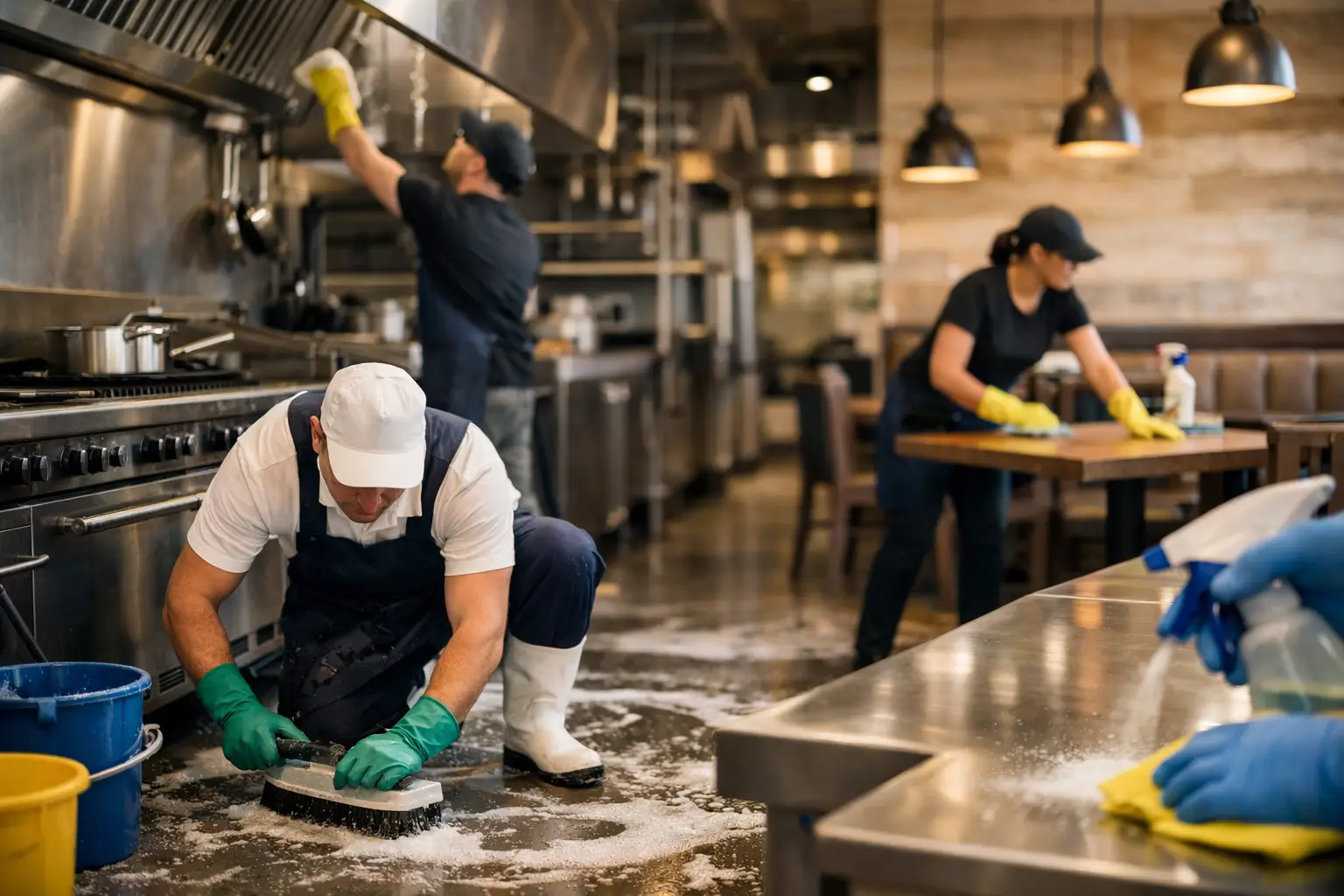
A restaurant can look clean at opening and still carry grease, residue, and bacteria where guests never look and staff rarely have time to reach. That is where restaurant deep cleaning services make a real difference. They go beyond routine wipe-downs and closing checklists to address the buildup that affects food safety, equipment performance, indoor air quality, and inspection readiness.
For restaurant owners and operators, the issue is not whether cleaning matters. It is whether daily cleaning is enough for the pace, volume, and complexity of a working kitchen. In many cases, it is not. Line cooks and managers are focused on service, prep, inventory, and staffing. Even strong in-house routines can leave behind hidden grease around fryers, under equipment, in grout lines, on exhaust surfaces, and in hard-to-reach corners where contamination builds over time.
What restaurant deep cleaning services actually cover
Deep cleaning is a targeted, high-detail service built to restore cleanliness in areas that regular janitorial work or daily kitchen cleaning cannot fully address. The exact scope depends on the restaurant layout, the menu, the equipment used, and the condition of the space.
In a full-service kitchen, deep cleaning often includes degreasing cooking lines, cleaning behind and beneath movable equipment, detailing floor edges, sanitizing prep surfaces, washing walls affected by splatter, and addressing drain areas, baseboards, tiles, and grout. Dining areas, restrooms, storage spaces, walk-ins, and employee areas may also be included, especially if the goal is a full-facility reset.
This is one reason restaurant deep cleaning services should not be treated like a generic add-on. A coffee shop with light food service has different needs than a high-volume grill, a bakery, or a multi-unit fast-casual operation. The best cleaning plan matches the actual risks in the space instead of applying the same checklist to every site.
Why daily cleaning is not enough on its own
Daily cleaning is essential. It supports shift transitions, keeps surfaces presentable, and reduces immediate sanitation risks. But daily cleaning is usually designed around speed. Teams focus on what must be cleaned before the next rush or before the doors open again.
That creates predictable blind spots. Heavy equipment may not be moved often. Grease may accumulate under cook lines. Splash zones on walls and behind prep tables may get ignored until staining or odor appears. Restroom corners, floor drains, vents, and grout lines can slowly deteriorate from buildup even when the overall space looks acceptable.
There is also a labor reality. Restaurant staff are hired to run a restaurant. Asking them to perform intensive technical cleaning after long shifts can lead to inconsistent results, safety issues, and unnecessary wear on equipment or surfaces. A trained commercial cleaning team brings the tools, products, and process needed to clean thoroughly without disrupting operations more than necessary.
The operational value of restaurant deep cleaning services
A deep clean supports more than appearance. It protects the way the business runs day to day.
First, there is sanitation. Food service environments demand a higher standard because contamination risks are constant. Grease, food debris, moisture, and foot traffic create conditions where bacteria and pests can become harder to control. A properly executed deep clean removes the material that allows those issues to escalate.
Second, there is compliance. Health inspections are not only about what is visible at eye level. Inspectors pay attention to neglected areas, evidence of buildup, and signs that sanitation is not being maintained consistently. Deep cleaning helps restaurants stay prepared rather than reacting under pressure after a complaint, failed inspection, or internal concern.
Third, there is equipment performance. Grease and debris can affect how efficiently kitchen equipment runs and how easy it is to maintain. While cleaning is not a substitute for mechanical servicing, a cleaner environment can reduce strain on assets and make maintenance issues easier to spot earlier.
Fourth, there is brand perception. Guests may never inspect behind the range, but they will notice odors, sticky floors, dingy restrooms, stained grout, and neglected corners. Cleanliness influences trust, and trust influences repeat business.
When to schedule a deep clean
The right frequency depends on the restaurant. A busy quick-service location operating long hours will usually need more frequent deep cleaning than a low-volume concept with limited cooking. Fry-heavy menus, high grease output, and small kitchens with tight equipment spacing often require more aggressive scheduling.
Some operators schedule monthly or quarterly deep cleaning, while others combine regular routine service with larger seasonal resets. After renovations, before reopening, before an inspection cycle, or after staffing disruptions are also common times to bring in a deep cleaning crew.
If you are seeing recurring grease, lingering odors, darkened grout, slipping standards in the restroom, or buildup around equipment despite regular effort, that is usually a sign the cleaning frequency or scope needs to change.
What to look for in a restaurant cleaning partner
Not every commercial cleaner is equipped for food service environments. Restaurants need a provider that understands sanitation standards, high-traffic wear, and the practical realities of operating hours, prep schedules, and customer service pressures.
Experience matters because restaurant spaces are more complex than standard office environments. Cleaning teams need to know how to work around sensitive equipment, identify high-risk areas, and use appropriate methods for stainless steel, tile, flooring, and food-contact zones. Products matter too. Approved, professional-grade solutions should support hygiene goals without creating unnecessary risk for staff or guests.
Reliability is just as important as technical skill. If a cleaning team arrives late, misses details, or cannot adapt to schedule changes, the impact reaches beyond cleanliness. It affects opening readiness, employee confidence, and management time. That is why many operators prefer a bonded, insured, and supervised provider with clear quality control and responsive communication.
For businesses managing one site or several, flexibility also matters. Some restaurants need overnight work. Others need weekend service, emergency support, or a custom plan that blends daily maintenance with periodic deep cleaning. A provider should be able to scale the service to the operation instead of forcing the operation to fit a rigid package.
How deep cleaning fits into a broader cleaning plan
Deep cleaning works best when it supports, rather than replaces, routine cleaning. The strongest approach is layered. Daily cleaning handles immediate sanitation and presentation. Periodic deep cleaning addresses buildup and hidden risk. Specialty services, when needed, can target carpets, post-renovation cleanup, or problem areas that require extra attention.
That layered model gives operators better control over standards and budget. Instead of waiting until conditions decline and then paying for a major recovery clean, restaurants can maintain a more stable level of cleanliness throughout the year.
This is also where customization matters. A front-of-house focused concept may place more emphasis on guest areas and restroom presentation. A production-heavy kitchen may need greater attention on grease control, back-of-house detailing, and floor safety. A dependable service partner will assess the site, note the pressure points, and recommend a schedule that fits the business.
HSI Cleaning Services approaches restaurant environments with that practical mindset, building service around sanitation needs, operating hours, and consistent results rather than one-size-fits-all assumptions.
A cleaner restaurant is a safer, stronger operation
Restaurant cleaning is easy to reduce to a checklist, but operators know the real stakes are higher. Cleanliness affects inspections, food safety, staff morale, customer confidence, and the daily pace of the business. Restaurant deep cleaning services give you a way to address the areas that routine cleaning cannot fully cover, before small issues turn into operational problems.
The most effective cleaning plan is not always the most frequent or the most expensive. It is the one built around your menu, your traffic, your kitchen setup, and your standards. When deep cleaning is scheduled with intention, it helps protect the restaurant you have worked hard to build and keeps your team focused on service instead of catch-up cleaning.
A well-run restaurant should not have to choose between speed and sanitation. With the right support, it does not have to.

About Author

Recent Posts

Property Turnover Cleaning That Protects Move-In Dates

8 Insured Commercial Cleaning Benefits for Businesses