

Post Construction Dust Removal That Protects Sites

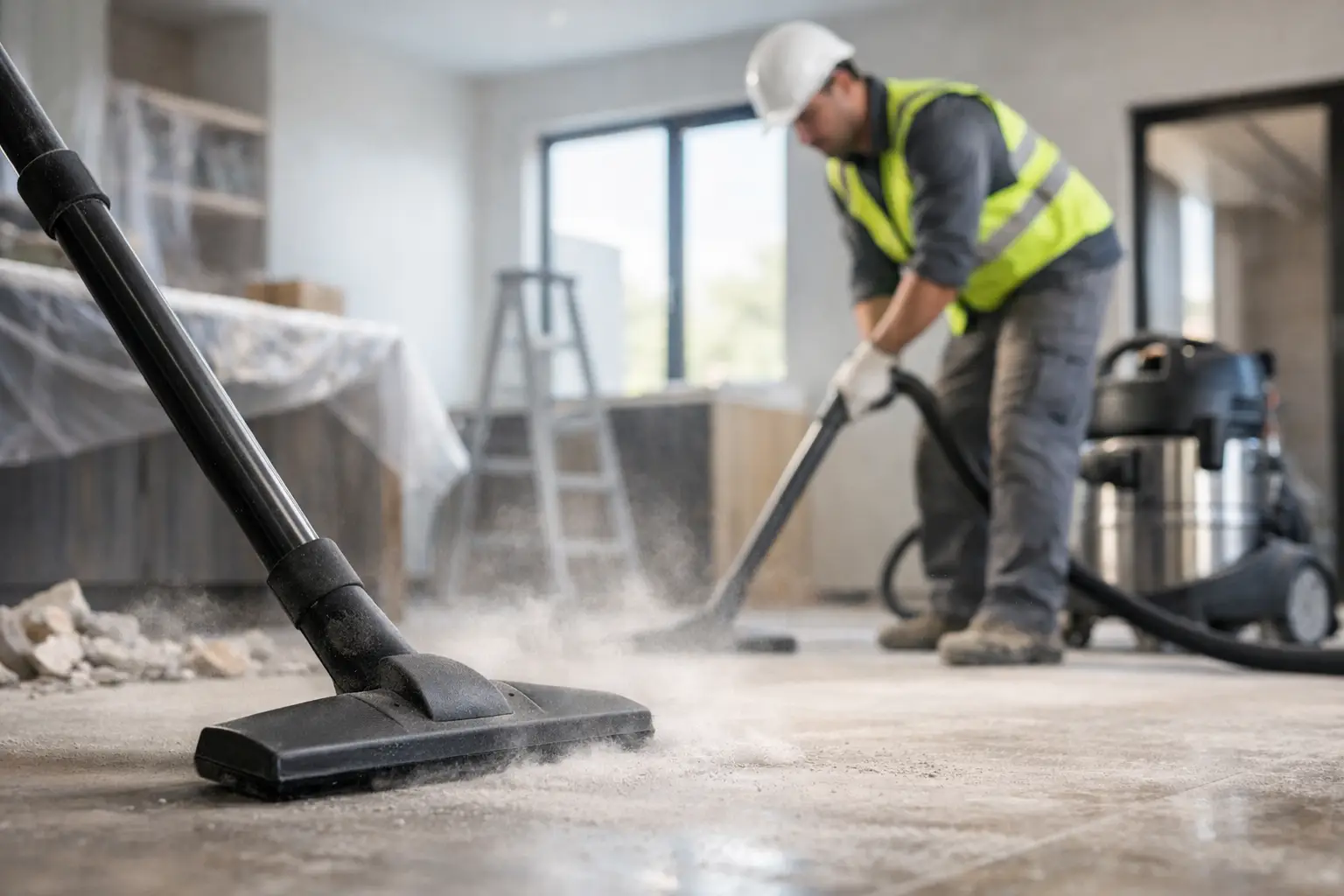
A renovation can look complete while fine construction dust is still settling on desks, vents, flooring, and fixtures. Post construction dust removal is the work that turns a finished project into a space that is ready for employees, customers, tenants, or inspectors. For facility managers and property owners, it is not an optional final polish. It is part of protecting indoor conditions, preserving new finishes, and delivering a professional handover.
Construction dust does not stay where it was created. Drywall dust can drift into adjacent rooms, sawdust can collect behind equipment, and fine particles can travel through air returns if containment was not maintained throughout the project. A quick sweep or a standard vacuum often leaves behind the particles that become most noticeable after people move back in.
Why Post Construction Dust Removal Requires a Dedicated Plan
The dust left after construction is different from everyday soil. It may include drywall compound, wood particles, grout haze, concrete residue, insulation fibers, packaging debris, and dust from drilling or cutting. The right cleaning method depends on the materials used, the type of facility, and whether the space is occupied during the work.
Fine dust is easily redistributed. If a crew begins with dry sweeping, aggressive dusting, or an unsuitable vacuum, particles can become airborne again and settle on surfaces that were already cleaned. That creates extra labor, delays occupancy, and can affect the appearance of newly installed flooring, millwork, glass, and equipment.
A dedicated plan also helps avoid damage. New paint, polished fixtures, stone surfaces, specialty flooring, and display glass may require different products and tools. Strong chemicals or abrasive pads can leave marks that are far more costly than the cleanup itself. Professional teams assess the surfaces before selecting a process rather than treating every site the same way.
For offices, retail locations, restaurants, dealerships, and mixed-use properties, the goal is clear: remove visible debris and fine dust without disrupting the final stages of construction or creating new issues for the people entering the space.
Start With Containment, Access, and a Site Assessment
Effective cleanup begins before a vacuum is switched on. The cleaning team should understand which areas are complete, which areas remain active, and where dust may have migrated. Cleaning a finished office while trades are still cutting material nearby can lead to unnecessary repeat work. In some cases, a phased approach is the more efficient choice.
The assessment should also identify access requirements, waste removal needs, sensitive surfaces, and building rules. A property manager may need cleaning completed outside business hours. A restaurant may require careful attention to food-service areas before equipment is installed. An industrial site may have safety procedures, restricted zones, or machinery that needs to remain protected during cleanup.
Containment matters when work is ongoing. Doorways, vents, and adjacent occupied areas may need to be protected so dust does not spread during cleaning. Where appropriate, high-efficiency particulate air filtration vacuums help capture fine particles rather than blowing them back into the room. This is especially valuable for detailed cleaning of carpet edges, baseboards, blinds, ledges, and interior fixtures.
Cleaning in the Right Order Prevents Rework
Post-renovation cleaning is most effective when it follows the path of the dust. Teams generally begin high and work downward, addressing ceilings, vents, light fixtures, upper ledges, walls, and millwork before cleaning lower surfaces. Floors are completed near the end because they collect dust from every stage above.
This sequence sounds simple, but it is a major quality-control point. A floor can look clean immediately after mopping, then show a fresh layer of dust when overhead fixtures are wiped later. The same principle applies to desks, shelving, display cases, and newly installed equipment.
Many projects also require more than one pass. An initial rough clean removes construction debris and larger material. A detailed clean targets fine dust, marks, fingerprints, and residue. A final touch-up may be needed after contractors complete last-minute adjustments or after the space sits overnight and remaining airborne particles settle.
What Thorough Construction Dust Removal Should Cover
A proper scope goes beyond visible floors and countertops. Dust collects in areas people rarely check until it causes a complaint: door frames, window tracks, cabinet interiors, baseboards, sprinkler heads, air vents, electrical plates, and the tops of partitions. These details affect both presentation and day-to-day indoor cleanliness.
Glass needs particular care. Construction work often leaves adhesive residue, paint specks, protective-film marks, and dust around frames. Using the wrong scraper or chemical can damage tint, coatings, or brand-new surfaces. Similarly, finished floors may need a method suited to their material. Tile may have haze, carpet may contain embedded fine dust, and hard flooring can show streaks if residue is not properly removed.
Restrooms, break rooms, reception areas, and customer-facing zones deserve close attention because they are high-visibility spaces. In a retail store or dealership, dust on shelving, displays, mirrors, and sales counters can undermine the investment made in the renovation. In an office, employees may notice dust on monitors, chairs, vents, and workstations before they notice the new finishes.
For spaces preparing to open, cleaning also supports a more organized final inspection. Once debris and dust are removed, contractors and managers can more easily identify paint touch-ups, cracked tiles, missing hardware, or other deficiencies that may have been hidden by the construction process.
The Right Method Depends on the Facility
There is no single checklist that fits every project. A small office refresh may need detailed dust removal, carpet vacuuming, restroom sanitation, and spot cleaning of glass. A full retail build-out may require multiple cleaning phases, display-area detailing, and after-hours scheduling to meet an opening date.
Restaurants require added care around kitchen areas, dining rooms, fixtures, and equipment zones. The cleaning process must account for surfaces that will be used for food service and for the difference between construction cleanup and ongoing restaurant sanitation. Industrial properties may involve larger debris, high surfaces, loading areas, or site-specific safety requirements that call for trained, properly equipped crews.
Occupied renovations create another layer of planning. Employees, tenants, or customers may still be using nearby areas, so the work should be scheduled and contained to minimize disruption. In these situations, a flexible provider can clean completed sections in stages rather than waiting until the entire project is finished.
When to Bring in a Professional Cleaning Team
A capable internal team can handle light tidying after minor work, but larger renovations benefit from specialized equipment, trained labor, and a clear quality-control process. Professional cleaners know where dust accumulates, how to work around new finishes, and how to complete detailed work within a construction schedule.
Look for a provider that can confirm its scope before arrival, adapt to project timing, and communicate with the site contact. Bonded and insured teams, supervised crews, and cleaning products selected for the surface and environment all help reduce risk. It is also useful to ask whether the provider can return for a final touch-up if the project schedule changes or additional contractor work occurs.
HSI Cleaning Services provides customized post-renovation cleaning support for commercial properties that need dependable crews, responsive scheduling, and a clean, healthy environment before reopening or handover.
A Practical Final Walk-Through
Before approving the site, walk through it under normal lighting and look at surfaces from more than one angle. Fine dust is easy to miss in dim areas and can be especially visible on dark finishes, glass, and horizontal ledges. Check whether air vents, corners, cabinet interiors, washrooms, entryways, and customer-facing surfaces have received the same attention as the main floor.
Ask one simple question: could employees or customers use this space confidently right now? If the answer is not clearly yes, the cleanup is not finished. A careful post-construction dust removal process gives the project a cleaner handover, protects the impression of the new space, and helps the people who enter it start on the right foot.

About Author

Recent Posts

Property Turnover Cleaning That Protects Move-In Dates

8 Insured Commercial Cleaning Benefits for Businesses