Day Porter vs Nightly Cleaning for Your Facility

A restroom runs out of paper towels at 11 a.m. A customer tracks rainwater across a retail entryway at 2 p.m. A meeting room needs to be reset before an unexpected client visit. These are the moments that make the day porter vs nightly cleaning decision more than a scheduling question. The right service model protects your presentation, supports healthier conditions, and keeps small issues from becoming operational distractions.
For many facilities, nightly cleaning provides the dependable foundation. A day porter adds active support while your business is open. Neither option is automatically better. The right choice depends on your traffic, building layout, operating hours, customer expectations, and the level of attention your space needs during the day.
What a Day Porter Does During Business Hours
A day porter is an on-site cleaning professional who works during all or part of your operating day. Rather than performing a single after-hours clean, the porter maintains the facility as conditions change. Their work is visible in the results, even when the person is working discreetly in the background.
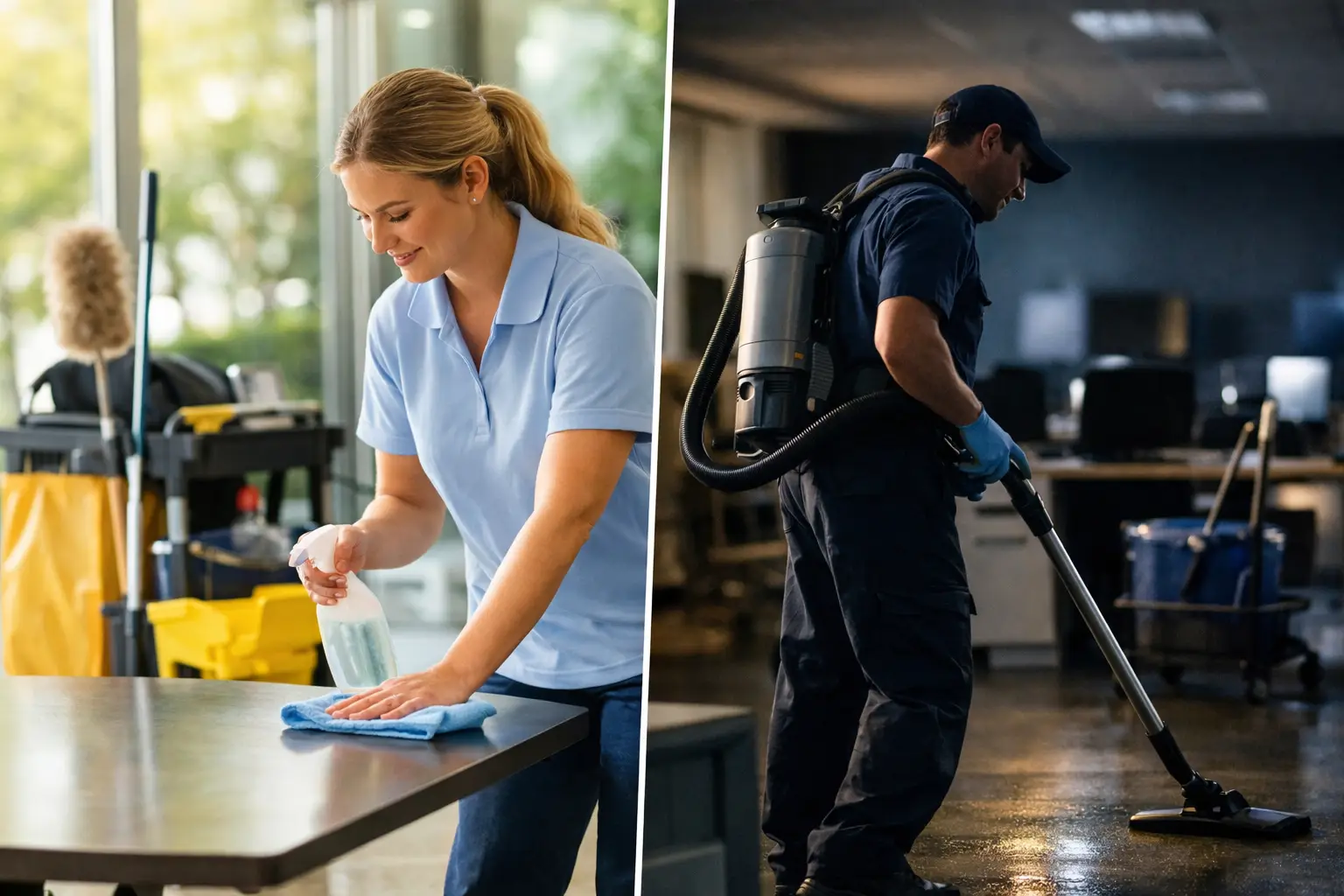
Typical duties include checking and restocking restrooms, spot-cleaning glass and high-touch surfaces, removing trash, responding to spills, maintaining entryways, and resetting common areas. In offices, this may mean keeping kitchens and conference rooms ready for use. In retail settings, it can mean managing fitting rooms, carts, or customer-facing floors. In restaurants, it may involve ongoing restroom checks and front-of-house touch-ups between rushes.
The strongest benefit is responsiveness. A day porter can address a problem shortly after it appears rather than leaving it until the evening crew arrives. That matters when a wet floor creates a safety concern or a neglected restroom changes a guest’s impression of the business.
Day porter service is not usually designed to replace detailed nightly work. It is designed to preserve the condition created by that work throughout the day. For a low-traffic office with stable routines, a full-time porter may be unnecessary. For a busy public-facing property, the difference can be immediately noticeable.
How Nightly Cleaning Supports Consistent Standards
Nightly cleaning takes place after employees, tenants, customers, or guests have left. The crew can clean more thoroughly without interrupting work, navigating crowds, or closing off areas that need to remain accessible.
A typical nightly scope includes vacuuming or mopping floors, emptying waste and recycling, cleaning and sanitizing restrooms, wiping desks or touchpoints as requested, cleaning break rooms, and restoring common areas. Depending on the facility, the service may also include floor care, carpet cleaning, detailed kitchen sanitation, or scheduled deep-cleaning tasks.
Because the team works in an empty or quieter building, nightly cleaning is often the most efficient way to handle labor-intensive work. Floors can dry without affecting foot traffic. Washrooms can receive a complete clean. Waste can be removed and supplies can be replenished for the next business day.
Nightly service also gives facility managers a predictable standard: the space opens clean each morning. This model works especially well for professional offices, clinics with controlled foot traffic, dealerships after closing, and buildings where daytime cleaning would disrupt employees or visitors.
Day Porter vs Nightly Cleaning: The Practical Difference
The main difference is not simply when cleaning happens. It is the type of coverage you are purchasing.
Day porter service focuses on real-time maintenance, appearance, and quick response. Nightly cleaning focuses on comprehensive reset, sanitation, and routine detail work. A porter may clean a spill immediately and restock a washroom several times. A nightly team may deep-clean that washroom, mop the floor, remove waste, and prepare it for the next day.
Cost also reflects this distinction. A dedicated day porter requires scheduled daytime labor, which can be a larger investment than a standard after-hours service. But comparing only the hourly cost can be misleading. If your staff repeatedly handles spills, supply shortages, trash overflow, or meeting-room resets, those interruptions carry a cost as well. A porter can return time and focus to your employees while helping maintain a professional environment.
Visibility is another trade-off. In customer-facing spaces, an attentive porter can reassure visitors that cleanliness is being actively managed. In quieter executive offices or secure environments, an after-hours crew may be preferred because it keeps cleaning activity out of the workday. The service should fit the atmosphere you want employees and guests to experience.
When a Day Porter Is the Better Fit
A day porter is often the right choice when traffic is high, conditions change quickly, or your brand depends on an always-ready appearance. Retail stores, shopping centers, restaurants, dealerships, multi-tenant properties, schools, and medical-adjacent offices commonly benefit from daytime coverage.
Consider a porter when restrooms need frequent attention, entrances collect dirt or moisture, break rooms see heavy use, or customer areas must stay presentable from opening through closing. Properties with multiple meetings, tenant events, deliveries, or shared amenities may also need someone who can respond without waiting for the end of the day.
Hours can be customized. Some businesses need coverage only during lunch and afternoon peak periods. Others need a porter for the full business day. A careful site assessment should identify where issues occur, when they occur, and how quickly they need to be addressed. Paying for continuous coverage where a targeted shift would work is unnecessary, but under-scheduling can leave visible gaps.
When Nightly Cleaning Is Enough
Nightly cleaning is often sufficient when the facility has moderate traffic, employees maintain their own work areas reasonably well, and there are no frequent customer-facing disruptions. A small to mid-sized office, a professional services firm, or a business with limited daytime visitors may get excellent results from a well-defined nightly plan.
The key is scope. Nightly cleaning should be tailored to your actual use of the space, not copied from a generic checklist. A building with several restrooms, a busy lunchroom, and carpeted meeting rooms needs different attention than a mostly private office with hard floors. Periodic deep cleaning and carpet care can address work that does not need to happen every night.
When a Combined Plan Delivers Better Value
Many larger or high-traffic facilities need both services. In this model, the day porter maintains key areas during operating hours while the nightly crew completes the detailed clean after closing. The approach creates continuity: problems are handled quickly during the day, and the facility receives a full reset each evening.
A combined plan is particularly effective for restaurants, retail locations, multi-tenant commercial properties, and dealerships. It can also work well for offices that host frequent client meetings or have large employee populations. The porter protects the guest experience while the nightly team handles the broader sanitation and cleaning workload.
Build the Scope Around Risk, Traffic, and Health
Before choosing a schedule, walk through your facility at different times of day. Look beyond the obvious areas. Note restroom traffic, entrances during bad weather, waste volume, food-service areas, shared equipment, reception desks, elevators, and touchpoints such as handles and railings.
Health-conscious cleaning plans should include appropriate cleaning and disinfecting practices for high-touch and high-use areas. Product selection, staff training, and clear quality checks matter as much as frequency. A cleaning provider should be able to explain who will supervise the work, how concerns are reported, and how service can adjust when your operations change.
Security is equally relevant for after-hours access, while safety is especially relevant for daytime service. Verify that cleaning personnel are bonded and insured, follow site procedures, and understand how to manage wet floors, spills, and customer interactions. Consistency comes from supervision and communication, not from a checklist alone.
For facilities across Toronto and the GTA, HSI Cleaning Services can build a customized plan around daytime needs, after-hours cleaning, industry requirements, and the condition standards your team expects.
The best choice is the one that lets your employees focus on their work and lets every visitor walk into a space that looks cared for. Start with how your facility actually operates, then match cleaning coverage to the moments when it matters most.

About Author

Recent Posts

Property Turnover Cleaning That Protects Move-In Dates

8 Insured Commercial Cleaning Benefits for Businesses