7 Warehouse Dust Control Methods That Work

A thin layer of dust on a warehouse rack is rarely just a cosmetic issue. It can settle on inventory, block sensors, wear down equipment, trigger respiratory complaints, and create avoidable fire risks when combustible materials are involved. Effective warehouse dust control methods treat dust as an operational concern, not a once-a-year deep-cleaning task.
For facility managers, the goal is practical: reduce the dust generated at the source, capture what becomes airborne, and remove settled dust before it spreads through work areas. The right plan depends on the building, materials handled, traffic patterns, ventilation, and the level of cleanliness required for the operation.
Why warehouse dust needs a planned response
Warehouses generate dust in different ways. Cardboard handling releases fibers. Forklifts and foot traffic lift settled debris back into the air. Pallets shed wood particles. Loading docks bring in outdoor dirt, salt, and vehicle residue. Manufacturing, packaging, food handling, and construction supply operations may create more specialized dust that requires stricter controls.
The consequences can extend beyond appearance. Dust accumulation around machinery may affect moving parts and cooling systems. Dust on high shelving, light fixtures, sprinkler pipes, and beams can fall back into active work zones. In customer-facing distribution spaces, a dusty facility also sends the wrong message about quality control and workplace standards.
A dependable program begins with an assessment. Walk the facility during normal operations and identify where dust originates, where it collects, and which areas are most difficult to clean safely. This prevents teams from spending time repeatedly cleaning the same visible surfaces while overhead dust, loading areas, or traffic lanes remain untreated.
1. Control dust at the source
The most cost-effective dust control is preventing unnecessary dust from entering or being created in the facility. Inspect receiving doors, dock seals, weather stripping, and gaps around entry points. If outdoor debris is entering with every shipment, interior cleaning alone will not solve the problem.
Material handling practices matter as well. Keep cardboard, stretch wrap, broken pallets, and packaging debris contained and removed promptly. Designate staging areas for unpacking when possible, rather than allowing debris-producing work to happen throughout the building. For operations that cut, grind, transfer powders, or process materials, localized extraction may be necessary near the source.
Even small changes can reduce the workload. Slow forklift speeds in dusty lanes, use clean pallets where product requirements demand it, and avoid storing loose materials directly beneath supply vents that can spread particles across the warehouse.
2. Improve entryway and dock housekeeping
Loading docks are often the first major dust source in a warehouse. Outdoor dirt, truck exhaust residue, tire debris, and moisture are carried through dock doors and into travel paths. A dock can look clean early in the day and become a source of contamination after a few active deliveries.
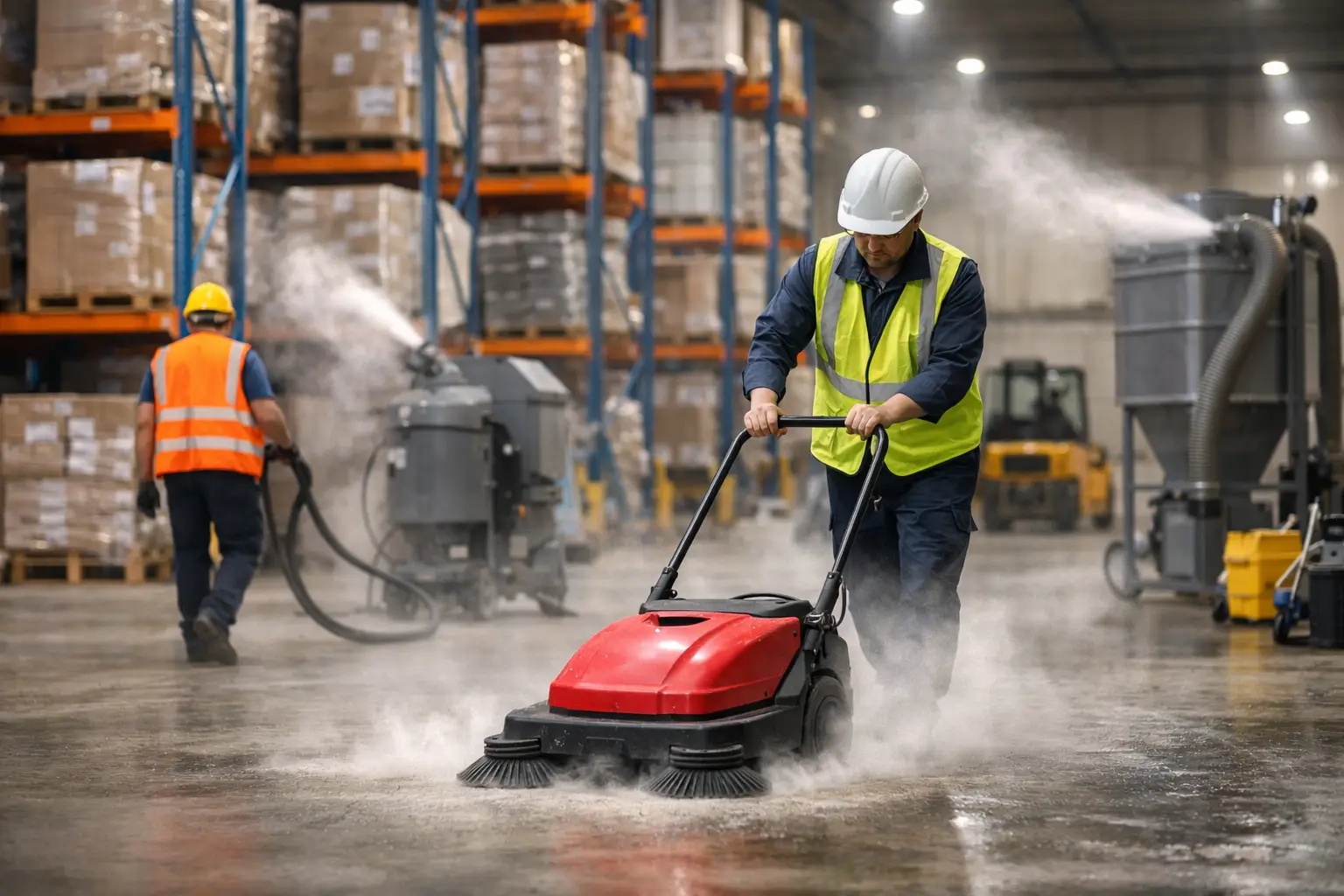
Place durable entry mats at personnel entrances and maintain them on a regular schedule. At busy docks, use walk-behind sweepers or industrial vacuums to remove debris before it is tracked farther into the building. Wet conditions require special attention because dirt becomes mud, then dries into fine dust that is easily redistributed.
Dock cleaning should be timed around operating patterns. Cleaning only after hours may not be enough for high-volume facilities. A mid-shift touch-up in active receiving areas can keep debris from reaching storage racks, picking zones, and office spaces.
3. Use the right floor cleaning equipment
Floor cleaning is central to warehouse dust control methods, but the tool matters as much as the schedule. A dry push broom can move large debris, yet it may also send fine dust into the air. In many warehouses, an industrial sweeper with proper filtration is a better choice for dry debris, especially across large concrete floors.
For dust that has settled into floor texture, corners, and travel lanes, commercial-grade vacuuming can be more effective than sweeping. Equipment with HEPA filtration is especially useful when fine particles are a concern because it helps capture dust rather than returning it to the air through exhaust.
Scrubbers can support a cleaner finish in areas with tracked-in grime or residue, but they are not a replacement for sweeping or vacuuming first. Running a scrubber over loose debris may leave streaks, clog recovery systems, and create more work. The best approach often combines regular dry debris removal with scheduled machine scrubbing based on traffic and soil levels.
4. Clean high surfaces before dust falls
Dust does not stay on the floor. It settles on racking, beams, pipes, cable trays, light fixtures, ventilation components, and the tops of warehouse offices. These areas are easy to overlook because they are out of reach, but they can hold large volumes of debris over time.
High dusting should be planned according to the facility’s activity level and risk profile. A warehouse storing sealed consumer goods may need periodic overhead cleaning. A distribution center with heavy cardboard handling, busy forklifts, or exposed product may need more frequent service. Buildings that handle combustible dust require a more specialized review and should follow applicable fire and safety requirements.
This work should never be treated as an improvised ladder task. Professional crews use appropriate access equipment, containment practices, and vacuum-assisted tools to reduce the chance of pushing dust into occupied areas. High-level cleaning is also best scheduled with operations in mind, since dust removal above active inventory or production can require temporary protection or restricted access.
5. Maintain ventilation and filtration systems
A warehouse ventilation system can either support dust control or spread the problem. Dirty filters, poorly maintained return vents, and imbalanced airflow can circulate fine particles through offices, break rooms, storage zones, and picking areas.
Work with your HVAC provider to establish filter inspection and replacement intervals that reflect actual facility conditions. A standard office-based schedule may not be adequate for a warehouse with frequent dock activity or high particulate loads. Keep supply and return vents clear, and address visible dust buildup before it affects air movement.
Portable air cleaners can help in enclosed offices, quality-control rooms, or employee break areas, but they should not be viewed as a substitute for source control and regular cleaning. If employees consistently notice dust in the air, persistent odors, or heavy buildup near vents, the facility may need a broader review of airflow, filtration, and housekeeping practices.
6. Set cleaning frequencies by zone
Not every part of a warehouse needs the same cleaning schedule. A one-size-fits-all routine can waste resources in low-traffic areas while allowing high-risk zones to deteriorate. Divide the facility into practical zones based on activity, exposure, and cleanliness requirements.
Loading docks, entrances, forklift lanes, packing stations, restrooms, and break rooms often require daily attention. Storage aisles may need scheduled sweeping or vacuuming several times per week, depending on product movement. High racking, beams, and light fixtures usually require periodic service rather than daily cleaning, but they should be included in a documented plan.
A simple inspection log helps managers spot trends. If dust returns quickly in one location, ask why. The cause may be a dock door gap, damaged pallet stock, an air vent, a nearby process, or an equipment issue. Repeated cleaning without investigating the source increases cost without delivering lasting results.
7. Train staff and verify results
Dust control works best when warehouse employees, maintenance teams, and cleaning providers understand their roles. Staff should know where to dispose of packaging waste, how to report spills or excessive dust, and why dry sweeping may not be appropriate in certain areas. Clear expectations reduce the chance that debris is moved from one zone to another.
Supervisors should also verify results instead of relying only on completed task lists. Check corners, rack bases, dock edges, overhead ledges, ventilation grilles, and equipment surfaces. These locations reveal whether cleaning practices are controlling dust or merely improving the most visible areas.
For outsourced service, provide the cleaning team with current information about operating hours, restricted zones, safety procedures, inventory sensitivity, and any changes in production or shipping volume. A professional cleaning partner can then adjust staffing, equipment, and service frequency without disrupting warehouse operations.
When specialized dust control is necessary
Some dust is more than a housekeeping concern. Facilities handling wood, flour, grain, metal particles, chemicals, powdered ingredients, or certain manufacturing materials may face combustible, hazardous, or regulated dust risks. These environments may require engineering controls, documented safety procedures, specialized vacuums, and guidance from qualified safety professionals.
Do not assume a standard janitorial routine is suitable for these conditions. The cleaning method, equipment, protective measures, and waste handling process must match the material involved. If dust is visibly accumulating around production equipment, electrical panels, or enclosed spaces, act promptly and involve the right specialists.
A clean warehouse supports safer work, better inventory protection, and a stronger impression on every employee, driver, vendor, and customer who enters the facility. Start with the areas where dust begins, build a schedule around real activity, and make professional follow-through part of daily operations rather than an emergency response.

About Author

Recent Posts

Property Turnover Cleaning That Protects Move-In Dates

8 Insured Commercial Cleaning Benefits for Businesses