Guide to Industrial Facility Cleaning Plans

A missed spill beside a production line, dust settling on overhead beams, or residue building up near loading bays can create more than a poor impression. Each can affect employee safety, equipment performance, product quality, and compliance. This guide to industrial facility cleaning helps facility managers create a practical program that protects operations without disrupting them.
Industrial cleaning is not simply commercial cleaning at a larger scale. Warehouses, plants, distribution centers, workshops, and manufacturing sites each have different hazards, traffic patterns, surfaces, and sanitation requirements. The right plan is built around the work happening in the building, not a generic checklist.
Start With a Facility Risk Assessment
Before setting a cleaning schedule, walk the facility with a safety and operations lens. Look beyond visible dirt. Identify where contamination, debris, moisture, dust, grease, and cross-traffic can create problems.
A receiving area may collect cardboard dust, pallet debris, and water tracked in from outdoors. A fabrication floor may need regular control of metal shavings or oils. A food-related production area may require more frequent sanitation and stricter separation between zones. Office spaces within an industrial building still need attention, but they should not take priority over areas where cleaning gaps can lead to injuries or operational downtime.
Document the surfaces, equipment, access points, and hazards in each area. This gives your internal team or cleaning provider a clear scope of work. It also prevents a common problem: a service team may clean the areas it can easily see while high-risk locations such as racking, floor drains, dock doors, stairwells, and high ledges receive inconsistent attention.
Build an Industrial Facility Cleaning Schedule That Fits Operations
The best industrial facility cleaning schedule is based on risk and use, not on whether an area “looks dirty.” High-traffic and high-risk zones often need service every shift or daily. Lower-risk areas can be cleaned weekly, monthly, or as part of a scheduled deep-cleaning rotation.
For example, entrance mats, break rooms, restrooms, touchpoints, and active aisleways usually require frequent attention. Dust removal from ceiling structures, ducting exteriors, lighting fixtures, and upper racking may be scheduled less often, but skipping it can allow buildup to spread through the facility or become a fire concern.
Timing matters as much as frequency. Cleaning during a busy shift can introduce slip hazards, block travel routes, or interfere with forklifts and production staff. Many facilities benefit from after-hours service, shift-change cleaning, or targeted work during planned downtime. The right approach depends on staffing, production volume, security requirements, and the type of soil being removed.
A reliable plan should clearly state what is cleaned, how often, who is responsible, and how completion is verified. Vague terms such as “clean warehouse floor” leave too much room for inconsistent service. A better instruction identifies the zone, method, frequency, and expected result.
Separate Routine Cleaning From Specialized Work
Routine cleaning keeps the building presentable and reduces day-to-day hazards. It often includes restroom sanitation, waste removal, floor care, break room cleaning, dusting accessible surfaces, and disinfecting shared touchpoints. These services support a healthier workplace and help maintain professional standards for employees, visitors, and inspectors.
Specialized industrial work addresses conditions that routine crews may not be equipped to handle. This can include high-level dusting, machine-area degreasing, spill response, post-construction cleanup, deep floor scrubbing, or cleaning around complex equipment. These tasks may require specific training, equipment, personal protective equipment, and approved cleaning agents.
Do not assume every cleaning company should handle every industrial condition. If hazardous materials, confined spaces, energized equipment, regulated waste, or chemical exposure are involved, the scope must be reviewed carefully. In some cases, a specialized contractor is the appropriate choice. A dependable cleaning partner should be clear about its capabilities and should not take on work outside a safe, authorized scope.
Protect People, Equipment, and Product
Cleaning methods should support the facility’s safety program. Wet floors need visible warning signs and controlled access until dry. Cleaning staff need site-specific orientation, including emergency procedures, traffic routes, restricted areas, and rules around machinery. They should know when equipment must be shut down, isolated, or left untouched.
Chemical selection also deserves attention. Products should be used according to label directions, stored correctly, and matched to the surface and soil type. Stronger is not always better. A product that damages coatings, leaves residue, creates strong fumes, or conflicts with a sanitation process can cause more problems than it solves.
For facilities with sensitive production, inventory, or electronics, cleaning must be controlled to avoid cross-contamination. Color-coded tools, separate mops by zone, dedicated restroom equipment, and careful handling of waste can reduce the chance that contaminants move from one part of the building to another. This is especially relevant when offices, shipping operations, production spaces, and employee areas share the same site.
Give Floors the Attention They Deserve
Industrial floors carry the evidence of daily operations: tire marks, oil, dust, salt, moisture, packaging debris, and foot traffic. They also carry the greatest slip, trip, and fall risk. A floor care plan should account for the material underfoot, whether concrete, epoxy, tile, rubber, or another specialty surface.
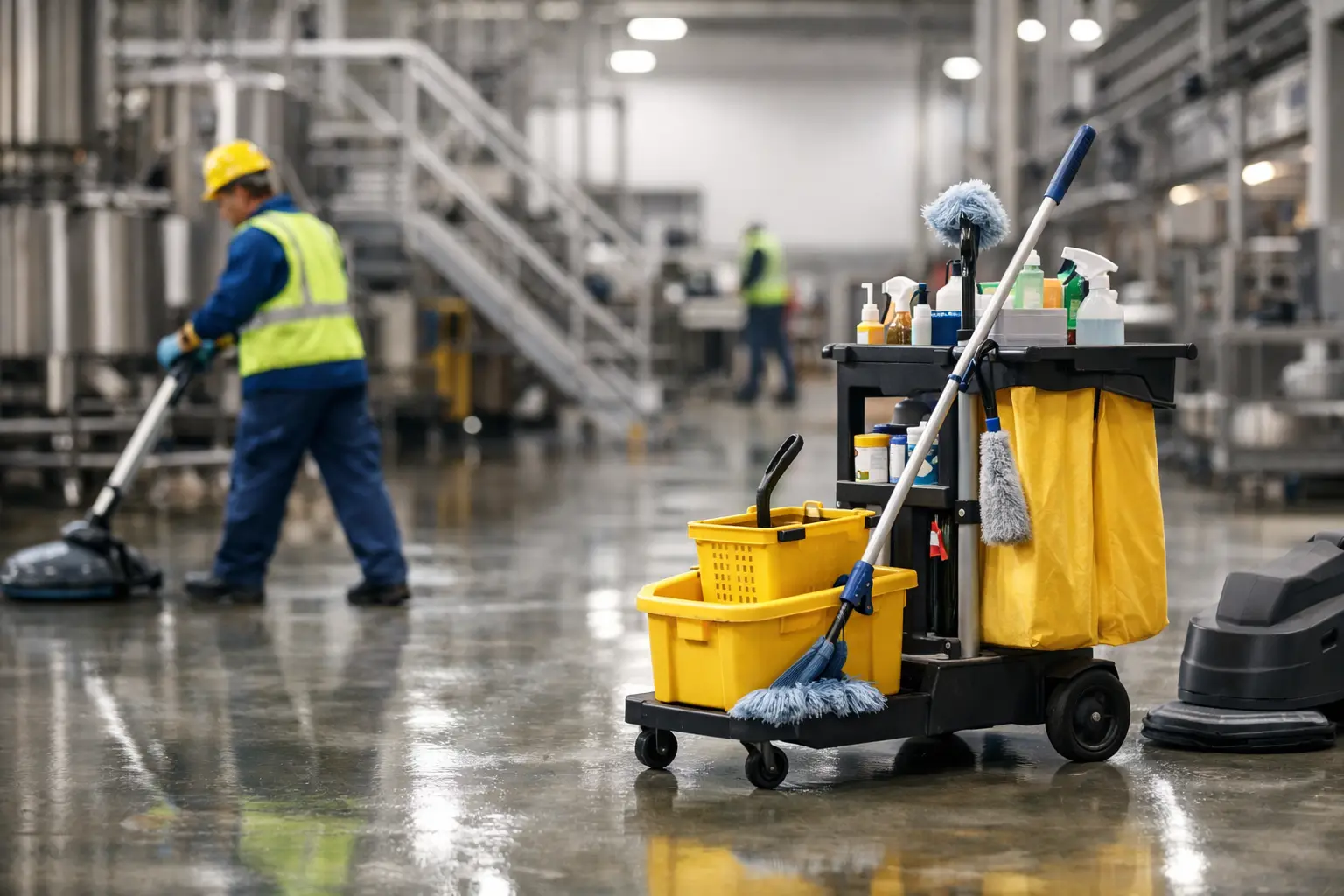
Sweeping alone may move fine dust rather than remove it. Mechanical sweeping or scrubbing can be more effective for large open areas, while detailed edge work is needed around shelving, equipment, and dock plates. Degreasers may be needed in maintenance areas, but they must be selected with the floor finish and drainage system in mind.
During winter or wet weather, entrances and loading areas need added attention. Moisture and de-icing residue can travel farther into a facility than expected. Extra mat service, prompt spot cleaning, and frequent inspections can help keep those conditions under control.
Use Quality Checks, Not Assumptions
A cleaning plan only works when results are checked. Supervisory inspections should confirm that the required areas were cleaned, supplies were replenished, safety procedures were followed, and issues were reported promptly. The goal is not to add paperwork for its own sake. It is to catch gaps before they become complaints, hazards, or costly maintenance problems.
Simple communication can make a major difference. A site log, digital checklist, or regular manager walkthrough gives both the facility and the cleaning team a record of completed work and outstanding concerns. If a spill, leak, pest issue, damaged floor, or unusual buildup is found, there should be a clear process for reporting it to the right person.
Service plans should also be reviewed as operations change. New machinery, expanded shifts, seasonal conditions, construction, or higher shipping volume can all change cleaning needs. A schedule that worked six months ago may no longer be sufficient.
Choose a Cleaning Partner With Industrial Discipline
When outsourcing, look for more than a competitive price. Ask how the provider trains staff for industrial sites, manages supervision, handles security access, and adjusts service around production schedules. Confirm that the company is insured and bonded, uses appropriate products, and can provide a customized scope rather than a one-size-fits-all package.
Responsiveness matters. Industrial facilities cannot always wait until the next scheduled visit when a spill, unexpected inspection, renovation project, or urgent sanitation need occurs. A provider with clear communication and flexible scheduling can help protect continuity when conditions change.
It is also reasonable to ask how quality is measured. Consistent service comes from defined expectations, trained teams, regular oversight, and quick correction when an issue is identified. The lowest quote may reduce short-term costs, but missed cleaning, damage to surfaces, or unreliable staffing can be more expensive over time.
A well-maintained industrial facility sends a practical message to everyone who enters it: this operation values safety, health, and the work being done here. Start with the areas that create the greatest risk, set clear expectations, and build a cleaning routine that can keep pace with your operation.

About Author

Recent Posts

Property Turnover Cleaning That Protects Move-In Dates

8 Insured Commercial Cleaning Benefits for Businesses