Commercial Disinfection Protocols That Work

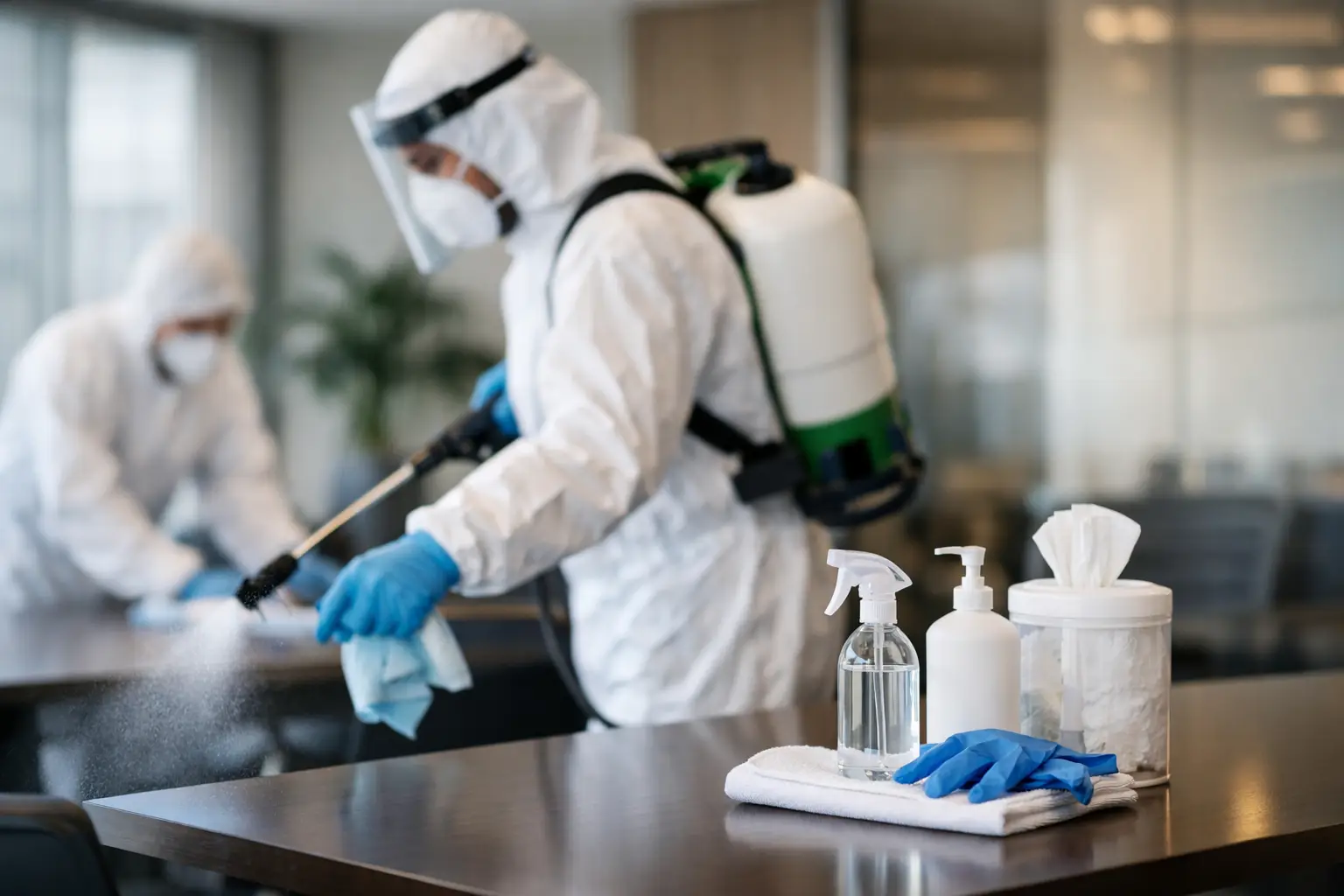
A conference room can look spotless after a quick wipe-down and still carry contamination on its door handles, chair arms, light switches, and shared equipment. That gap is why commercial disinfection protocols matter. A dependable protocol gives staff and cleaning providers a clear, repeatable way to reduce germ spread without disrupting daily operations or relying on guesswork.
For offices, restaurants, retail stores, dealerships, industrial facilities, and managed properties, the goal is not to disinfect every surface all day. The goal is to focus effort where it has the greatest health and operational value, use products correctly, and verify that the work is completed consistently.
What Commercial Disinfection Protocols Should Cover
Disinfection is only one part of a healthy cleaning program. Cleaning removes visible soil, dust, grease, and organic material. Disinfecting uses an appropriate product to kill or inactivate many germs on a surface. If a surface is dirty, disinfectant may not work as intended, which is why cleaning often comes first.
Effective commercial disinfection protocols define the surfaces to be treated, how often they need attention, which approved products are used, and who is responsible for each task. They also establish safe handling procedures, documentation expectations, and quality checks.
The right scope depends on the facility. A small professional office may need targeted attention to restrooms, kitchens, reception counters, and shared workstations. A restaurant needs a more detailed approach that separates food-contact sanitation from general surface disinfection. A medical-adjacent setting, daycare, or high-traffic retail location may require more frequent service and tighter recordkeeping.
A generic checklist cannot account for those differences. A customized plan can.
Start With a Risk-Based Surface Assessment
The most useful protocols begin with a walkthrough, not a product bottle. Identify where people touch surfaces repeatedly, where many people pass through, and where contamination could affect customers, employees, or operations.
High-touch points usually include entry doors, elevator buttons, handrails, restroom fixtures, faucet handles, breakroom appliances, payment terminals, shared phones, keyboards, and copier controls. In a dealership, add steering wheels, gear selectors, keys, and showroom counters. In industrial settings, machine controls, locker rooms, time clocks, and shared tools may need priority treatment.
Traffic patterns matter as much as surface type. A lobby door used by 200 people a day needs a different frequency than a storage-room handle used by two employees. This is where a facility manager can avoid both under-cleaning and unnecessary labor.
Consider three practical questions during the assessment: How often is the surface touched? Who touches it? What happens if it is missed? The answers help set reasonable cleaning and disinfection frequencies.
Choose Products for the Surface and the Task
Using a disinfectant does not automatically make a process effective. The product must be suitable for the target organisms, safe for the material being treated, and used according to its label directions. Contact time is especially critical. Many products must remain visibly wet for a specified period before they can be wiped or allowed to air dry.
Rushing this step is one of the most common failures in commercial cleaning. A team can cover every door handle in minutes, but if the product is wiped away immediately, the disinfection claim may not apply.
For US facilities, select EPA-registered disinfectants where required and follow the manufacturer’s label. The label identifies appropriate uses, dilution instructions, contact time, personal protective equipment, and compatible surfaces. Food-service operations must also use the correct sanitizer and process for food-contact surfaces. A disinfectant used in a restroom is not automatically appropriate for a prep table.
Product choice involves trade-offs. Stronger chemistry may be needed in some environments, but it can damage certain finishes, irritate occupants, or leave residues if used incorrectly. Low-odor or less harsh products can improve occupant comfort, but they still need to meet the required performance standard. A professional cleaning provider should be able to explain the product selection without making vague claims.
Do Not Skip Pre-Cleaning
Grease in a restaurant kitchen, fingerprints on glass, dust on office furniture, and residue on a retail counter can interfere with disinfectant performance. Clean visibly soiled surfaces first, then disinfect them according to the product instructions.
This two-step process is particularly important in restrooms, breakrooms, kitchens, and industrial environments. It takes more time than spraying and wiping, but it produces a more dependable result.
Build Frequency Around Real Operations
Daily disinfection is appropriate for many shared spaces, but frequency should be flexible. A protocol should account for occupancy, business hours, seasonal illness trends, events, and any known contamination concerns.
For example, a retail checkout area may need repeated treatment during operating hours, while a low-traffic office boardroom may be disinfected after meetings and during nightly service. Restrooms deserve scheduled attention throughout the day in busy facilities, not only at closing time. High-use shared equipment should be addressed between users when practical.
A good plan also includes an escalation process. When illness is reported, traffic increases unexpectedly, or an incident occurs, the facility should know who is contacted, which areas are prioritized, and how quickly additional service can be deployed. This prevents a minor concern from becoming a confusing, last-minute scramble.
Train Teams on Method, Not Just Tasks
A checklist is useful, but it cannot replace training. Staff need to understand why dwell time matters, how to avoid cross-contamination, when to change cloths or mop heads, and how to work safely around employees and customers.
Color-coded tools can help keep restroom equipment separate from breakroom or general-use equipment. Clean-to-dirty workflows also reduce the risk of moving contamination from one area to another. For example, a cleaner should not service a restroom and then use the same gloves or cloth on a reception counter.
Training should cover chemical safety, including dilution, storage, labeling, and required protective equipment. Mixing cleaning chemicals is never acceptable unless the manufacturer specifically directs it. Clear procedures protect the cleaning team as well as building occupants.
At HSI Cleaning Services, supervised teams and customized schedules help clients maintain consistent standards while adapting service to the way each facility operates.
Verify the Work and Keep Records That Help
Quality assurance turns a written protocol into a reliable service. Supervisory inspections, task logs, and client feedback can confirm whether high-priority areas are being addressed at the right frequency.
Documentation does not need to become burdensome. A practical log can record the date, time, area serviced, team member, product used, and any issue found during service. In higher-risk settings, managers may use inspection forms or surface-testing methods as an added verification layer. The level of documentation should match the facility’s risk, contractual needs, and compliance requirements.
When an issue is identified, use it to improve the process. If a dispenser is repeatedly empty, a particular doorway is missed, or a surface is being damaged by a product, adjust the protocol. Consistency is not doing the same thing forever. It is maintaining the right standard through changing conditions.
Common Gaps That Weaken Disinfection Programs
Many facilities have good intentions but weak execution. The most frequent problem is treating disinfection as a visible spray-and-wipe routine rather than a controlled process. Another is applying the same frequency to every room regardless of occupancy and touch points.
Other gaps include using products without following contact-time instructions, failing to clean soiled surfaces first, and leaving cleaning teams without site-specific direction. Poor communication can create gaps as well. If daytime staff, night cleaners, and building management each assume someone else is handling high-touch surfaces, the work may not happen at all.
The solution is not a longer checklist. It is a clearer one, supported by training, supervision, and a responsive cleaning partner.
Make the Protocol Easy to Maintain
The best protocol is one your team can actually sustain. Keep instructions specific to the building, schedule high-impact work around business activity, and revisit the plan whenever occupancy, layout, or operations change. A plan that looks impressive on paper but cannot be completed during a normal shift will not protect your workplace.
Healthy facilities are built through disciplined daily habits: clean first, disinfect correctly, focus on real risk, and verify the details. When those habits are supported by trained professionals, commercial disinfection becomes a practical part of keeping employees confident, customers comfortable, and operations ready for the next day.

About Author

Recent Posts
Property Turnover Cleaning That Protects Move-In Dates
8 Insured Commercial Cleaning Benefits for Businesses