Best Retail Floor Cleaning Methods for Stores

A shopper may not comment on a clean floor, but they notice a sticky entrance, scuffed aisle, or spill near the checkout immediately. The best retail floor cleaning methods protect more than appearance. They reduce slip risks, support healthier indoor spaces, preserve expensive flooring, and help every customer feel confident in your store.
For retail operators, floor care is not a one-size-fits-all task. A high-traffic grocery entrance needs a different routine than a boutique showroom, while a stockroom floor may require stronger soil removal than a customer-facing sales area. The right plan matches the floor material, foot traffic, weather, operating hours, and the level of sanitation your business requires.
Start With the Floor and the Traffic Pattern
Before choosing equipment or chemicals, identify what is underfoot. Vinyl composition tile, luxury vinyl tile, ceramic tile, sealed concrete, natural stone, carpet, rubber flooring, and hardwood all respond differently to water, friction, and cleaning solutions. Using the wrong product can dull a finish, leave residue, weaken grout, or cause premature wear.
Traffic matters just as much. Entrances, fitting rooms, checkout lanes, food displays, elevator lobbies, and washroom corridors usually collect the most moisture, salt, dirt, and debris. These areas need more frequent attention than low-traffic display sections or back offices.
A practical retail floor care plan separates spaces into high-, medium-, and low-traffic zones. This allows staff or a professional cleaning team to focus labor where it has the greatest impact rather than treating every square foot the same way.
Daily Retail Floor Cleaning Methods That Work
Daily care prevents dirt from becoming embedded in the floor surface. It also gives your team a consistent way to spot hazards before they become customer complaints or safety incidents.
Dry soil removal comes first
Sand, road salt, grit, paper, and product debris act like abrasives when customers walk over them. If they are left on the floor, even a durable finish can become scratched and dull. Vacuuming carpeted areas and dust mopping hard surfaces before wet cleaning is one of the simplest ways to extend floor life.
Retail entrances deserve special attention. During wet weather, place properly sized entry mats inside and outside the door, then vacuum or shake out mats regularly. Mats capture a large share of the soil that would otherwise be tracked through the store.
Spot-clean spills right away
Spill response should be immediate, especially near food displays, beverage stations, and checkout areas. Use wet-floor signage, remove the spill with the appropriate cleaner, and dry the area fully before reopening it to traffic.
Fast response protects customers and prevents stains from setting. It also stops sugary liquids, grease, and salt residue from creating a tacky film that attracts more dirt. Staff should know where spill kits, warning signs, mops, and approved cleaning products are kept.
Damp mop hard floors with clean solution
A damp mop removes light soil without flooding the surface. The key is using clean water and the correct amount of neutral floor cleaner. Too much chemical can leave a dull, slippery residue. Too much water can seep into seams, grout, or flooring edges.
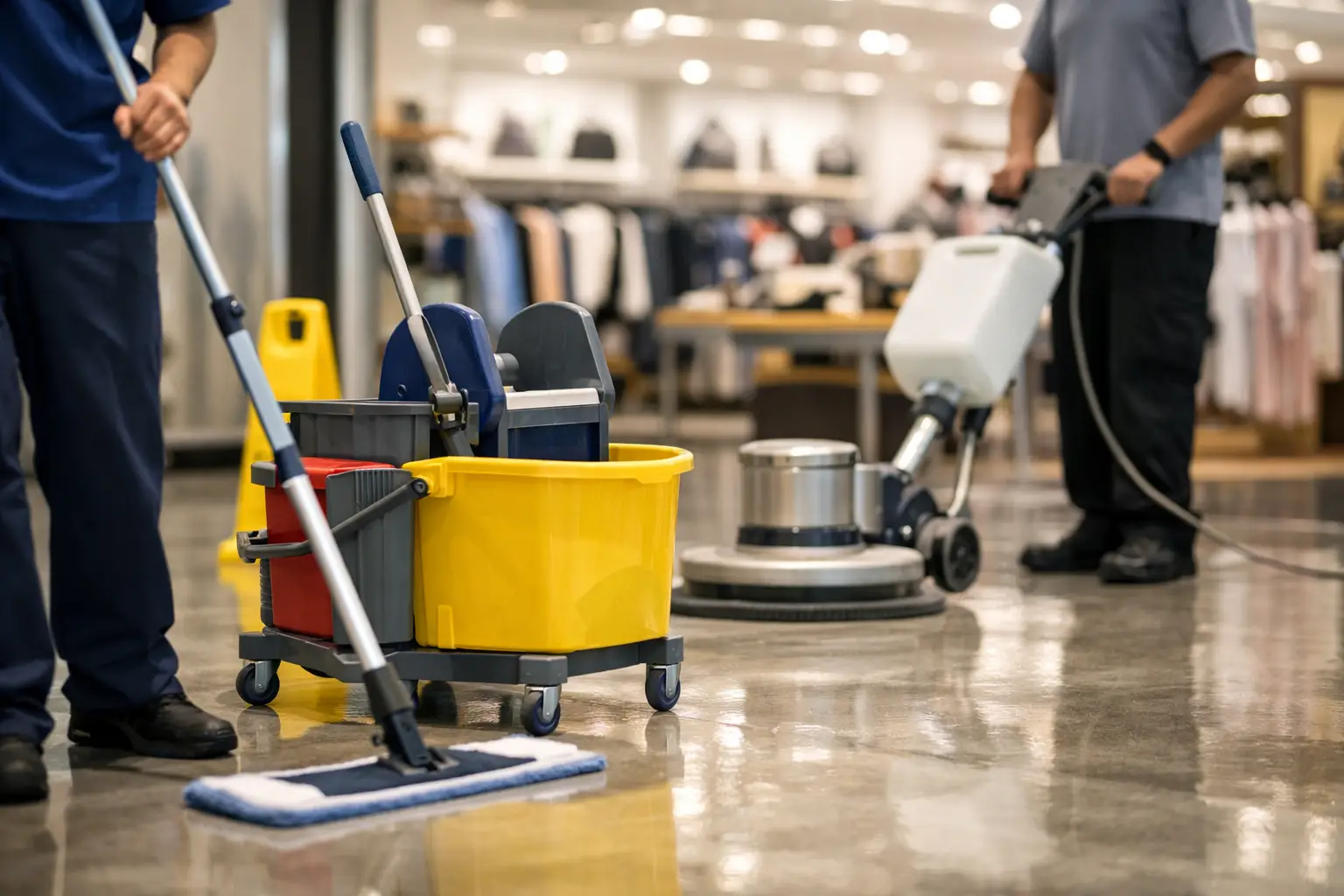
For large retail spaces, microfiber flat mops and auto scrubbers offer better consistency than a traditional string mop. Microfiber picks up fine dust effectively, while an auto scrubber applies solution, agitates soil, and recovers dirty water in one pass. The result is a cleaner floor with less standing moisture and less disruption to customers.
Best Retail Floor Cleaning Methods by Surface
The best method depends on the floor material and its current condition. A cleaning program should always follow manufacturer recommendations, particularly for newer flooring with warranty requirements.
Vinyl and VCT flooring
Vinyl and VCT are common in retail settings because they are durable and easy to maintain, but they still need regular care. Daily dust mopping and damp mopping with a neutral cleaner help prevent surface wear. Periodic machine scrubbing removes embedded grime that mopping cannot lift.
VCT often requires scheduled stripping and refinishing to restore protection and shine. This is not a daily task. It is a planned maintenance service that removes worn finish, prepares the surface, and applies new floor finish evenly. The schedule depends on traffic, soil exposure, and the appearance standard of the store.
Tile and grout
Ceramic and porcelain tile can handle frequent cleaning, but grout lines hold soil, grease, and moisture. Regular mopping keeps tile presentable, while periodic deep cleaning with mechanical agitation helps restore grout appearance.
Avoid leaving dirty mop water on tile floors. It can settle into grout and make the floor look worse over time. In food-service retail environments, use products suitable for grease removal and follow all safety procedures for wet floors.
Sealed concrete
Polished or sealed concrete is popular in larger stores, warehouses, and modern retail spaces. Dust mopping is essential because grit can reduce the surface shine. Auto scrubbing with a cleaner designed for concrete is often the most efficient approach for wide areas.
Harsh acidic or highly alkaline products may damage a concrete finish or leave uneven spots. If the floor begins to look hazy or loses its protective layer, professional assessment is usually more cost-effective than repeated use of stronger chemicals.
Carpet and entry mats
Carpet requires regular vacuuming, prompt stain treatment, and scheduled extraction cleaning. Vacuuming alone removes dry soil, but it does not remove oils, tracked-in moisture, or deeply embedded contaminants. Hot water extraction or low-moisture encapsulation cleaning can refresh carpeted sales areas without extended downtime.
The right choice depends on drying time. A store that trades late and opens early may benefit from low-moisture methods, while a deeper periodic extraction can be scheduled after hours. Entry mats should be treated as part of the floor system, not as an afterthought.
Natural stone and hardwood
Natural stone and hardwood require the most caution. Stone can be damaged by acidic products, while excess water can warp wood or affect protective coatings. Use pH-appropriate products, minimal moisture, and soft cleaning tools. For these surfaces, trained professional service is often the safest choice when deep cleaning or restoration is needed.
When to Use an Auto Scrubber
An auto scrubber is one of the most effective tools for medium and large retail floors, particularly in supermarkets, dealerships, big-box stores, and shopping centers. It cleans more uniformly than manual mopping and recovers dirty water instead of spreading it across the floor.
It is not necessary in every space. Small boutiques, narrow aisles, and stores with delicate flooring may be better served by microfiber mopping and targeted machine cleaning. The decision should be based on available space, flooring type, daily traffic, and how quickly the area must be ready for customers.
For best results, auto scrubber pads and brushes should match the floor type. An overly aggressive pad can remove finish or create visible wear. A pad that is too soft may fail to remove embedded soil. Equipment also needs regular maintenance so dirty tanks, worn squeegees, or clogged recovery systems do not compromise results.
Build a Schedule Around Prevention and Deep Cleaning
Retail floors stay cleaner when routine maintenance and periodic restorative work are planned together. Daily cleaning handles visible debris and spills. Weekly detail work reaches corners, baseboards, under fixtures, and floor edges. Monthly or quarterly deep cleaning addresses buildup that routine service cannot remove.
Seasonal planning is especially valuable in regions with rain, snow, and road salt. Winter can increase slip hazards and leave damaging residue on hard floors. During these periods, retailers may need more frequent entrance cleaning, mat service, and hard-floor scrubbing.
A professional cleaning provider can adjust service frequency around store hours, promotions, deliveries, and peak shopping periods. This flexibility matters because a clean floor should support operations, not interrupt them.
Protect Health, Safety, and Your Store’s Image
Floor cleaning is closely tied to health and safety. Standing moisture, food residue, and dirty carpet can create odors, encourage bacteria, and make customers question the care taken throughout the business. Approved cleaning products, trained staff, and clear safety procedures help maintain a healthier retail environment.
Consistency is equally important. One excellent deep clean cannot compensate for missed daily service. Documented checklists, quality inspections, and clear accountability keep standards steady across shifts and locations. For multi-site operators, this is often the difference between a cleaning plan that looks good on paper and one that performs reliably in every store.
HSI Cleaning Services helps retail businesses create customized floor care routines that fit their flooring, traffic level, and operating schedule. A dependable plan keeps the sales floor ready for customers while protecting the surfaces your business has invested in.
The best floor care program is the one your team can maintain every day and strengthen when traffic, weather, or business demands change. When floors are clean, dry, and properly protected, customers can focus on what brought them through your doors.

About Author

Recent Posts
Property Turnover Cleaning That Protects Move-In Dates

8 Insured Commercial Cleaning Benefits for Businesses