Carpet Cleaning vs Replacement for Businesses

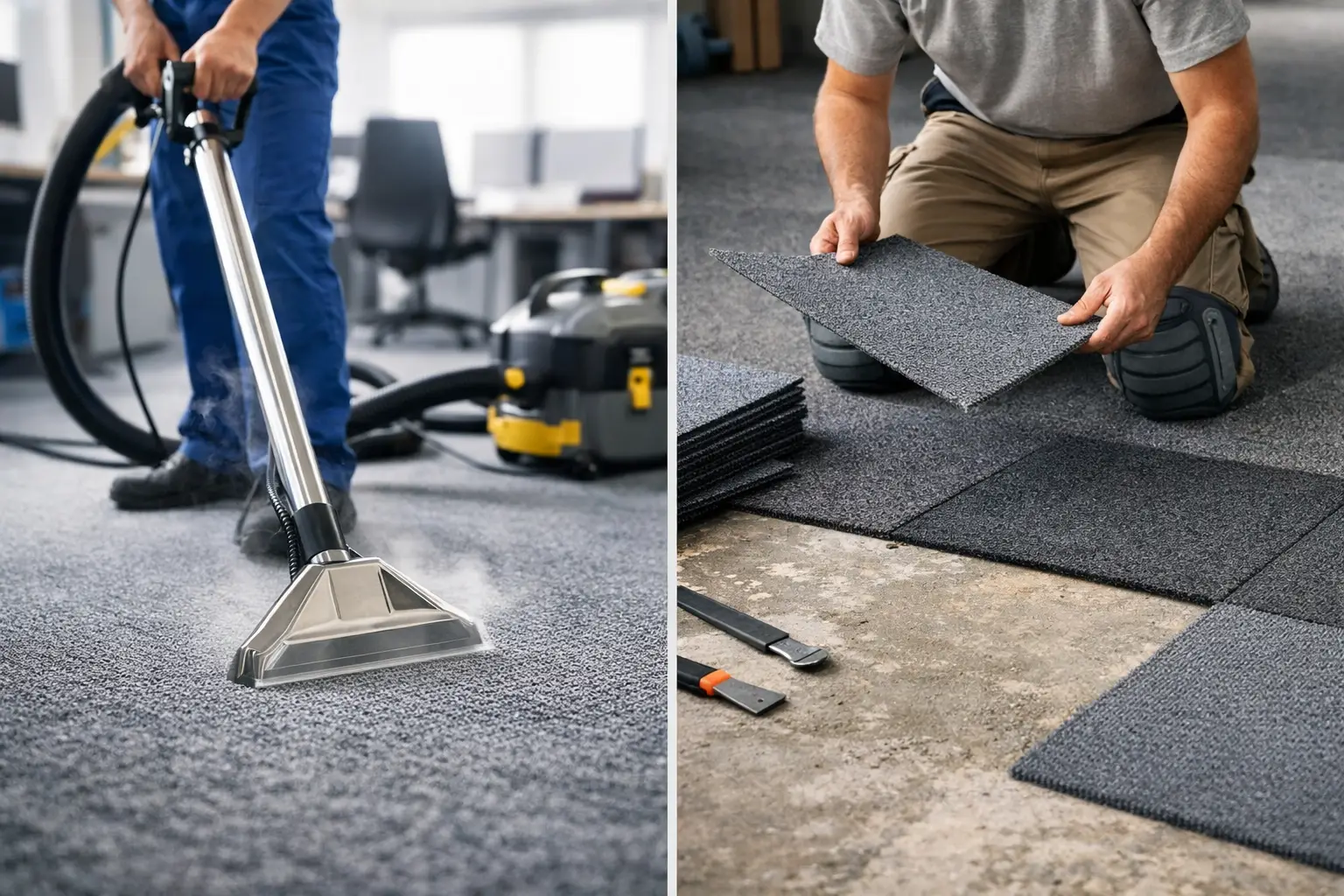
A worn carpet can quietly change how customers, tenants, and employees view a business. It can hold visible traffic lanes, lingering odors, and embedded soil long before it looks completely worn out. The decision between carpet cleaning vs replacement is not just cosmetic. It affects operating budgets, indoor air quality, workplace presentation, and how much disruption your facility can absorb.
For most commercial properties, replacement should not be the first response to a stained or dull carpet. Professional cleaning can often restore appearance and extend usable life. However, cleaning cannot repair a carpet that has reached the end of its service life. The right choice depends on the carpet’s condition, the source of the problem, and the demands of the space.
Start With the Cause, Not the Appearance
A carpet may look permanently dirty when the issue is actually accumulated soil. In offices, retail stores, restaurants, dealerships, and common areas, foot traffic pushes grit deep into carpet fibers. Vacuuming removes surface debris, but it does not always remove the oils, fine particles, and residue that cause fibers to look gray or flattened.
Professional carpet cleaning is often the appropriate first step when the carpet has general soiling, isolated spots, salt residue, or high-traffic lanes. Extraction cleaning can remove embedded dirt and help refresh the carpet’s color and texture. In a customer-facing setting, that improvement can be immediate.
The cause matters because some stains and odors require more than a standard cleaning approach. Water damage, pet contamination in residential units, food grease in restaurants, ink, rust, and recurring spills may need targeted treatment. A qualified cleaning team should inspect the carpet before making promises about stain removal. Honest recommendations protect your budget and help avoid unnecessary replacement.
When Carpet Cleaning Is the Better Business Decision
Cleaning is usually the stronger option when the carpet structure remains sound. Look closely at the fibers, seams, backing, and edges rather than judging the floor only by its surface color. If the pile still has reasonable resilience and the carpet is securely installed, professional cleaning may add years to its usable life.
This is particularly relevant for facilities with recurring traffic but limited downtime. Replacing carpet can mean measuring, ordering materials, moving furniture, removing old flooring, installing new product, and managing access restrictions. Scheduled cleaning is generally faster and less disruptive, especially when it is planned during evenings, weekends, or lower-traffic hours.
Regular cleaning also supports healthier workplaces. Carpets collect dust, allergens, outdoor pollutants, and other particles tracked in from sidewalks, parking lots, and entrances. When these contaminants build up, they can affect appearance and contribute to a less fresh indoor environment. A professional program that combines routine vacuuming, spot response, and periodic deep cleaning helps control that buildup.
For commercial properties, cleaning is also a practical way to protect an existing flooring investment. Many carpet manufacturers recommend professional cleaning at defined intervals. Waiting until the carpet appears heavily soiled can make restoration more difficult and may shorten its lifespan.
Signs Cleaning Is Likely Enough
A professional cleaning assessment is worth considering when the carpet has one or more of these conditions:
- Dull or dark traffic lanes near entrances, elevators, desks, or checkout areas
- Spots and spills that have not been professionally treated
- Winter salt residue, tracked-in soil, or general discoloration
- Mild odors with no evidence of extensive contamination
- Flattened fibers that may improve after soil removal and grooming
Cleaning results depend on fiber type, age, previous maintenance, and the nature of the stain. Some permanent discoloration may remain, but a cleaner carpet can still look significantly better and perform well.
When Replacement Is the Responsible Choice
There is a point where cleaning becomes a short-term cosmetic fix rather than a sound maintenance decision. Replacement is usually warranted when carpet fibers are worn through, seams are separating, backing is failing, or the carpet no longer stays securely in place. These conditions can create trip hazards and reflect poorly on the property.
Persistent odors are another concern. If moisture, mold, sewage, or repeated contamination has reached the padding or subfloor, surface cleaning may not solve the problem. The source must be addressed before new flooring is installed, or the issue can return.
Replacement may also make sense when the current carpet no longer fits the way the space is used. A restaurant entry, busy medical reception area, or retail aisle may need a more durable product or a different flooring solution than the one originally installed. Facility managers should consider traffic patterns, cleaning requirements, slip resistance, and expected lifespan before selecting replacement materials.
Do not overlook the appearance standard of the business. In leasing offices, showrooms, hospitality spaces, and executive workplaces, a carpet can be technically clean but still look dated or heavily worn. If it is affecting tenant impressions, customer confidence, or the presentation of the brand, replacement may be justified.
Carpet Cleaning vs Replacement: Compare the Full Cost
The purchase price of new carpet is only one part of replacement cost. Businesses should also account for removal and disposal, floor preparation, installation labor, furniture moving, lost access to the space, and possible after-hours work. In a busy operation, downtime can be more expensive than the flooring itself.
Professional cleaning has a lower immediate cost and can be scheduled as part of a recurring maintenance plan. It is often the best value when the carpet has years of functional life remaining. However, repeatedly cleaning a carpet with damaged backing, recurring odor issues, or deep permanent staining can become inefficient. Paying for service after service without a meaningful improvement is not a cost-saving strategy.
A useful question is this: will cleaning restore the carpet to an acceptable standard for the next 12 to 24 months? If the answer is yes, cleaning is likely the sensible choice. If the carpet will still require replacement within a few months, it may be better to plan the project now and avoid repeated disruption.
Make the Decision by Zone, Not Always by Building
A property does not always need an all-or-nothing answer. Many facilities benefit from a zone-based approach. A low-traffic private office may respond well to deep cleaning, while a heavily worn entrance corridor or customer waiting area may need replacement. This approach allows property managers to direct capital spending where it has the greatest visual and operational impact.
Consider how each area is used. Entryways need frequent soil removal because they receive moisture, salt, and grit. Conference rooms may need periodic appearance-focused cleaning. Restaurant dining areas require prompt spill response and more frequent deep cleaning because food and grease can settle into fibers. Industrial offices may need extra attention around dust and debris tracked in from work areas.
A professional assessment should identify the carpet type, soil conditions, damage, moisture concerns, and access requirements. It should also account for the schedule of your business. The goal is not simply to make carpet look better for one day. It is to maintain a clean, healthy space without interrupting staff, customers, or daily operations.
Protect the Carpet You Keep
Whether you clean now or replace later, maintenance determines how long the flooring will last. Entrance matting, frequent vacuuming, rapid spot treatment, and planned deep cleaning reduce the abrasive soil that wears fibers down. Waiting for carpet to look dirty is usually too late, especially in high-traffic commercial environments.
HSI Cleaning Services helps businesses across Toronto and the GTA build cleaning plans around their facility type, schedule, and hygiene needs. Trained teams, supervised service, and approved cleaning products help support consistent results while minimizing disruption to your operation.
Before approving a replacement budget, arrange a professional inspection of the areas causing concern. You may find that a targeted cleaning program restores the spaces that matter most, while giving you clear evidence about the few areas that truly need new flooring.

About Author

Recent Posts
Property Turnover Cleaning That Protects Move-In Dates

8 Insured Commercial Cleaning Benefits for Businesses