What Commercial Cleaning Insurance Should Cover

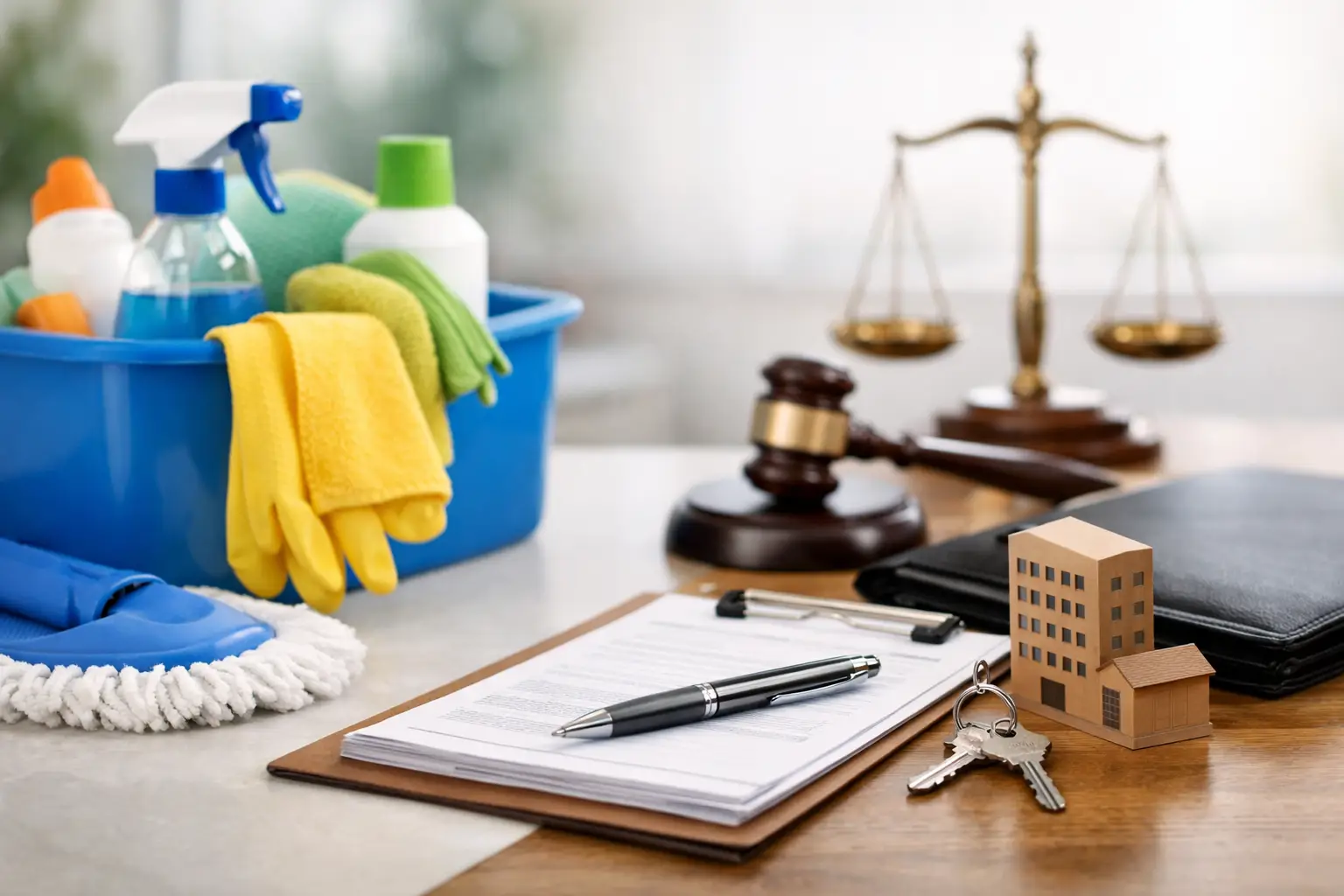
A cleaner slips on a freshly mopped lobby floor. A floor machine damages a client’s tile. A key goes missing after an evening service. These are not the outcomes anyone expects, but they are exactly why commercial cleaning insurance belongs in every vendor review. A clean facility supports health, productivity, and presentation. Proper insurance helps protect the business when an unexpected incident interrupts that work.
For facility managers, property managers, and business owners, insurance should not be treated as a box to check after comparing prices. It is part of the service standard. The right coverage signals that a cleaning provider understands the risks of working around staff, customers, equipment, tenant spaces, and high-traffic areas.
Why Commercial Cleaning Insurance Matters
Cleaning teams work in active environments. They handle wet floors, cleaning chemicals, ladders, vacuums, floor equipment, waste, and restricted spaces. In offices, retail stores, restaurants, dealerships, industrial facilities, and post-renovation sites, the risks change from one location to the next.
A low-cost quote can look attractive until a loss occurs. If a contractor lacks appropriate coverage, the client may face delays, disputes, or out-of-pocket costs while responsibility is sorted out. Insurance does not prevent every incident, but it provides a defined process for responding when something goes wrong.
It also protects the relationship between the client and the cleaning company. Clear documentation, prompt reporting, and valid coverage help both parties focus on resolving the issue rather than debating whether the provider was prepared to operate on site.
The Core Coverage a Cleaning Provider Should Carry
The exact insurance program depends on the company’s services, staff size, contract requirements, and the properties it serves. Still, several types of coverage are commonly expected for professional cleaning work.
Commercial General Liability
Commercial general liability insurance is the foundation. It is designed to respond to third-party claims involving bodily injury or property damage that may arise from the cleaning operation.
For example, a visitor may claim they were injured after slipping in a recently serviced area, or a cleaner may accidentally damage a glass partition, countertop, display fixture, or piece of office equipment. General liability coverage can address eligible claims, legal defense costs, and settlements up to the policy limits, subject to the policy terms.
Ask about the coverage limit, not simply whether liability insurance exists. Larger facilities, multi-tenant properties, and clients with formal procurement requirements often require higher limits. The appropriate amount depends on the site and contract, so there is no single number that suits every business.
Workers’ Compensation Coverage
Cleaning is physical work. Team members may lift supplies, use equipment, work around wet surfaces, and perform repetitive tasks. Workers’ compensation coverage helps protect employees who are injured while performing their duties.
For the client, this coverage is a major risk-control measure. Without it, a workplace injury can create questions about who is responsible, particularly if the incident occurs on the client’s premises. A responsible cleaning provider should be prepared to provide current proof of workers’ compensation or its applicable local equivalent.
Commercial Auto Insurance
If cleaners travel between sites in company vehicles or transport equipment and supplies, commercial auto insurance is relevant. A personal auto policy may not provide the protection needed for business use, especially when vehicles are regularly used to support contracted services.
This matters most for multi-location cleaning programs, emergency callouts, post-construction projects, and service providers covering broad geographic areas. It may not be central to every contract, but it is worth verifying when a provider’s team is routinely on the road.
Bonding and Employee Dishonesty Coverage
Insurance and bonding are often mentioned together, but they are not the same thing. A bond can offer protection against certain losses caused by dishonest acts, such as theft by an employee. For businesses that give cleaning staff access after hours, keys, alarm codes, inventory areas, offices, or tenant suites, this protection can be especially meaningful.
Bonding should support, not replace, strong hiring and supervision practices. Ask how the provider screens employees, controls keys and access credentials, assigns supervisors, and handles reported concerns. Coverage is valuable, but daily operational discipline is what reduces the likelihood of a problem.
What a Certificate of Insurance Can Tell You
A certificate of insurance is commonly requested before work begins. It provides a snapshot of the provider’s active insurance policies, including the insurer, policy dates, types of coverage, and policy limits.
Review the certificate carefully. Confirm that the business name matches the company you are contracting with, the policy has not expired, and the coverage reflects the work being performed. If your contract requires your business or property owner to be listed as an additional insured, make that requirement clear before service starts.
A certificate is useful documentation, but it is not the full policy. It does not explain every exclusion, condition, or coverage detail. For higher-risk facilities or contracts with strict compliance requirements, involve your legal, risk, or procurement team to confirm that the documentation meets your standards.
Questions to Ask Before Hiring a Cleaning Company
Insurance verification works best when it is part of a broader vendor qualification process. A credible provider should answer direct questions without hesitation. Ask whether the company carries commercial general liability, workers’ compensation, and bonding; whether its insurance limits meet your contract requirements; and whether a current certificate can be supplied before work begins.
Also ask how claims are reported and managed. A company should have a clear escalation path for accidents, property damage, security concerns, and customer complaints. Fast communication matters. A small issue that is documented and addressed immediately is less likely to become a costly disruption.
Finally, look at the provider’s operating practices. Are cleaners trained on chemical handling, wet-floor procedures, equipment use, and site-specific safety rules? Are supervisors available? Are cleaning plans tailored to the facility rather than copied from a generic checklist? Insurance is essential, but safe, consistent work is the first line of protection.
Coverage Should Match the Work Being Performed
Not every cleaning contract carries the same level of exposure. A small office cleaned after business hours has different risks than a restaurant kitchen, a retail center open to the public, or an industrial site with specialized safety procedures.
For example, daily restaurant cleaning may involve grease, food-service surfaces, slip hazards, and tight operating windows. Post-renovation cleaning can involve dust containment, debris, newly installed finishes, and coordination with other trades. Carpet extraction introduces moisture and equipment considerations. The cleaning company’s insurance, training, and scope of work should reflect these realities.
Be cautious when a provider offers specialized services but cannot explain how it manages the related risk. The best fit is not always the company with the largest policy limit. It is the company whose coverage, procedures, staffing, and supervision align with your property’s actual needs.
Avoid These Common Assumptions
Do not assume that a provider is insured because its proposal says “insured.” Request documentation. Do not assume an old certificate is still valid. Policies renew, lapse, and change. And do not assume that an independent contractor has the same coverage as an established cleaning company with trained, supervised employees.
It is also wise to avoid treating insurance as the only indicator of quality. A properly insured vendor can still deliver inconsistent service if schedules are unclear, supervision is weak, or the scope is poorly defined. Strong commercial cleaning partners pair coverage with reliable staffing, approved products, quality checks, and responsive communication.
A Cleaner Partnership Starts With Clear Protection
Commercial cleaning is a trusted service. Your provider may work around your employees, customers, assets, and confidential spaces when your team is not present. That trust should be supported by more than a promise.
Before signing a cleaning agreement, verify commercial cleaning insurance, review the provider’s documentation, and confirm that its safety practices fit your facility. HSI Cleaning Services approaches every customized cleaning plan with the same priority: clean spaces, healthier workplaces, and dependable service you can confidently put to work.

About Author

Recent Posts

Property Turnover Cleaning That Protects Move-In Dates

8 Insured Commercial Cleaning Benefits for Businesses