How Much Does Retail Cleaning Cost for Stores?

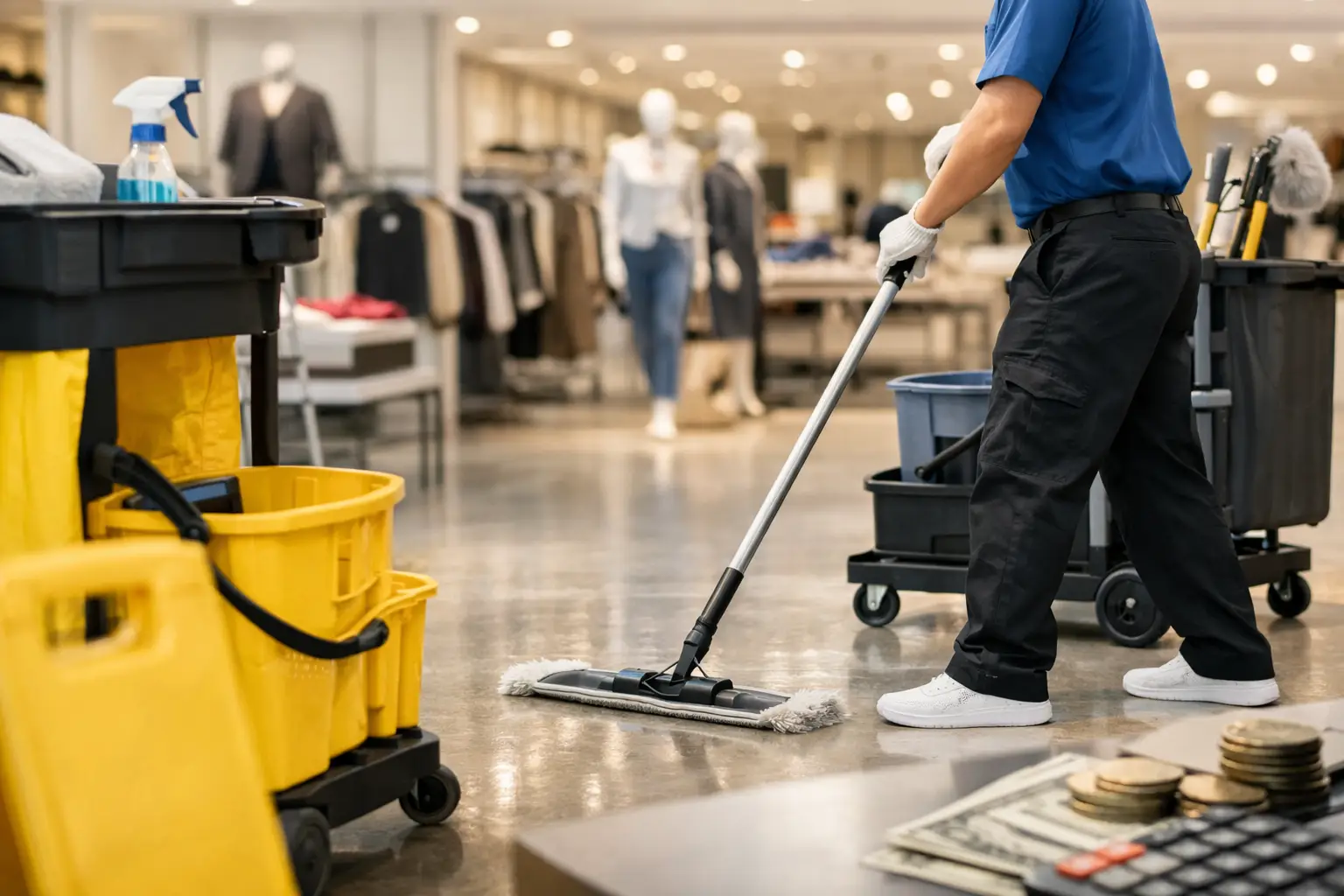
A smudged entrance door, dusty shelves, or overflowing restroom bin can shape a shopper’s impression before your team has a chance to help them. Retail cleaning is not simply an operating expense. It protects the customer experience, supports employee health, and helps keep a busy store ready for business. So, how much does retail cleaning cost? The honest answer depends on your space, hours, traffic, and required cleaning standards.
For Toronto and GTA businesses, recurring retail cleaning is commonly priced by the visit, by labor hours, or as a monthly contract. The figures below are planning ranges in Canadian dollars. A site visit and detailed scope are still the best way to receive an accurate quote.
How Much Does Retail Cleaning Cost Each Month?
Most retail stores can expect to budget anywhere from $1,000 to $6,500 or more per month for recurring professional cleaning. Smaller stores with limited hours and a few weekly visits may fall below that range, while large-format retailers, shopping centers, grocery stores, and high-traffic locations may spend substantially more.
A small boutique or specialty store of roughly 1,000 to 3,000 square feet may pay about $150 to $350 per visit, depending on the schedule and restroom needs. When service is provided two or three times per week, that can translate to approximately $1,200 to $3,500 per month.
A medium-sized retail space of 3,000 to 10,000 square feet that requires daily cleaning often falls between $2,500 and $6,500 per month. Larger stores, multi-unit retail operations, and locations with extended hours may require a dedicated crew or more frequent attention. Monthly costs for these properties can range from $6,000 to $15,000 or more.
Hourly rates are another useful planning reference, particularly for one-time work or smaller cleaning needs. Commercial cleaning labor may be quoted at approximately $35 to $65 per cleaner hour. The final rate reflects the work required, supervision, products, equipment, scheduling conditions, and local labor costs.
What Has the Biggest Effect on Retail Cleaning Prices?
Square footage matters, but it is not the only cost driver. A 2,000-square-foot jewelry store with polished displays, glass cases, and premium flooring can take more detailed work than a larger, open retail space. The condition of the location and the required finish level also influence the time needed to clean it properly.
Cleaning frequency and store traffic
Daily cleaning typically costs more each month than service two or three times a week. However, the per-visit rate may be more economical within a recurring contract because the crew can maintain the space rather than repeatedly address built-up soil.
Foot traffic is just as important as the schedule. A store with steady customer volume, children’s areas, fitting rooms, public restrooms, or frequent deliveries may need ongoing attention to entryways, floors, touchpoints, and waste bins. A quieter showroom may need fewer visits but still require detailed presentation cleaning.
Scope of work
A basic retail cleaning program often includes vacuuming or mopping floors, dusting accessible surfaces, emptying trash, cleaning restrooms, and disinfecting high-touch points such as door handles, payment counters, and light switches. Adding more tasks increases the price, but it can also prevent the visible issues that affect customer confidence.
Glass cleaning, fitting room upkeep, display fixture dusting, break room cleaning, floor machine scrubbing, and interior window cleaning are common additions. Retailers should be clear about whether stockrooms, offices, staff areas, loading areas, and customer washrooms are included. A vague scope can lead to inconsistent results and unexpected charges.
Floors, fixtures, and specialized surfaces
Floor care is often one of the largest variables in a retail cleaning quote. Carpeted stores may need routine vacuuming plus periodic extraction cleaning. Tile, vinyl, concrete, and hard flooring may require machine scrubbing, burnishing, stripping, or refinishing over time.
High-end finishes also require the right products and training. Improper cleaning can damage natural stone, hardwood, polished concrete, mirrored displays, specialty fixtures, or electronic point-of-sale areas. Paying for a trained crew and appropriate materials is usually less costly than repairing damaged surfaces or replacing merchandise displays.
Access, operating hours, and staffing
Cleaning performed after closing is standard for many retailers, but late-night access, mall security procedures, alarm protocols, and restricted delivery entrances can affect labor time. Stores open seven days a week or late into the evening may need flexible crews that can work around customers and staff.
A single cleaner may be suitable for a small, straightforward location. Larger stores often need a team to complete the work within a limited window. The number of workers affects the visit price, even if the total labor time remains similar, because it allows the work to be completed safely and on schedule.
Health and sanitation requirements
Retailers that handle food, cosmetics, children’s products, health-related goods, or high customer volumes may need stronger sanitation protocols. This can include Health Canada-approved disinfectants, frequent touchpoint disinfection, documented cleaning procedures, and additional restroom attention.
These requirements should not be treated as optional extras when the customer experience or health standards depend on them. A cleaning plan should match the risks and expectations of the store, rather than relying on a one-size-fits-all checklist.
One-Time Services That Can Add to the Budget
Recurring service keeps a store presentable, but periodic project work protects the condition of the entire property. Deep cleaning, post-renovation cleaning, carpet extraction, floor stripping and waxing, high dusting, and window cleaning are usually quoted separately from a standard nightly or weekly contract.
For example, a deep clean before a grand opening, seasonal reset, or inventory change may cost several hundred dollars for a smaller shop and several thousand dollars for a larger location. Post-construction cleaning can cost more because it involves fine dust removal, detailed surface cleaning, and extra labor to make the store safe and ready for customers.
Ask prospective providers whether these services are included in the monthly price, available at a set rate, or quoted when needed. This helps avoid the false economy of selecting a low base price that excludes essential maintenance.
How to Build a Retail Cleaning Budget That Works
Start with the areas customers see first: entrances, glass, sales floors, fitting rooms, checkout areas, and restrooms. Then consider the spaces that support your team, including break rooms, stockrooms, offices, and receiving areas. A cleaning partner can help separate daily needs from weekly, monthly, and seasonal tasks.
It also helps to document practical details before requesting a quote. Share the store size, number of restrooms, floor types, operating hours, expected service frequency, and any security or access requirements. If there are recurring issues such as salt residue at entrances, heavy fitting room use, or frequent spills, mention them early. Those details lead to a more accurate scope and fewer surprises later.
The lowest quote is not always the lowest cost over time. Missed visits, poorly trained workers, inadequate insurance, and inconsistent quality can create complaints, staff frustration, and avoidable property damage. Look for a bonded and insured provider with supervised teams, clear quality checks, and the ability to adjust service as your store changes.
Is Daily Retail Cleaning Worth the Cost?
For high-traffic stores, daily cleaning is often a practical investment. It prevents trash buildup, keeps restrooms usable, maintains clean floors, and reduces the spread of germs on high-touch surfaces. It can also make morning opening procedures easier for store teams, who should be focused on customers and merchandising rather than correcting cleaning issues.
Lower-traffic stores may be well served by two or three scheduled visits each week combined with a simple staff touch-up routine. The right frequency is based on what customers experience between visits, not on a standard schedule borrowed from another type of business.
A dependable cleaning plan should feel like part of your store operations, not another problem for your managers to solve. HSI Cleaning Services builds retail cleaning programs around the real demands of each location, including traffic patterns, store hours, sanitation needs, and presentation standards.
The most useful next step is to walk your location with a cleaning professional and identify what must look perfect every day, what needs scheduled maintenance, and where extra attention will protect your business. That conversation turns a general budget into a cleaning plan your customers and team can rely on.

About Author

Recent Posts

Property Turnover Cleaning That Protects Move-In Dates

8 Insured Commercial Cleaning Benefits for Businesses