Warehouse Safety Cleaning: A Practical Plan

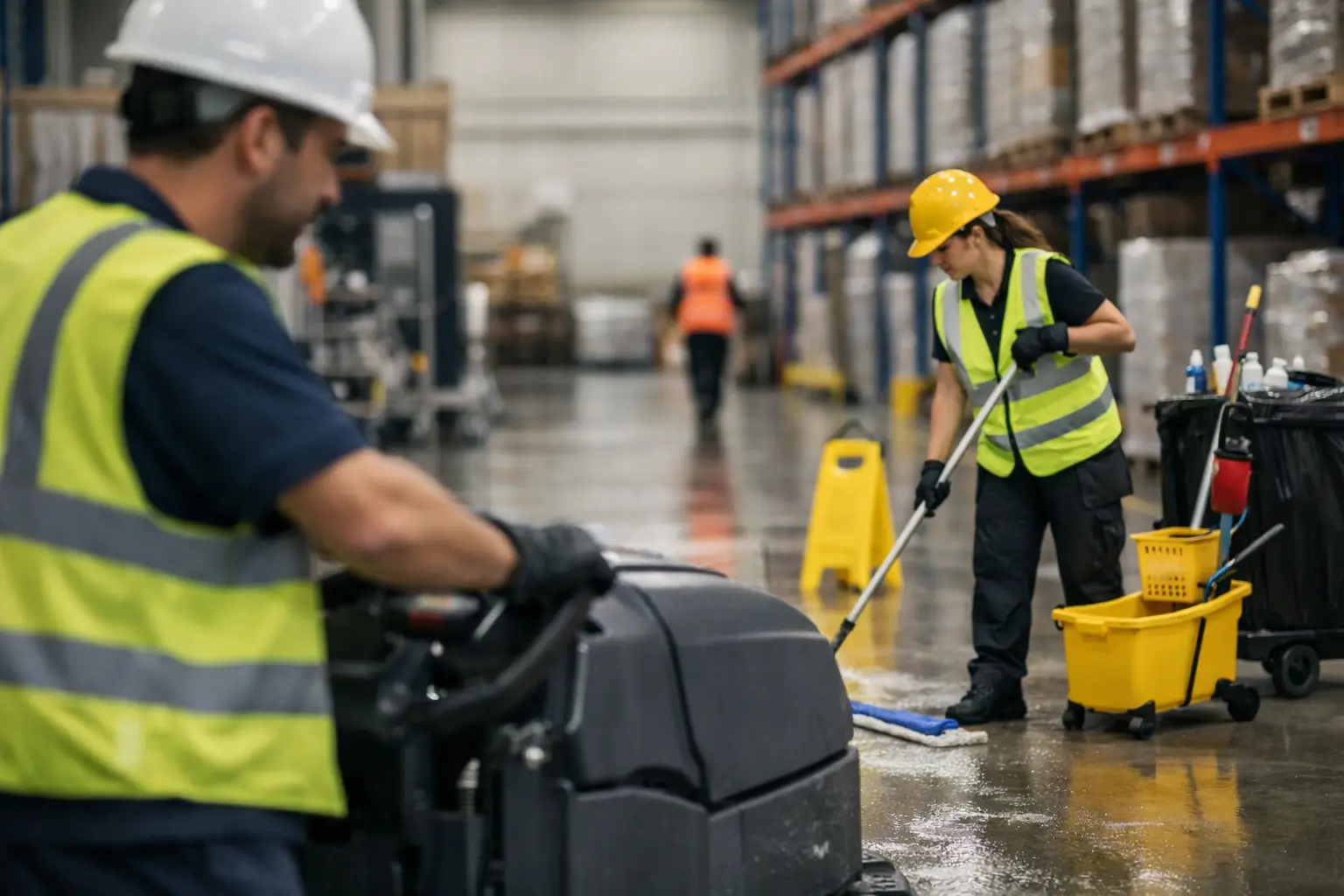
A warehouse floor can look busy and productive right up to the moment a spill, loose stretch wrap, or blocked aisle causes an injury or stops a shift. Cleaning is not simply a presentation issue in this environment. Warehouse safety cleaning is a practical control that helps protect employees, inventory, equipment, and the pace of daily operations.
For facility managers and warehouse operators, the challenge is rarely deciding whether cleaning matters. The challenge is creating a dependable process that reaches high-risk areas without disrupting receiving, picking, shipping, or production. The right plan is built around the way your facility actually works, not a generic checklist.
Why Warehouse Safety Cleaning Matters
Warehouses collect hazards quickly. Dirt and moisture are tracked in through loading docks. Pallet debris, cardboard dust, shrink wrap, and damaged goods accumulate in travel paths. Battery charging areas can develop residue, while break rooms and restrooms require a different level of sanitation than storage aisles.
When these conditions are not addressed consistently, small issues become larger operational risks. A slick floor can lead to a slip and fall. Dust around equipment may affect air quality or create a fire concern, depending on the materials handled. Obstructed exits, electrical panels, eyewash stations, and fire extinguishers can create serious compliance and emergency-response problems.
A cleaner warehouse also supports better inventory control. Clear aisles make damaged pallets, leaking products, pest activity, and misplaced stock easier to spot. Employees can move with more confidence, and visitors receive a more professional impression of the operation.
Start With a Risk-Based Cleaning Plan
Not every area needs the same cleaning frequency or method. A high-traffic loading dock may need attention several times per shift, while high-level beams may be scheduled as part of a periodic deep-cleaning program. The goal is to focus labor where it reduces the most risk.
Begin by walking the facility with supervisors, safety personnel, and cleaning staff. Look beyond visible dirt. Identify where people walk, where machinery turns, where materials are staged, and where water, dust, oil, or packaging waste tends to collect. Review incident reports and near-miss records as well. They often reveal recurring trouble spots that a standard cleaning schedule misses.
Your plan should clearly define who is responsible, what must be cleaned, how often it is completed, and how the work is documented. This is particularly valuable across multiple shifts, where one team may assume another has handled a spill or waste buildup.
Separate routine work from corrective work
Routine cleaning includes predictable tasks such as sweeping, floor care, waste removal, restroom sanitation, and cleaning touchpoints in shared work areas. Corrective work is triggered by an event: a spill, broken pallet, product leak, glass breakage, pest concern, or unusually heavy debris after a delivery.
Both matter, but they require different response times. A spill in a forklift lane should not wait for the evening cleaning crew. Employees need a clear process for reporting hazards, securing the area, and getting prompt cleanup support. In many facilities, a simple reporting channel and visible spill-response supplies can prevent a minor issue from becoming an incident.
Focus on the Areas That Create the Most Risk
Cleaning teams should understand the purpose of each task, not just the task itself. Sweeping an aisle is helpful, but checking that the aisle remains free of loose wrap, pallet fragments, and obstructions is the real safety outcome.
Pay close attention to these areas:
- Loading docks, dock plates, entrances, and receiving zones where moisture, tire residue, and debris are common.
- Forklift lanes, pedestrian walkways, crosswalks, and intersections where visibility and traction affect safe movement.
- Battery charging and maintenance areas, following site-specific procedures for chemical residue and waste.
- Racking bases, under conveyors, and behind equipment where dust and debris can build up out of sight.
- Restrooms, break rooms, lockers, and shared touchpoints that affect employee health and workplace hygiene.
- Emergency exits, stairwells, first-aid stations, fire equipment, and electrical panels that must remain clean and accessible.
High-level cleaning deserves its own schedule. Dust can gather on rafters, ductwork, light fixtures, pipes, and elevated storage areas over time. The appropriate frequency depends on the building, ventilation, materials handled, and local safety requirements. Work at height should always be planned carefully, with the right equipment, trained personnel, and controls for protecting people and inventory below.
Choose Methods That Fit the Facility
The fastest cleaning method is not always the safest or most effective one. Dry sweeping may move fine dust into the air, while a scrubber can leave a floor too wet if it is not operated correctly or if traffic returns before drying is complete. Cleaning products also need to match the surface and the risk.
For hard floors, regular sweeping or vacuuming removes dry debris before it is ground into traffic lanes. Mechanical scrubbing can be effective for larger areas, especially when it uses the correct pads, water levels, and drying procedures. Entrance mats and dock areas may require extra attention during wet weather, when tracked-in water raises slip risks.
For dust-sensitive operations, methods that capture rather than redistribute dust are often the better choice. For food-related storage, healthcare products, or other regulated inventory, cleaning protocols may need to account for sanitation standards, product segregation, and approved chemicals. A cleaning provider should ask the right questions before recommending a process.
Health-focused cleaning also means using products responsibly. Health Canada-approved products, proper dilution, labeled containers, and trained handling procedures help support sanitation without creating unnecessary chemical exposure or damaging warehouse surfaces.
Make Cleaning Work With the Shift Schedule
A cleaning plan can fail when it ignores operational reality. Trying to scrub major travel lanes during peak picking hours may create congestion and increase risk. On the other hand, limiting all cleaning to overnight hours may leave day-shift hazards in place too long.
The most dependable approach is usually a combination of daytime maintenance and scheduled deep cleaning. Daytime service can address restrooms, break areas, waste, entrance conditions, spills, and high-traffic zones. Off-hours work can handle larger floor-care projects, detailed equipment-area cleaning, and high dusting with less disruption.
Communication matters as much as timing. Warehouse leaders should know when cleaning crews will be working near active equipment, restricted areas, or inventory. Cleaning teams should know where traffic patterns change, when deliveries arrive, and which zones require special authorization. Clear signage, cones, and temporary barriers help separate cleaning activity from forklift and pedestrian traffic.
Train for Consistency, Not Assumptions
A written schedule does not guarantee safe results. The people completing the work need training on site rules, hazard communication, personal protective equipment, equipment use, and escalation procedures. They should know when a condition can be cleaned immediately and when it needs to be reported to a supervisor or maintenance team.
Quality checks are equally important. Supervisors can inspect completed areas, verify that logs are accurate, and watch for repeat issues. If a certain dock door is repeatedly dirty or slippery, the answer may be more frequent cleaning, but it could also be a drainage, weather-sealing, or workflow issue. Cleaning data can help reveal these underlying problems.
For outsourced service, choose a partner that can provide trained, insured, supervised staff and adapt the scope as your operation changes. HSI Cleaning Services builds customized commercial and industrial cleaning plans around facility schedules, sanitation needs, and safety priorities, helping businesses maintain clean spaces without losing sight of production demands.
Review the Plan as Conditions Change
Warehouse operations change with seasonal demand, new inventory, layout adjustments, staffing levels, and equipment upgrades. A cleaning schedule that worked last quarter may not fit a newly expanded shipping area or a busier holiday receiving schedule.
Review the plan regularly with operations and safety leaders. Look for trends in spill reports, slip incidents, dust buildup, employee feedback, and inspection findings. Adjust frequencies, methods, and staffing before conditions become a larger problem.
A well-maintained warehouse sends a clear message to employees: their safety is taken seriously. When cleaning is planned as part of operations rather than treated as an afterthought, the facility becomes easier to manage, safer to work in, and better prepared for every shift.

About Author

Recent Posts

Property Turnover Cleaning That Protects Move-In Dates

8 Insured Commercial Cleaning Benefits for Businesses