

What Should Be Cleaned Daily at Work?

The easiest way to tell whether a workplace cleaning plan is working is not the shine on the floor. It is whether the space still feels controlled by the end of the day. If you are deciding what should be cleaned daily, the right answer usually comes down to two things – what people touch most and what affects health, safety, or customer perception fastest.
For business owners, office managers, and facility teams, daily cleaning is not about cleaning everything, every time. It is about protecting the parts of the space that collect the most soil, bacteria, odors, and visual clutter in a single business day. When that daily baseline is handled well, deeper weekly and monthly work becomes more effective and far less disruptive.
What should be cleaned daily in a commercial space?
Most commercial properties have the same daily pressure points, even if the industry is different. Restrooms, high-touch surfaces, trash areas, floors in active zones, and shared-use spaces should be cleaned every day. In some environments, especially restaurants, medical-adjacent settings, and high-traffic retail, certain tasks may need to happen multiple times during operating hours.
The key is not to overbuild the checklist. A daily cleaning plan should focus on exposure, traffic, and visible impact. A boardroom table used once a week does not need the same attention as a breakroom counter touched by 30 people before noon.
Daily cleaning priorities by area
Restrooms
If there is one area that should never be pushed to tomorrow, it is the restroom. Toilets, urinals, sinks, faucets, counters, stall handles, door pulls, mirrors, and dispensers all need daily attention. Floors also matter because they collect splash, paper debris, and product residue quickly.
This is about more than appearance. Restrooms are one of the fastest places for odors, cross-contamination, and negative impressions to build. In customer-facing environments, an unclean restroom can affect how people judge the entire business.
Entrance areas and lobbies
Your front entrance works hard. Dirt, salt, rainwater, leaves, and debris all come in here first, especially in a climate with seasonal swings. Glass doors, handles, mats, vestibule floors, and reception counters should be cleaned daily because they shape the first impression before anyone sees the rest of the building.
In wet or snowy conditions, this area may need spot attention throughout the day. That is less about polishing and more about reducing slip risk and preventing tracked-in soil from spreading deeper into the facility.
High-touch surfaces
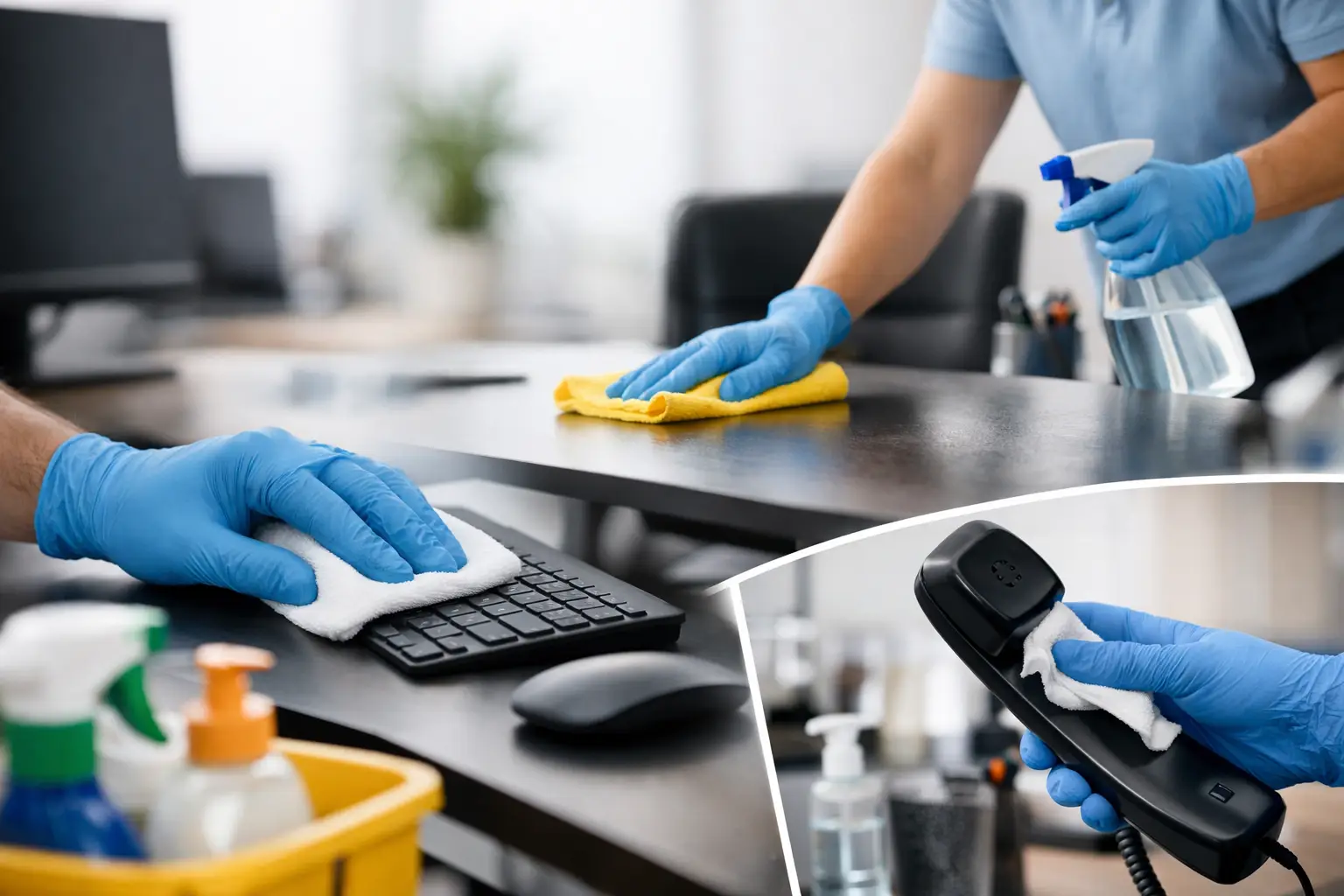
Door handles, push plates, light switches, elevator buttons, railings, shared phones, keyboards, copier panels, time clocks, fridge handles, microwave buttons, and faucet levers should all be disinfected or sanitized as part of daily service where appropriate.
Not every building has the same touchpoint map, which is why generic cleaning schedules often miss the mark. A dealership showroom, office suite, and restaurant all have different contact patterns. The surfaces people touch repeatedly should always be identified and built into the daily scope.
Breakrooms and kitchens
Shared food spaces get messy fast. Counters, tables, sink fixtures, appliance handles, coffee stations, and floors should be cleaned daily. Trash should be removed before odors start building, and food-contact surfaces should be cleaned with the right products and methods for the setting.
This area often creates frustration among staff because people notice grime here quickly. Even when the rest of the office looks fine, a dirty breakroom can make the whole workplace feel neglected.
Trash and recycling points
Any area where waste collects should be serviced daily. That includes under-desk bins in some offices, central waste stations, restroom receptacles, kitchen trash, and exterior-facing bins near entrances. Liners should be replaced as needed, and surrounding surfaces should be checked for leaks, residue, and odors.
This is one of the most basic tasks on a cleaning plan, but it has outsized impact. Overflowing trash changes how a space smells, looks, and functions almost immediately.
Floors in active zones
Not every square foot needs daily detailed floor care, but active floor areas do. Entryways, corridors, reception zones, breakrooms, restrooms, checkout areas, and other high-traffic paths should be vacuumed, swept, or mopped daily based on the flooring type.
This is where good judgment matters. A low-traffic executive office may not need daily vacuuming, while a retail aisle or restaurant dining area absolutely does. Daily floor care is part appearance, part safety, and part asset protection.
What should be cleaned daily by business type?
Offices
In office environments, the daily focus is usually restrooms, lobbies, breakrooms, touchpoints, trash, and common-area floors. Workstations can be handled daily if requested, but many companies prefer a tailored approach because desks may contain personal items, paperwork, or equipment that requires care.
A common mistake is treating the entire office as one cleaning zone. In reality, shared spaces usually need daily service, while private offices and low-use meeting rooms may follow a lighter schedule unless traffic levels justify more.
Retail stores
Retail cleaning needs to protect both presentation and hygiene. Entrances, display-adjacent floors, fitting room touchpoints, restrooms, checkout counters, payment terminals, and glass are all strong daily priorities. If the store carries products that customers handle frequently, shelving and fixtures may need regular spot cleaning as well.
Customer perception moves fast in retail. Smudged glass, dusty surfaces, or dirty floors can make the merchandise look less cared for, even when the products themselves are fine.
Restaurants and food service spaces
Restaurants operate on a stricter daily standard because sanitation risk is higher. Dining areas, host stands, restrooms, kitchen floors, prep-adjacent surfaces, touchpoints, waste zones, and grease-prone areas all need consistent daily cleaning. Some tasks, especially in food prep and guest-facing zones, need to be completed multiple times a day.
This is also where the difference between cleaning and sanitizing matters. A surface can look clean and still fail hygiene expectations if the correct sanitizing process is not followed.
Dealerships and showrooms
Dealerships combine office, retail, and service traffic in one place. Daily work should cover entrances, showroom glass, customer seating areas, restrooms, sales desks, waiting areas, touchpoints, and floors. Service-adjacent zones may also need more frequent debris control because vehicle traffic brings in dirt, water, and residue.
A clean showroom supports trust. Customers buying high-value items notice details, and cleanliness contributes to the sense that the business is organized and professional.
What should not always be cleaned daily?
A strong daily plan also respects efficiency. Some items do not need full daily attention unless usage is high. Baseboards, interior windows beyond fingerprints, low-traffic storage rooms, high dusting, deep carpet extraction, and detailed upholstery cleaning are usually better placed on weekly, monthly, or project-based schedules.
Over-cleaning low-impact areas can waste labor hours that should be going toward higher-risk surfaces. For most businesses, the better investment is consistent daily maintenance paired with scheduled deep cleaning. That is how standards stay high without overspending.
Building a daily cleaning routine that actually works
The best daily cleaning programs are specific to the building, not copied from a generic template. Traffic volume, operating hours, number of occupants, customer exposure, floor type, and regulatory expectations all shape what should be cleaned daily.
Timing matters too. Some tasks are best done after hours for efficiency and discretion. Others, like restroom restocking or lobby floor spot cleaning, may need daytime support. Businesses with staggered shifts or public-facing operations often need a flexible schedule rather than one fixed evening visit.
This is where a professional cleaning partner can make a real difference. A customized plan identifies the surfaces and spaces that affect your operation most, then aligns service frequency with actual risk and use. For companies managing multiple priorities at once, that reliability matters just as much as the cleaning itself.
At HSI Cleaning Services, we often see the same issue across different industries: teams either clean too little in the wrong places or try to clean everything every day and lose consistency. The better approach is practical and disciplined. Clean the areas people notice, touch, and rely on daily, then support that baseline with deeper scheduled service.
If you are reviewing your current routine, start with the spaces that affect health, traffic flow, and first impressions by the end of each day. When those are consistently clean, the whole workplace feels more controlled, more professional, and easier to maintain tomorrow.

About Author

Recent Posts

Property Turnover Cleaning That Protects Move-In Dates

8 Insured Commercial Cleaning Benefits for Businesses