Daily Commercial Cleaning Checklist That Works

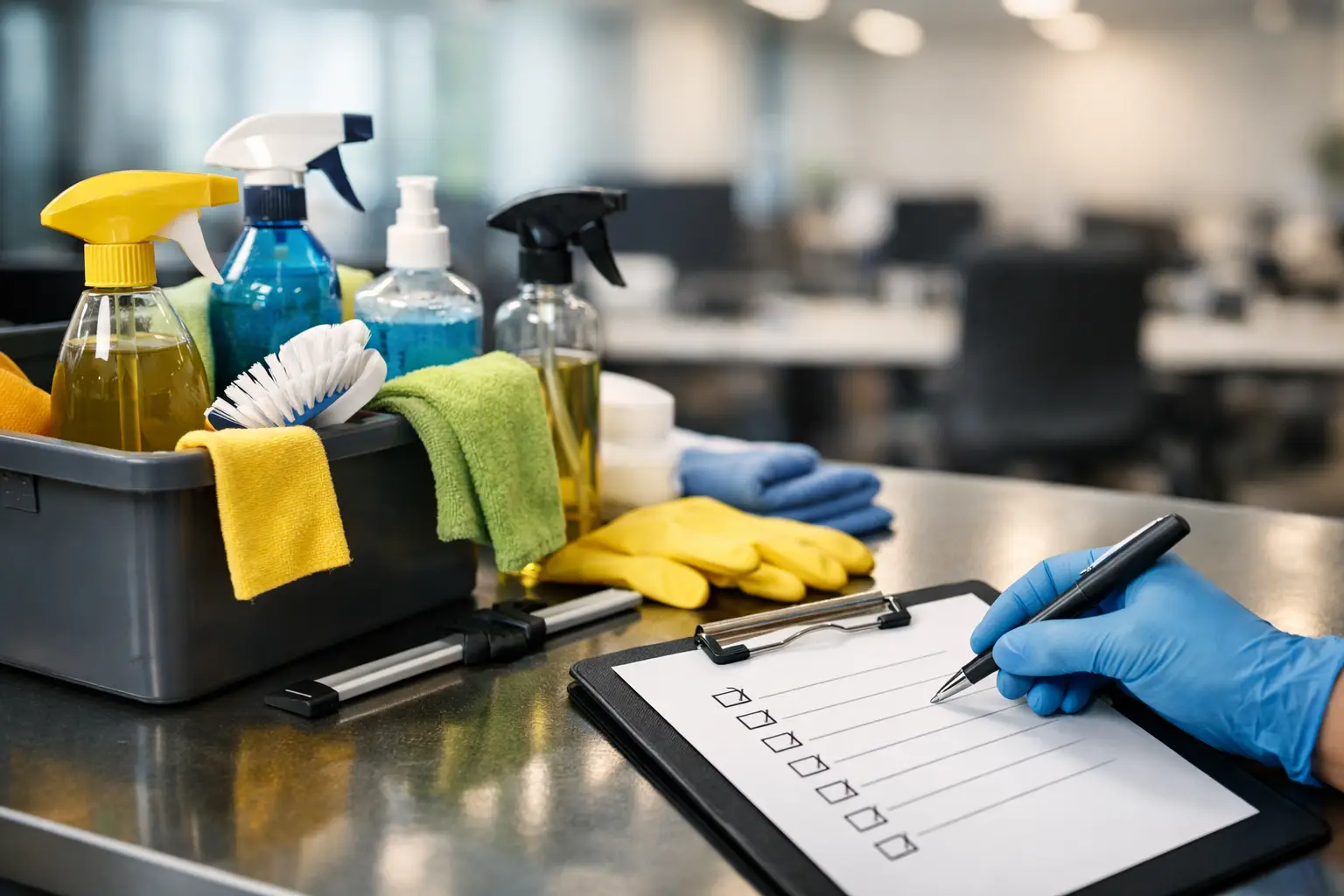
A missed restroom restock at 8 a.m. can turn into tenant complaints by noon. Smudged entry glass, full trash bins, and neglected touchpoints send the same message just as quickly – standards are slipping. A strong daily commercial cleaning checklist helps prevent that drift by turning cleaning from a reactive task into a consistent operating system.
For facility managers, office administrators, retail operators, and property teams, the real value of a checklist is not paperwork. It is control. When expectations are documented clearly, teams work faster, quality is easier to verify, and sanitation standards stay visible across shifts, locations, and high-traffic areas.
What a daily commercial cleaning checklist should actually do
A useful checklist does more than list chores. It should reflect how your space operates, where the traffic is highest, what health risks exist, and what your staff, tenants, or customers notice first. In an office, that may mean restrooms, reception areas, kitchens, and shared desks. In retail, floors, fitting rooms, entry glass, and checkout counters often need the most attention. In restaurants, the priorities shift again toward sanitation, odor control, washrooms, and food-adjacent surfaces.
That is why a generic checklist often underperforms. If every room gets the same treatment on paper, teams can miss the details that matter most in real conditions. A better approach is to build the checklist around zones, frequency, and inspection points. That creates accountability without making the process rigid.
Core zones in a daily commercial cleaning checklist
Most commercial facilities can structure daily cleaning around a few key zones. The exact tasks vary by industry, but the logic stays consistent.
Entryways and reception areas
These spaces shape first impressions and collect more soil than many people expect. Entry mats should be vacuumed or shaken out as needed, hard floors spot-mopped or fully mopped depending on traffic, and glass doors cleaned for fingerprints and smears. Reception desks, seating, and high-touch surfaces such as door handles and counter edges should be disinfected with approved products.
This is also the area where weather changes create added demands. Rain, snow, and salt can turn a once-daily floor check into a repeated task throughout the day. A checklist should allow for those operational realities instead of assuming every day is the same.
Restrooms
If one area needs zero ambiguity, it is the restroom. Toilets and urinals should be cleaned and disinfected, sinks and fixtures wiped down, mirrors polished, partitions spot-cleaned, and floors mopped with attention to corners and base areas. Soap, paper towel, and tissue dispensers need to be checked and restocked every day, and more often in high-use environments.
Odor control belongs on the checklist too. A restroom can appear clean and still create complaints if drains, waste bins, or floor edges are neglected. Good cleaning teams pay attention to both visible cleanliness and the overall condition of the space.
Workstations, offices, and meeting rooms
In offices, dust and touchpoints are the main daily concerns. Desks may be cleaned differently depending on client policy, especially where paperwork, electronics, or privacy issues are involved. Shared desks, meeting tables, chair arms, light switches, and door handles usually belong on the daily list. Floors should be vacuumed or spot-cleaned based on flooring type and use.
There is a trade-off here. Some employers want every desk fully detailed each night. Others prefer a lighter daily touch with deeper periodic cleaning to avoid disrupting work materials. The right checklist respects workflow, confidentiality, and budget while still protecting hygiene standards.
Break rooms and kitchenettes
These areas can decline quickly if they are not addressed daily. Counters, sinks, appliance exteriors, tables, cabinet pulls, and high-touch surfaces should be cleaned and disinfected. Trash and recycling should be removed, liners replaced, and floors vacuumed or mopped. If a microwave interior or refrigerator handle is constantly used, it should not be left for weekly cleaning.
Food residue is not just a cosmetic issue. It attracts pests, creates odors, and raises concerns about workplace health. A daily checklist keeps these small problems from becoming service calls.
Open floors, hallways, and common areas
These spaces usually account for the largest share of visible dirt. Carpeted areas need vacuuming, with extra attention to edges, corridors, and heavy traffic paths. Hard floors may require dust mopping, damp mopping, or machine scrubbing depending on soil load. Handrails, ledges, and touchpoints should be wiped down.
A common mistake is treating all flooring the same. Hard surface maintenance depends on finish type, slip risk, and how much debris the space takes on during the day. The checklist should match the floor, not just the room.
Trash collection and waste points
Daily trash removal sounds basic, but missed bins are one of the most visible signs of inconsistency. All receptacles should be emptied as needed, liners replaced, and bin exteriors wiped where necessary. Waste rooms or central collection points should also be inspected for spills, odor, and overflow.
In medical-adjacent, food service, or industrial settings, waste handling may involve added protocols. If that applies to your facility, the checklist should separate general waste from regulated or specialty waste tasks clearly.
How to build a checklist your team will actually follow
The best daily commercial cleaning checklist is specific enough to guide performance and simple enough to use under real working conditions. If it is too broad, quality drops. If it is too detailed, staff start bypassing it to save time.
Start by identifying every public, staff-only, and back-of-house area in the building. Then assign daily tasks to each zone based on use, risk, and visibility. High-touch disinfection, restroom sanitation, trash removal, and floor care usually form the daily baseline. From there, define what completion looks like. “Clean restroom” is vague. “Disinfect toilets, sinks, counters, partitions, mirrors, replenish supplies, mop floor, remove trash” is measurable.
It also helps to assign responsibility by shift or service window. A retail store may need opening checks, daytime touch-up service, and after-hours cleaning. A professional office may only need one evening service, while a restaurant may need both front-of-house and kitchen-adjacent checks multiple times per day. The checklist should support the operation, not interrupt it.
Why inspections matter as much as the checklist itself
A checklist without verification becomes a formality. Daily cleaning is only dependable when supervisors, site leads, or managers can confirm that tasks were completed to standard. That does not mean a lengthy audit every night. It means spot checks, documented issues, and a clear process for correcting misses before they become patterns.
This is especially important in multi-tenant buildings, customer-facing businesses, and high-volume spaces. A cleaned area that still has streaks, odors, or supply gaps is not truly complete. Quality assurance protects both appearance and hygiene.
For that reason, many businesses prefer working with a supervised, insured provider rather than relying on loosely managed labor. Consistency usually comes from training, approved products, reporting systems, and accountability at the management level. HSI Cleaning Services structures daily cleaning with that kind of operational discipline because reliability matters just as much as the task list itself.
Common problems a checklist can prevent
Daily cleaning issues rarely start with major failures. More often, standards slip through repetition. A touchpoint gets skipped because it looked clean. A floor corner is missed because furniture was moved. A supply refill is assumed rather than checked.
Over time, those small misses affect employee confidence, customer perception, and even health outcomes. Shared surfaces stay contaminated longer. Restrooms generate complaints. Entrances look neglected. In leased properties, cleaning inconsistency can also create friction between occupants and management.
A clear checklist reduces that risk because it removes guesswork. It also makes communication easier when expectations change. During flu season, for example, touchpoint disinfection may need to increase. During winter, entry floor care may need extra attention. The checklist becomes a living tool rather than a static document.
When a standard checklist is not enough
Some facilities need more than a basic daily program. Restaurants, medical-adjacent offices, industrial sites, dealerships, and post-renovation spaces all bring different cleaning pressures. In those settings, the checklist may need added steps for grease control, showroom presentation, debris management, or specialized disinfection protocols.
That is where customization matters. A law office and an auto dealership may both need daily service, but they do not need the same checklist. The goal is not to overbuild the plan. It is to align the work with the environment, traffic, and risk level.
If your current checklist feels either too generic or too hard to enforce, that is usually a sign it needs to be rebuilt around the space itself. A practical checklist should be clear, realistic, and easy to inspect. When that happens, cleaning becomes more predictable, and so does the experience your staff and customers have every day.
A clean facility does not stay clean by accident. It stays clean because someone took the time to define the standard, assign the work, and check that it was done right.

About Author

Recent Posts
Property Turnover Cleaning That Protects Move-In Dates

8 Insured Commercial Cleaning Benefits for Businesses