Professional Office Cleaning Checklist

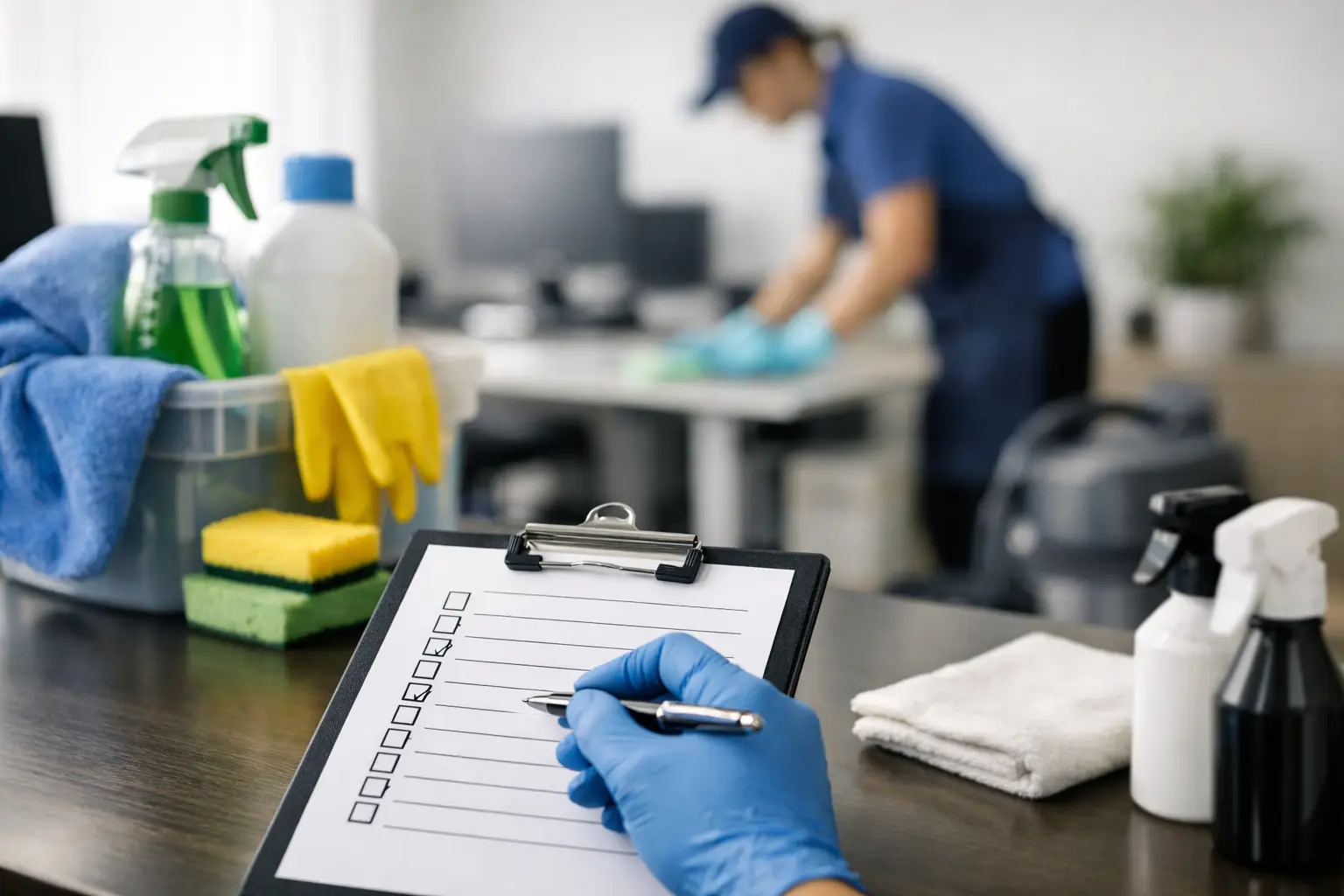
A missed restroom restock or a breakroom floor that stays sticky for two days does more than look bad. It sends a message to staff, visitors, and tenants that cleaning standards are inconsistent. A professional office cleaning checklist helps prevent that drift by turning expectations into a routine your team or cleaning provider can actually follow.
For office managers and facility leaders, the goal is not just to make a space look tidy for an hour. It is to maintain a healthy, reliable environment that supports productivity, reduces complaints, and holds up under daily traffic. The right checklist creates accountability, but it also helps you match cleaning frequency to how your office is used.
Why a professional office cleaning checklist matters
Office cleaning is easy to underestimate until something goes wrong. High-touch surfaces get overlooked, waste builds up faster than expected, washrooms run short on supplies, or dust starts showing up on vents, ledges, and shared equipment. In a busy workplace, those small misses add up quickly.
A checklist brings structure to the work. It makes standards clearer for in-house staff, outsourced crews, site supervisors, and management. It also helps separate appearance cleaning from health-focused sanitation. Those are not always the same thing. A lobby can look polished while phones, door handles, and kitchen counters still need attention.
There is also a practical business case. Consistent cleaning supports employee wellbeing, helps protect your professional image, and can extend the life of flooring, carpets, furniture, and fixtures. When cleaning is organized by frequency instead of handled reactively, you get fewer surprises and better long-term results.
What to include in a professional office cleaning checklist
A useful checklist should reflect the real conditions of the property. A small private office with limited foot traffic does not need the same schedule as a multi-floor workplace with shared washrooms, lunchrooms, reception seating, meeting spaces, and frequent client visits.
That is why the strongest checklists are built in layers. Daily tasks cover hygiene and presentation. Weekly tasks handle buildup. Monthly and periodic tasks address the deeper work that protects the condition of the space over time.
Daily office cleaning tasks
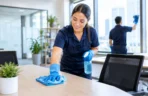
Daily cleaning should focus on visible cleanliness, touchpoint sanitation, odor control, and supply management. In most offices, this starts with entrances, reception, workstations, kitchens, and washrooms.
Reception areas should be vacuumed or mopped as needed, especially around entry points where dirt and moisture come in first. Glass entry doors and interior glass panels often need spot cleaning every day because fingerprints are one of the first things people notice. Front desks, chairs, and waiting areas should be wiped down and kept free of dust and debris.
Open office areas and private offices typically need garbage removed, liners replaced when necessary, and floors vacuumed or spot cleaned. Desks can be included, but this depends on your workplace policy. Some companies prefer cleaners to avoid personal work surfaces unless specifically requested. Shared desks, counters, and collaborative tables, however, should be disinfected routinely.
Breakrooms and kitchens need close attention because they affect both hygiene and morale. Counters, sinks, appliance exteriors, tables, and cabinet fronts should be cleaned daily. Floors should be mopped, especially near coffee stations, microwaves, and fridges where spills tend to collect. Waste and recycling should be emptied before odors become a problem.
Washrooms are non-negotiable daily priority zones. Toilets, urinals, sinks, faucets, dispensers, partitions, mirrors, and touchpoints should be cleaned and disinfected. Floors should be mopped with appropriate products, and all consumables should be restocked. A washroom that looks acceptable at 8 a.m. can fall below standard by midday in a busy office, so some sites need porter support or more than one service visit.
High-touch points across the office deserve their own attention. Door handles, light switches, elevator buttons, handrails, shared printers, copier panels, and meeting room controls should be disinfected consistently. This is one of the clearest places where health-focused cleaning differs from basic janitorial appearance work.
Weekly cleaning tasks
Weekly tasks take care of the buildup that daily service may not fully address. These jobs keep the office from slowly slipping below standard even when the basics are being handled.
This usually includes more detailed dusting of horizontal surfaces, baseboards, ledges, shelves, windowsills, and accessible vents. Interior glass can be cleaned more thoroughly, not just spot treated. Upholstered seating in common areas may need vacuuming, and hard floor edges often need extra attention where routine mopping misses corners and perimeter soil.
Meeting rooms should be reviewed beyond simple table wiping. Chairs, credenzas, presentation equipment areas, and glass partitions often collect fingerprints and dust over the week. In shared spaces, this matters because those rooms are used by multiple teams and often by clients.
Kitchen appliances also need deeper weekly work. Microwaves should be cleaned inside and out, refrigerator exteriors wiped down, and splash-prone areas around sinks and coffee stations addressed carefully. Depending on office habits, fridge interior cleaning may need a set day and clear client coordination so old food is removed properly.
Monthly and periodic cleaning tasks
A professional office cleaning checklist should also include less frequent tasks that protect the building and improve the overall environment. These are often the first items skipped when there is no formal schedule.
Monthly work may include detailed dusting of vents, high ledges, door frames, blinds, and low-reach light fixtures. Floor care may involve machine scrubbing, spray buffing, or more intensive treatment depending on the surface. Carpets may need spot extraction in traffic lanes or scheduled deep cleaning in areas that hold soil and moisture.
Periodic tasks can also include wall spot cleaning, partition detailing, interior window cleaning, deep washroom descaling, and upholstery cleaning. If your office has seasonal weather exposure, entry mats and surrounding flooring may need increased attention during winter and rainy periods. In many GTA workplaces, that seasonal adjustment makes a major difference in keeping lobbies and corridors presentable.
How to tailor the checklist to your office
A checklist should not be copied from a generic template and left untouched. The right version depends on traffic volume, layout, industry, hours of operation, and how the space is actually used.
A professional services office with mostly assigned desks may prioritize reception, boardrooms, executive offices, and washrooms. A customer-facing sales office may need more frequent glass cleaning and floor care. A medical-adjacent admin office may require a stronger focus on touchpoint disinfection. Hybrid workplaces create another variable because some zones sit empty while shared areas carry more concentrated use.
Timing matters too. After-hours cleaning is common, but some facilities benefit from daytime coverage for washrooms, entrances, and common areas. If your team hosts frequent meetings or receives visitors throughout the day, a once-nightly clean may not be enough to maintain standards.
What decision-makers should look for in checklist execution
A checklist is only useful if it is followed consistently. That sounds obvious, but many service issues come from poor execution rather than poor planning.
Look for clear task ownership, realistic service frequencies, and site supervision. If a vendor promises everything every visit, the checklist may look impressive but fail in practice. Strong cleaning programs are specific about what gets done daily, what rotates weekly, and what requires separate scheduling.
You should also expect the products and methods to match the environment. Health-conscious cleaning means using appropriate, approved products and applying them correctly, especially in washrooms, kitchens, and shared touchpoint areas. More chemical is not always better. The right process matters just as much as the product.
Communication is another part of execution. If your office changes hours, adds staff, renovates a section, or begins using more shared workstations, the checklist should change too. Reliable cleaning support is flexible without becoming inconsistent.
Common checklist gaps that cause complaints
Most office cleaning complaints come from a short list of repeat issues. Washrooms are cleaned but not stocked. Floors are vacuumed but corners are ignored. Garbage is removed but recycling overflows. Kitchen counters are wiped while appliance handles and sink fixtures are missed. Front glass gets attention only when it is visibly dirty, which means it is usually already past the point where visitors notice.
Another common gap is assuming all desks should be cleaned the same way. In reality, workstation cleaning often needs client direction because of personal items, paperwork, and electronics. Shared surfaces should be clearly defined so there is no confusion between what the cleaner handles and what employees are expected to manage.
This is where a customized service plan makes a difference. HSI Cleaning Services approaches office cleaning with that level of structure because consistency comes from clear scope, trained teams, and active oversight, not guesswork.
A checklist should support standards, not just tasks
The best professional office cleaning checklist is not the longest one. It is the one that matches your office, supports health and presentation, and gets completed consistently. When cleaning standards are clear, your workplace feels more organized, more professional, and easier to manage day to day.
If your current routine feels reactive, that is usually a sign the checklist needs to be refined. A cleaner office starts with clearer expectations, and better expectations lead to healthier workspaces that hold their standard week after week.

About Author

Recent Posts
Property Turnover Cleaning That Protects Move-In Dates
8 Insured Commercial Cleaning Benefits for Businesses