Professional Office Cleaning Materials List

When an office starts to look dusty, streaked, or poorly stocked, the problem is rarely effort alone. More often, it comes down to having the wrong supplies on hand or using one product for every surface. A strong professional office cleaning materials list helps prevent that. It supports cleaner workstations, healthier shared spaces, and a more consistent standard across the entire facility.
For office managers and facility teams, the goal is not just to buy more cleaning products. It is to choose materials that match the space, the traffic level, and the health expectations of employees and visitors. A small admin office needs a different setup than a multi-floor corporate suite, medical-adjacent office, or shared commercial property.
What should be on a professional office cleaning materials list?
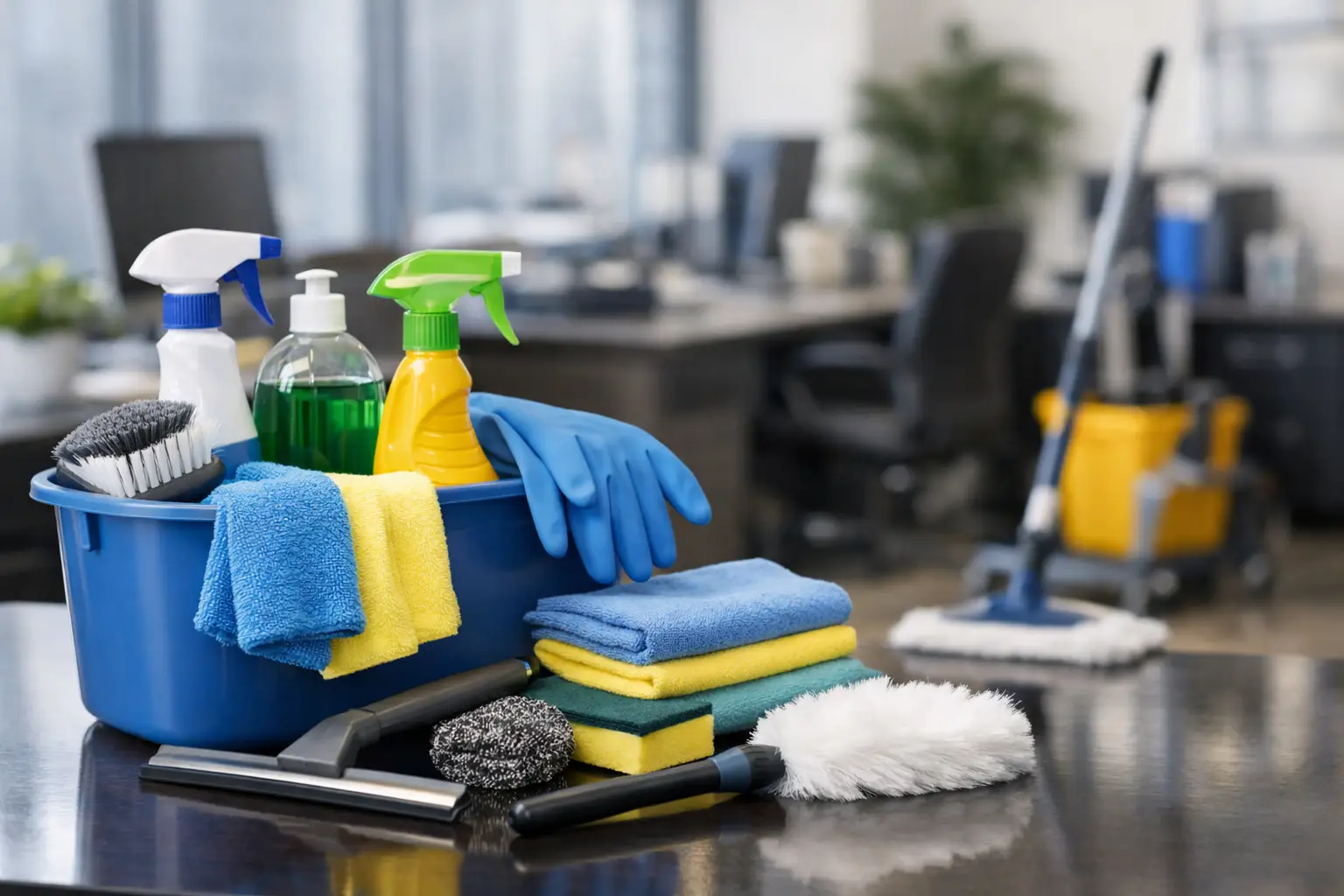
A reliable office cleaning setup starts with core categories, not random products. Most workplaces need surface cleaners, disinfectants, restroom supplies, floor care materials, glass cleaning products, trash liners, microfiber cloths, and personal protective equipment. Beyond that, the right list depends on how often the office is cleaned, how many people use the space, and whether there are kitchens, conference rooms, reception areas, or high-touch shared equipment.
A common mistake is focusing only on visible dirt. In practice, professional results come from covering both appearance and hygiene. Desks, door handles, break room counters, elevator buttons, faucet handles, and shared electronics all need different levels of attention.
Surface cleaning materials that do the daily work
General-purpose cleaners are the backbone of most office cleaning routines. They are used on desks, counters, tables, partitions, and other washable surfaces. The best choice is usually a product that cleans effectively without leaving heavy residue or overpowering fragrance. In office environments, that matters because residues attract more dust and strong scents can be a concern for staff sensitivity.
Disinfectants belong in a separate category. Cleaning and disinfecting are not the same task. A surface cleaner removes dirt and oils, while a disinfectant is intended to reduce bacteria and viruses on appropriate surfaces. In high-touch areas, both steps may be necessary. Product selection should also account for contact time. If a disinfectant requires the surface to stay wet for several minutes, staff need to know that, or the product may be used incorrectly.
Glass cleaner is another standard item, but quality matters. Cheap formulas can leave haze on interior glass, mirrored surfaces, and front-entry doors. In client-facing offices, that creates a poor impression quickly. A streak-free product paired with clean microfiber cloths usually performs better than paper towels.
Specialty spot removers can also be worth keeping in the supply cabinet. Coffee drips, ink marks, adhesive residue, and food stains show up regularly in office settings. These do not justify a whole cart of niche chemicals, but a few targeted products can save time and protect finishes.
Floor care materials for carpet, tile, and hard surfaces
Flooring usually takes the most visible wear in an office, especially near entrances, hallways, break rooms, and restrooms. A professional office cleaning materials list should reflect the actual floor types in the building.
For carpeted offices, vacuum cleaners with proper filtration are essential. Bags, belts, and replacement filters should be considered part of the materials list, not afterthoughts. Without them, even a good vacuum loses performance. Spot carpet cleaner is also useful for handling spills before they turn into permanent stains.
For tile, vinyl, laminate, or sealed hard floors, a neutral floor cleaner is often the safest starting point. Harsh chemicals can dull finishes over time. Mops, buckets, wringers, and microfiber flat mop systems all have a place, but the right option depends on the size of the facility and the frequency of cleaning. In larger offices, flat mop systems can improve speed and reduce cross-contamination when used with fresh pads.
Entry matting should not be overlooked. While not always listed as a cleaning material, mats are one of the most effective ways to reduce dirt and moisture tracked into the building. That means less wear on floors and less labor required throughout the day.
Restroom cleaning supplies require a higher standard
Restrooms are where cleaning quality is judged most quickly. They also carry the highest sanitation expectations. This part of the materials list needs to be complete and consistently stocked.
Toilet bowl cleaner, restroom disinfectant, descaling products for mineral buildup, and non-abrasive cleaners for partitions, sinks, and dispensers are all standard. Using the wrong product here can damage fixtures or leave behind residue that makes surfaces look dirty even after cleaning.
Restroom tools matter just as much as chemicals. Separate color-coded cloths, toilet brushes, gloves, and mop heads help reduce the risk of cross-use between restrooms and general office areas. That separation is a professional standard, not an extra precaution.
Consumables also need to be part of planning. Paper towels, toilet tissue, hand soap, hand sanitizer, feminine hygiene disposal liners, and air freshening products all affect user experience. A restroom may be technically clean, but if dispensers are empty, the space still feels poorly maintained.
Break room and kitchen cleaning materials
Office kitchens create a different kind of mess. Grease film, food spills, fingerprints, crumbs, and sink residue build up quickly, especially in shared spaces. These areas need degreasers that are safe for workplace use, food-area surface cleaners, disinfectants for high-touch points, and odor-control products.
Dish soap, scrub pads, sink cleanser, and trash can liners are basic but necessary. Depending on the office, appliance-safe cleaners for microwaves, refrigerators, and coffee stations may also be useful. If the space includes stainless steel finishes, stainless steel cleaner can improve appearance, but only when used correctly. Too much product can leave oily streaks and attract fingerprints.
The trade-off in break rooms is balancing food-safe cleaning with strong sanitation. Products should be effective without creating chemical residue concerns on counters and tables where employees eat.
Tools and accessories that improve cleaning quality
Cleaning materials are not just liquids and sprays. The tools behind them often make the difference between a rushed result and a professional one.
Microfiber cloths are one of the most important items to stock. They trap dust and soil better than many traditional cloths and can be assigned by area through color coding. Dusters with extendable handles help reach vents, ledges, and high surfaces. Spray bottles, labeled dilution bottles, scrub brushes, squeegees, and warning signs for wet floors all support safer and more efficient work.
Trash collection supplies are also part of the core setup. Different liner sizes, recycling bags, and durable waste bins help teams move through an office without interruption. It sounds basic, but running out of the right liner size during a shift slows down service and creates inconsistency.
PPE and safety items belong on the list too
Any professional office cleaning materials list should include protective equipment. Gloves are standard, but eye protection, masks where needed, and aprons may also be appropriate depending on the chemicals used and the tasks performed.
Safety data sheets, labeled containers, and secure storage are operational essentials. So are dilution controls if concentrates are used. Concentrated chemicals can reduce cost and storage space, but only if staff are trained and measurements stay accurate. Otherwise, performance and safety both suffer.
Health-focused workplaces should also review whether products align with current sanitation expectations and regulatory guidance. Many businesses prefer approved disinfectants and clearly documented product practices because they support employee confidence as much as cleanliness.
How to build the right materials list for your office
The best professional office cleaning materials list is specific to the property. Start by reviewing the building layout, surface types, traffic patterns, and service frequency. A five-day cleaning schedule requires different stock levels than two visits per week. So does an office with frequent client visits compared with a back-office administrative space.
Next, separate materials into daily-use items and periodic deep-clean items. Daily products include surface cleaner, disinfectant, restroom supplies, liners, and microfiber cloths. Less frequent items may include carpet spot treatment, floor finish products, scale removers, or upholstery cleaners.
Then look at storage and supervision. Overstocking chemicals in multiple closets can create waste and safety issues. Centralized inventory with controlled restocking is often the better system, especially in larger facilities.
For many businesses, outsourcing the work brings another advantage. A professional cleaning partner can supply materials, standardize product use, and adjust the list as seasonal needs change. That matters during flu season, post-renovation cleanup, or periods of heavier occupancy. At HSI Cleaning Services, that kind of planning is part of what keeps cleaning programs consistent instead of reactive.
A clean office does not happen because a few products sit in a janitorial closet. It happens when the right materials are selected, stocked, and used with discipline. If your current setup feels pieced together, that is usually the best place to improve first.

About Author

Recent Posts
Property Turnover Cleaning That Protects Move-In Dates
8 Insured Commercial Cleaning Benefits for Businesses