Office Cleaning vs Janitorial: What’s Different?

A missed trash pickup, fingerprints on the lobby glass, and an empty soap dispenser can change how employees and visitors view an entire workplace. That is why the office cleaning vs janitorial question matters more than it may first appear. The terms are often used interchangeably, but they can describe different service scopes, schedules, and levels of responsibility.
For a business, the right choice is not about finding the label that sounds best. It is about matching a cleaning plan to how your facility operates, what health standards it must maintain, and what people see every day. A small professional office may need targeted service several times a week. A busy building with shared restrooms, multiple tenants, or extended hours may need a dedicated daily janitorial program.
Office Cleaning vs Janitorial: The Core Difference
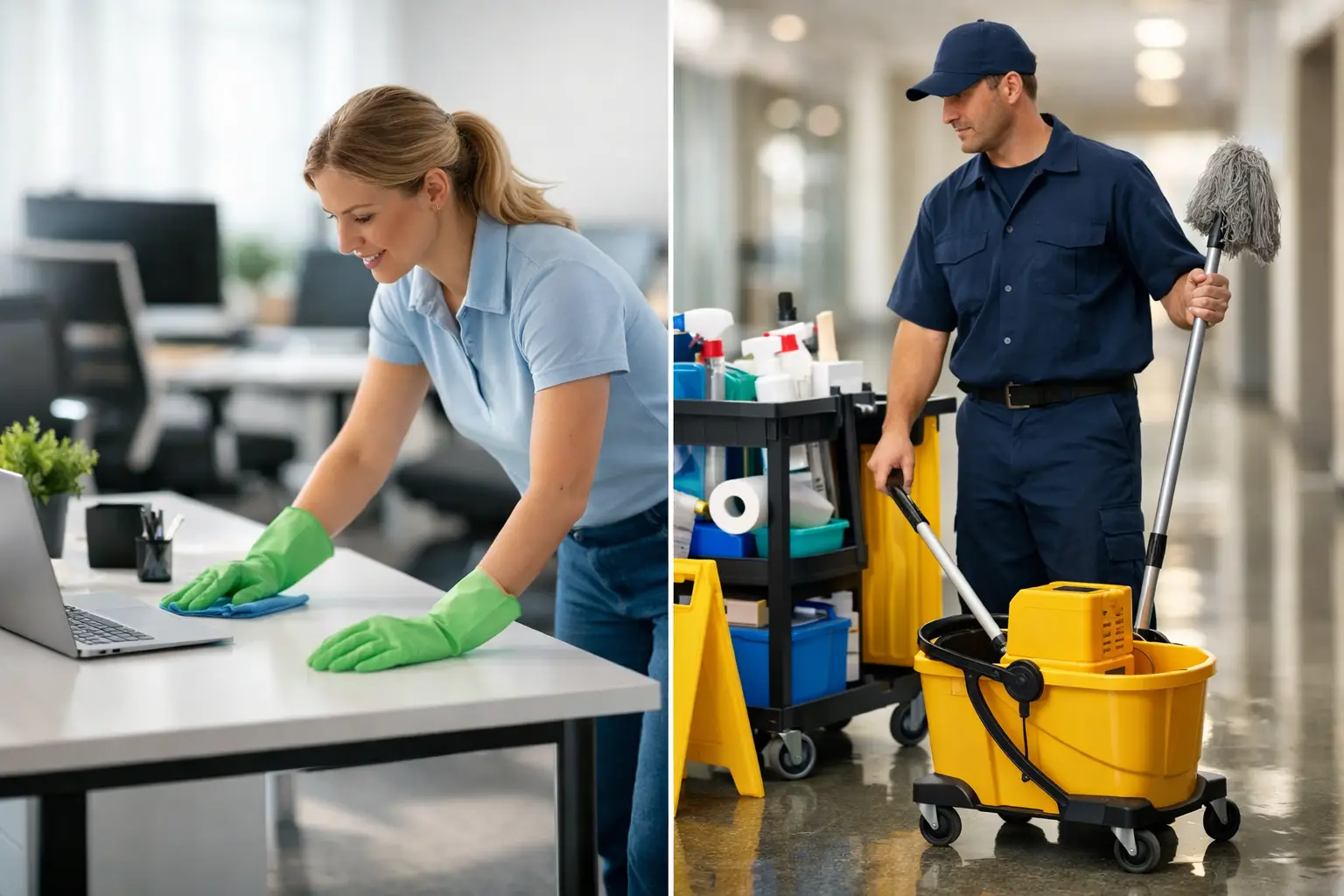
Office cleaning usually refers to cleaning services designed around office environments. The work focuses on keeping desks, meeting rooms, kitchens, restrooms, reception areas, and common spaces clean, sanitary, and presentable. It may be scheduled daily, several times per week, weekly, or as a periodic deep cleaning service.
Janitorial service is typically broader and more continuous. A janitorial team may take responsibility for the day-to-day upkeep of a facility, including routine cleaning, waste removal, restroom restocking, floor care, touchpoint disinfection, and response to immediate needs. In larger commercial properties, janitorial services can also include porter duties during business hours.
The distinction is not always fixed. Some providers use “office cleaning” as a general term for all workplace cleaning, while others reserve “janitorial” for recurring, higher-frequency facility maintenance. The practical question is this: do you need a cleaning crew to complete defined visits, or an ongoing partner to maintain your building throughout the week?
What Office Cleaning Usually Includes
A professional office cleaning plan is built around the spaces employees and guests use most. Regular tasks often include vacuuming carpets, mopping hard floors, emptying waste bins, cleaning and disinfecting restrooms, wiping kitchen surfaces, sanitizing high-touch points, and cleaning reception areas.
Depending on the plan, the service may also cover interior glass, dusting furniture and ledges, cleaning break room appliances, and detailed attention to conference rooms before important meetings. The schedule can be customized around your hours, so cleaning occurs after closing, before staff arrive, or at another low-disruption time.
Office cleaning is a strong fit when your needs are predictable and your building does not require constant attention during the day. For example, a law firm with 25 employees may need evening cleaning three times per week, plus occasional carpet cleaning and quarterly deep cleaning. That arrangement keeps the office professional without paying for a full daily onsite presence.
Health and presentation go together
Office cleaning is not only cosmetic. Shared keyboards, door handles, elevator buttons, coffee stations, and restroom fixtures can carry contaminants from one person to the next. A health-focused cleaning plan prioritizes high-touch surfaces and uses appropriate products and procedures for the facility.
At the same time, presentation has a business impact. Clean floors, odor-free restrooms, and orderly common areas help staff feel respected and give clients confidence before a conversation even begins.
What Janitorial Services Usually Include
Janitorial services are designed for facilities that need consistent, repeatable care at a wider operational level. The basic tasks may resemble office cleaning, but the service model is usually more frequent and comprehensive.
A janitorial contract may include daily trash and recycling removal, restroom cleaning and supply replenishment, floor maintenance, lobby upkeep, touchpoint disinfection, kitchen cleaning, and regular inspections. The provider may also handle spot-cleaning requests, spills, weather-related entryway maintenance, and other issues that cannot wait until the next scheduled visit.
This approach is common in multi-tenant offices, medical-adjacent facilities, retail locations, dealerships, educational settings, warehouses, and buildings with heavy public traffic. When hundreds of people use a restroom, lobby, or break room each day, a weekly cleaning visit is rarely enough.
Day porter service can be part of janitorial care
Some facilities benefit from a day porter, particularly when customer experience is central to the operation. A day porter can monitor restrooms, remove visible litter, clean spills, refresh entryways, and address concerns while the building is open.
This is especially useful for dealerships, retail spaces, restaurants, and high-traffic commercial properties. It does not always mean a full-time employee is required. The right coverage may be a few hours during peak periods, depending on foot traffic and the condition standards your business needs to maintain.
How to Choose the Right Service Level
Start with your facility’s actual demands rather than a generic checklist. Square footage matters, but it is not the only factor. A compact office with 80 employees and a shared kitchen can require more frequent care than a larger office with a small, hybrid team.
Consider how often people use your restrooms and break rooms, whether customers visit your location, how much floor traffic you receive, and whether your operation creates specialized cleaning needs. Restaurants, for example, need more intensive sanitation and grease-focused cleaning than a standard office. Industrial settings may require trained teams, specific safety procedures, and equipment suited to dust, debris, or production environments.
Your operating hours also matter. If staff work late, host early meetings, or run shifts around the clock, your provider must be able to clean without interrupting the business. Flexible scheduling and responsive communication are as valuable as the task list itself.
Cost: Why the Lowest Quote Can Create Problems
Office cleaning and janitorial pricing are commonly based on facility size, cleaning frequency, service scope, building layout, occupancy, and special requirements. A straightforward office cleaning program may cost less because it involves fewer visits and a defined set of tasks. A janitorial program can cost more because it requires higher frequency, supply management, closer supervision, and faster response.
The lowest quote may omit work you assume is included. For instance, a proposal may cover emptying trash but not replacing restroom supplies, cleaning interior glass, treating carpet stains, or addressing spills between scheduled visits. It may also rely on limited labor hours that leave teams rushing through the building.
Ask for a clear scope of work. It should identify the areas to be cleaned, the frequency of each task, who provides consumables, how quality checks are handled, and what happens when an urgent issue arises. A transparent quote makes it easier to compare providers fairly.
Questions to Ask Before You Hire
A dependable cleaning partner should be able to explain how it protects your workplace, people, and property. Ask whether the company is bonded and insured, how team members are trained and supervised, and what products are used in your facility. Health Canada-approved products and clear disinfection procedures can support a healthier environment without creating unnecessary disruption for employees or visitors.
You should also ask how the provider manages consistency. Is there a site checklist? Who inspects the work? Is there a direct contact for concerns? A cleaning plan only works when standards are maintained after the first week, not just during the initial walkthrough.
For businesses with changing needs, ask about flexibility. Seasonal traffic, tenant turnover, renovations, events, and unexpected staff absences can all change your requirements. The best provider can adjust the service plan without forcing you into a one-size-fits-all arrangement.
When You May Need Both
Many businesses do not have to choose one term over the other. They need routine office cleaning as the foundation and janitorial-level support in specific areas or periods. A property manager may arrange nightly cleaning for tenant spaces while using daytime janitorial coverage for lobbies and restrooms. A corporate office may schedule regular cleaning but add deep cleaning, carpet care, or post-renovation service when needed.
HSI Cleaning Services builds plans around those practical realities, with service levels that can support offices, commercial properties, retail operations, restaurants, dealerships, and industrial facilities. The goal is not to oversell cleaning hours. It is to create a dependable standard that fits your traffic, schedule, and workplace health priorities.
A clean workplace should not depend on reminders, last-minute calls, or a rushed visit before an important client arrives. Choose the service scope that keeps your facility ready for the people who rely on it every day.

About Author

Recent Posts

Property Turnover Cleaning That Protects Move-In Dates

8 Insured Commercial Cleaning Benefits for Businesses