

Day Cleaning vs Night Cleaning for Business

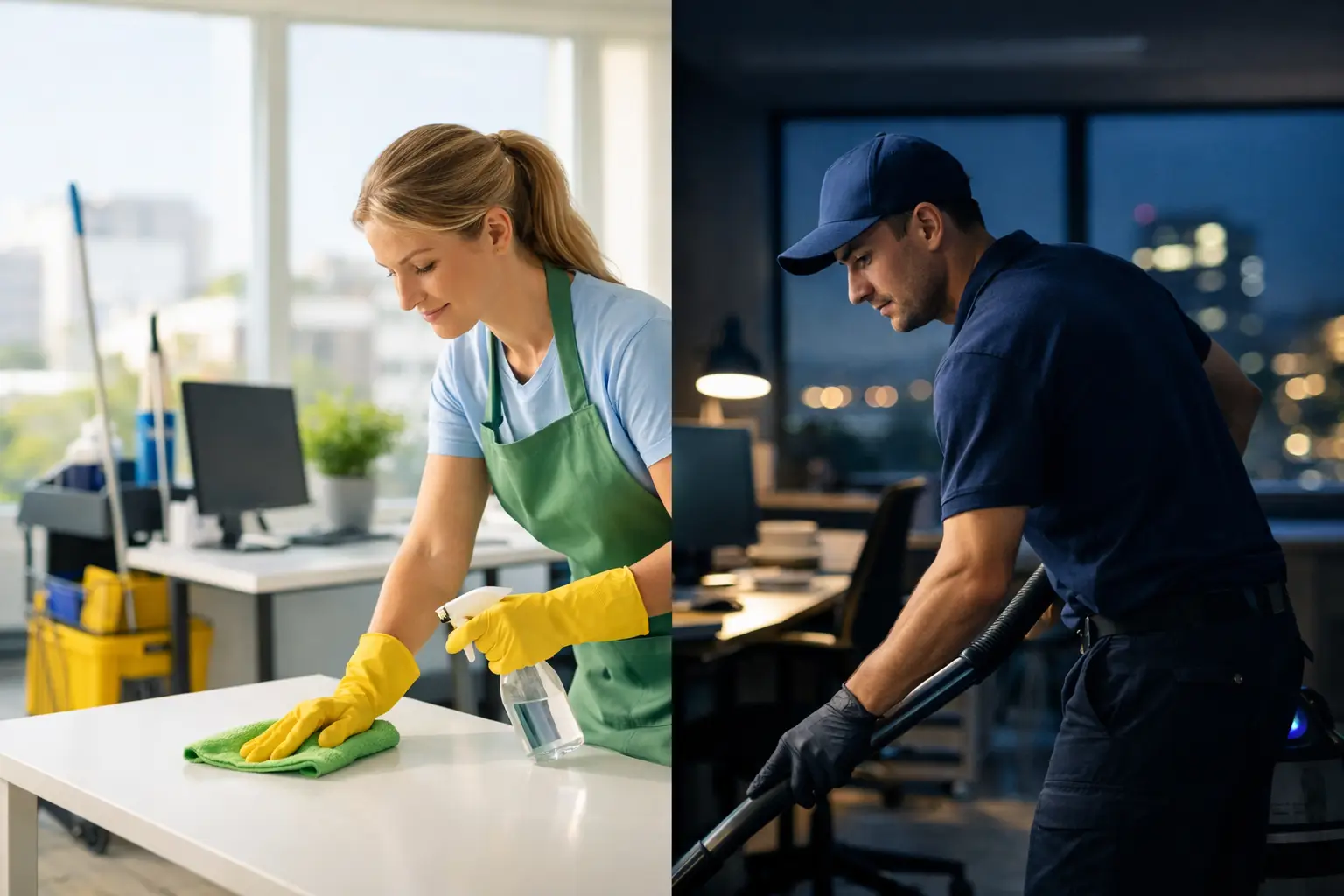
A cleaning schedule is more than a line item on a facilities checklist. It affects how employees work, how customers experience your space, and how quickly your team can respond to spills, odors, and other hygiene concerns. When weighing day cleaning vs night cleaning, the best choice is rarely about convenience alone. It is about matching cleaning activity to the way your business operates.
For a busy office, retail store, restaurant, dealership, or managed property, the right schedule protects your presentation without disrupting the people who rely on the space. Some facilities benefit from visible daytime service. Others need the uninterrupted access that comes after closing. Many need a combination of both.
What Day Cleaning Looks Like
Day cleaning takes place while your business is open or while staff are actively using the building. A daytime cleaning team may handle restrooms, entryways, waste removal, touchpoint disinfection, spill response, and other tasks that cannot wait until the end of the day.
This model is particularly useful in high-traffic environments. A retail entrance can quickly collect slush and salt during winter weather. Restaurant restrooms require frequent attention during service hours. In an office, a coffee spill in a meeting room or a full waste bin near a common area can create an immediate problem. Day cleaning gives your facility a trained team that can address these issues before they affect employees or visitors.
Visible service can also reinforce confidence. Customers and tenants often notice a clean lobby, fresh restroom, or orderly sales floor. When cleaning is performed professionally and with care, it communicates that your organization takes health, safety, and customer experience seriously.
Benefits of daytime service
The strongest advantage is responsiveness. Instead of leaving a mess, odor, or sanitation concern for the overnight crew, day porters can maintain the space continuously. This is valuable for facilities with frequent visitors, extended business hours, or shared common areas.
Day cleaning can also reduce pressure on the nighttime shift. Routine touch-ups completed throughout the day allow deeper work to be more focused and efficient later. For organizations that need a consistently polished appearance, that ongoing attention can make a meaningful difference.
There are trade-offs. Vacuums, carts, floor equipment, and cleaning activity can interrupt conversations or customer movement if the work is not carefully planned. Professional cleaners should use clear safety signage, work around peak periods, and choose low-disruption methods whenever possible. Scheduling matters as much as the task list.
What Night Cleaning Looks Like
Night cleaning is completed after employees, customers, and visitors have left. It is the traditional choice for many offices, schools, dealerships, and commercial facilities because crews can access workstations, floors, restrooms, and common areas without working around daily traffic.
With fewer people in the building, a cleaning team can complete more involved tasks efficiently. This may include vacuuming or mopping large floor areas, detailed restroom cleaning, trash removal, dusting, carpet care, and disinfecting high-touch surfaces. The facility is then ready for the next business day.
For businesses where quiet, privacy, or uninterrupted service is essential, night cleaning is often the practical answer. A financial office may not want cleaning activity near client meetings. A dealership may prefer its showroom floors serviced when customers are gone. A restaurant may need detailed kitchen and dining-area cleaning after the final guest leaves.
Benefits of after-hours cleaning
Night cleaning minimizes disruption to employees and customers. Staff can focus on their workday without equipment moving through their area, and crews have more room to complete their responsibilities thoroughly.
It can also support deeper routine cleaning. Floors can be cleaned while they are free of foot traffic, and crews can reach spaces that are occupied during the day. For facilities with standard business hours and a stable daily routine, this can be a cost-effective approach.
However, an overnight-only plan does not solve problems that occur at 10 a.m. A restroom can become untidy by midday. A spill can create a slip hazard. Entryway debris can accumulate rapidly during bad weather. If your facility sees high daytime traffic, relying only on night cleaning may leave visible gaps in maintenance.
Day Cleaning vs Night Cleaning: The Factors That Matter
The right schedule depends on your building, your visitors, and the type of work happening inside. Start by looking beyond square footage. A small but busy café may need more daytime attention than a larger office with limited foot traffic.
Foot traffic is the first consideration. Spaces with a steady flow of customers, patients, tenants, or employees often need daytime restroom checks, waste removal, and touchpoint cleaning. Retail stores, restaurants, public-facing offices, and multi-tenant properties commonly benefit from a day porter or scheduled daytime service.
Your operating hours matter too. If your team works late, runs shifts, or serves customers well into the evening, there may be little usable time for traditional night cleaning. In that case, early-morning service, daytime cleaning during slower periods, or a split schedule may be more realistic.
Security and access should be considered carefully. After-hours cleaning requires a dependable provider with trained, supervised, bonded, and insured staff. Clear access procedures, alarm protocols, key control, and communication expectations help protect your property and reduce risk. If sensitive records, equipment, or restricted areas are present, establish which spaces can be serviced and when.
Finally, consider the type of cleaning required. Daily maintenance is different from periodic deep cleaning, carpet extraction, post-renovation work, or industrial cleaning. A schedule should allow enough time for each task to be completed properly, not simply fit into the cheapest available window.
When a Hybrid Cleaning Plan Works Best
For many businesses, choosing between day and night cleaning is not an either-or decision. A hybrid plan can provide the best balance of ongoing hygiene and detailed after-hours care.
A typical approach may include daytime attention to restrooms, entryways, break rooms, waste bins, spills, and high-touch surfaces. The evening crew can then perform full floor care, detailed cleaning, dusting, and sanitizing after the building is quiet. This model helps keep the facility presentable throughout the day while preserving uninterrupted time for more extensive work.
Hybrid scheduling is especially effective for restaurants, busy retail locations, medical-adjacent offices, dealerships, and large commercial properties. It can also help property managers maintain common areas while accommodating the different hours and expectations of multiple tenants.
The key is to avoid duplicated work. A professional cleaning plan should define exactly what the daytime team handles, what the nighttime team completes, and how urgent issues are communicated. Clear scopes, inspection routines, and supervisor oversight keep the service consistent.
Build a Schedule Around Your Real Operations
The best cleaning schedule is based on observation, not assumptions. Walk your facility at different times of day. Look at restroom conditions before lunch, entryways during peak arrivals, break rooms after shifts, and customer-facing areas near closing. Those details reveal where cleaning support is actually needed.
Ask employees and front-line managers where standards slip during the day. Review customer complaints, safety incidents, and recurring maintenance concerns. If staff are regularly stepping away from their work to wipe tables, empty bins, or restock restrooms, your cleaning plan may not be aligned with operational demand.
A reliable provider should be prepared to customize service frequency, cleaning windows, task lists, and quality checks around your facility. HSI Cleaning Services helps businesses create practical schedules that support healthier workplaces, professional presentation, and dependable daily operations.
Your cleaning schedule should make the workday easier, not create another operational issue to manage. Whether that means a quiet overnight crew, a responsive daytime porter, or both, choose the plan that keeps your space clean when people need it most.

About Author

Recent Posts

Property Turnover Cleaning That Protects Move-In Dates

8 Insured Commercial Cleaning Benefits for Businesses