Deep Cleaning vs Regular Cleaning Explained

A lobby can look polished at 9 a.m. and still carry the buildup of months: dust behind furniture, residue on high-touch surfaces, stains in carpet traffic lanes, and grime along baseboards. That is where the difference between deep cleaning vs regular cleaning becomes clear. Both services protect your workplace, but they solve different problems.
For offices, retail stores, restaurants, dealerships, industrial facilities, and managed properties, choosing the right cleaning level is not just about appearance. It affects employee wellness, customer confidence, odors, wear on finishes, and the condition of your space over time.
Deep Cleaning vs Regular Cleaning: The Operational Difference
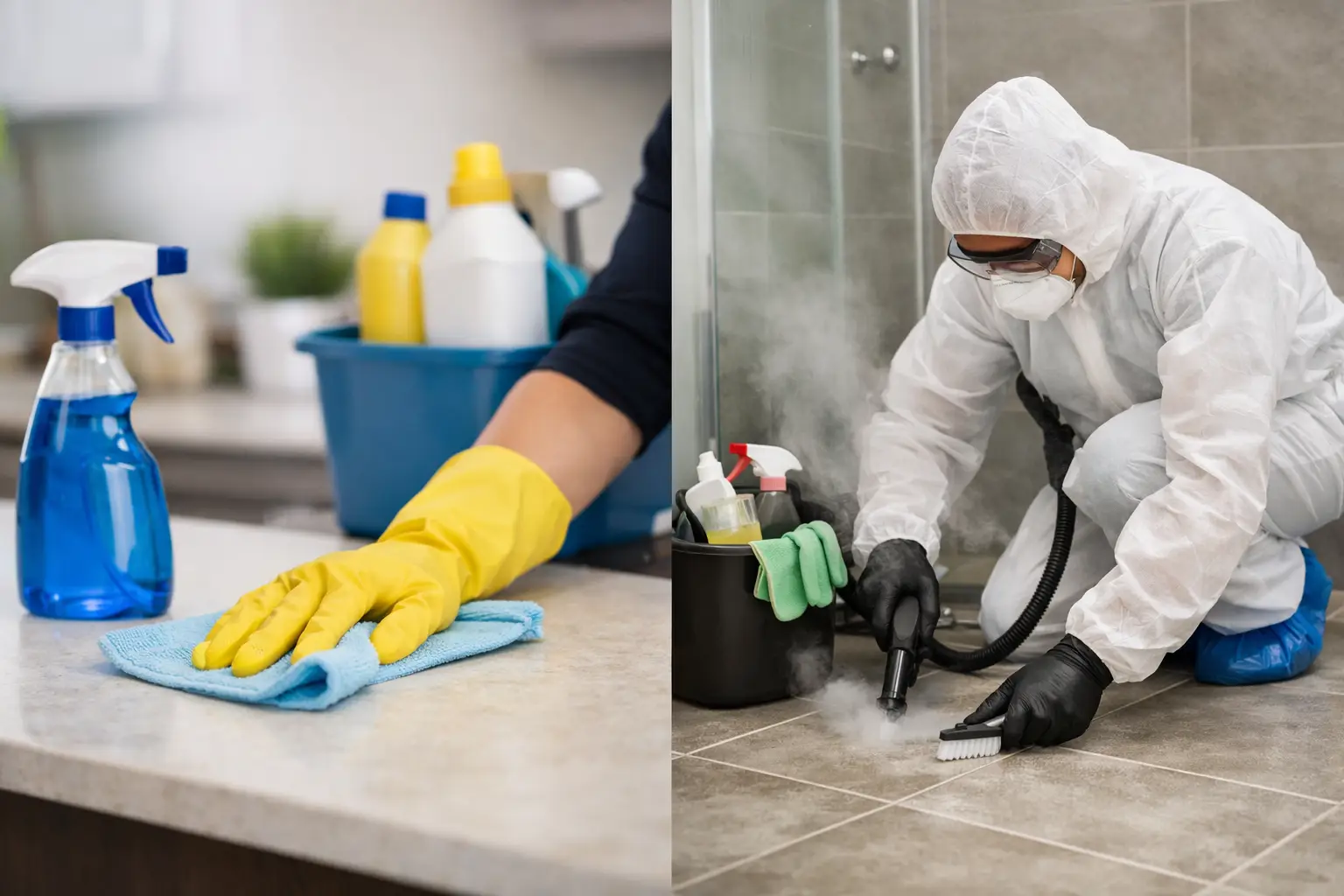
Regular cleaning is the repeatable work that keeps a facility presentable and sanitary from day to day. It focuses on the areas people see, touch, and use most often. Depending on your site and schedule, this may happen daily, several times per week, or after business hours.
A regular service typically includes cleaning and disinfecting restrooms, emptying waste, vacuuming or mopping floors, wiping accessible surfaces, cleaning entry glass, and maintaining break rooms. In a restaurant, it may include dining areas, restrooms, floors, and routine kitchen-adjacent tasks. In an office, the priority may be workstations, common areas, washrooms, and garbage removal.
Deep cleaning is more detailed, more labor-intensive, and less frequent. It targets accumulated soil in areas that routine service may not reach during a standard visit. The goal is to reset the environment, improve sanitation, and preserve the condition of surfaces and furnishings.
The distinction is not that regular cleaning is less important. It is the foundation. Deep cleaning works best when it supports a reliable routine rather than replaces one.
What Regular Cleaning Handles Best
Regular cleaning is built for consistency. It keeps daily messes from becoming larger maintenance issues and helps your business open each day with a clean, professional environment.
For customer-facing businesses, routine cleaning protects the first impression. Smudged glass, overflowing bins, dirty restrooms, and dusty counters are noticed quickly. For workplaces, regular service reduces the spread of everyday soil and supports a more comfortable environment for staff and visitors.
The exact scope should reflect how your facility operates. A busy retail location may need daily attention to entrances, fitting rooms, checkout areas, and restrooms. A professional office with limited public traffic may need nightly service with additional attention during flu season or after events. Restaurants often require a more demanding schedule because food, grease, moisture, and high customer volume create sanitation concerns every day.
Regular cleaning also makes it easier to spot problems early. A trained cleaning team may notice a leaking dispenser, damaged floor finish, unusual odor, or recurring stain before it becomes a larger issue for your operations team.
What a Deep Clean Reaches
Deep cleaning goes beyond visible dust and standard floor care. It addresses the places where soil settles gradually and where normal service time may not allow for detailed work.
A deep cleaning plan can include:
- Detailed cleaning of baseboards, vents, door frames, ledges, and wall edges
- High-touch surface disinfection, including handles, switches, railings, and shared equipment
- Carpet spot treatment, extraction, or detailed cleaning of heavy traffic areas
- Intensive restroom cleaning, including partitions, grout lines, fixtures, and hard-to-reach surfaces
- Cleaning behind and beneath movable furniture, appliances, or equipment where site conditions allow
The right scope depends on the property. A medical-adjacent office may prioritize detailed disinfection. A dealership may need showroom floor care, glass detailing, and customer lounge cleaning. A restaurant may require focused work on grease-prone surfaces, storage areas, washrooms, and non-food-preparation spaces, based on its operational needs.
Deep cleaning can also be the appropriate response after renovation work, a tenant turnover, a long vacancy, a seasonal slowdown, or a period when normal cleaning was limited. Post-renovation dust, for example, tends to settle repeatedly on horizontal surfaces and inside corners. A quick wipe-down rarely provides the reset needed before employees or customers return.
When Regular Cleaning Is Enough
Regular cleaning is generally enough when your facility is already well maintained, the workload is stable, and the cleaning team has enough time and frequency to complete the required tasks. A clean office with consistent nightly service may only need targeted periodic work, such as carpet care or high dusting, rather than a full deep clean every month.
This is where an overly broad cleaning plan can waste budget. Not every area needs intensive attention at the same frequency. A low-traffic conference room does not collect soil at the same rate as a public restroom or a restaurant entrance. A practical plan uses traffic patterns, business hours, and the type of work performed in each area to set priorities.
However, regular cleaning may no longer be enough when the same odors, stains, dust buildup, or restroom issues return despite consistent service. Those are often signs that buildup exists below the routine cleaning level.
Signs Your Facility Needs a Deep Clean
A deep clean is often scheduled before a major event or inspection, but waiting for a deadline is not always the best approach. Facility managers can watch for everyday indicators that a more detailed service is due.
Persistent odors are one example. Emptying trash and cleaning visible surfaces may not resolve odors caused by carpet fibers, drains, upholstery, food residue, or buildup around fixtures. Discolored grout, dull floors, sticky surfaces, dust on vents, and marks around door handles can point to the same issue: routine service is maintaining the surface, but not removing the accumulated soil.
Employee or customer feedback matters as well. If staff mention that washrooms never feel fully clean, or customers comment on stained seating and dusty displays, the concern is operational. Cleanliness influences how people judge the care a business puts into everything else.
For industrial and warehouse environments, a deep clean may be needed when dust and debris gather around equipment, shelving, loading zones, or floor edges. These spaces require site-specific planning, especially where safety procedures, equipment access, and production schedules must be considered.
How Often Should You Schedule Each Service?
There is no single schedule that fits every business. Regular cleaning may be daily for a high-traffic retail store, restaurant, dealership, or shared office. It may be two to five times per week for a smaller professional office. Deep cleaning is often scheduled quarterly, semiannually, annually, or after a specific event.
High-traffic restrooms, reception areas, lunchrooms, and public entrances usually require the most frequent attention. Seasonal conditions can also change the plan. Wet weather brings in salt, grit, and moisture that can damage floors and create slip risks. Allergy season can increase dust concerns. Busy holiday periods can leave retail and hospitality spaces with more wear than usual.
Budget is part of the decision, but it should not be the only factor. Reducing regular cleaning frequency may lower the short-term invoice while increasing the need for larger restorative work later. On the other hand, scheduling deep cleaning too often in lightly used areas may not deliver meaningful value. A walkthrough and customized scope help balance cost, cleanliness, and the actual demands of your facility.
A Better Cleaning Plan Uses Both
The strongest approach is layered. Regular cleaning keeps the workplace ready for daily operations. Deep cleaning addresses the buildup that routine work cannot reasonably cover in a standard shift. Together, they help protect floors, carpets, fixtures, furnishings, and the health-focused standards your employees and customers expect.
Before approving a service plan, ask what is included in the routine scope, what areas are excluded because of time or access, and how often detailed tasks are scheduled. Clear answers prevent assumptions and make it easier to measure service quality over time.
HSI Cleaning Services builds cleaning plans around your facility type, traffic level, operating hours, and sanitation priorities. A dependable partner should be able to adjust the scope when your needs change, whether you need reliable daily maintenance, a detailed reset, or both.
A clean business should not depend on a last-minute scramble before visitors arrive. Set a routine that keeps your space ready every day, then schedule deep cleaning before buildup has the chance to affect the people and operations that matter most.

About Author

Recent Posts

Property Turnover Cleaning That Protects Move-In Dates

8 Insured Commercial Cleaning Benefits for Businesses