Health Canada Approved Disinfectants: A Practical Guide

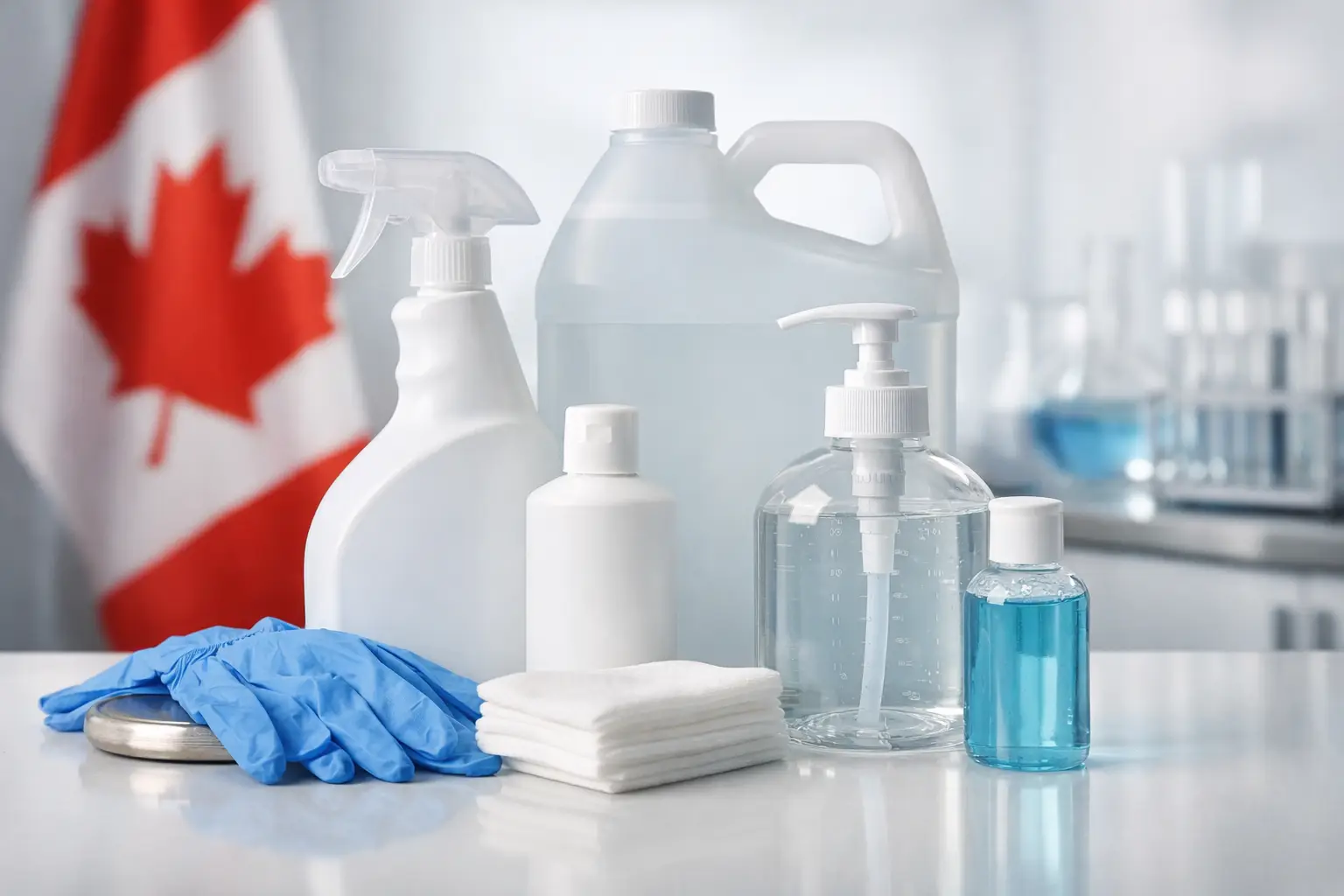
A disinfectant bottle can make a strong claim, but a clean-looking counter is not proof that harmful germs have been addressed. For businesses that serve staff, customers, tenants, or patients, choosing health canada approved disinfectants is one practical part of maintaining a healthier facility. The other part is using the product correctly, on the right surface, for the full contact time.
For facility managers and business owners, this is not simply a purchasing decision. It affects employee confidence, customer perception, cleaning consistency, and the ability to maintain clear health and safety standards across a busy workplace.
What Health Canada Approval Actually Means
In Canada, disinfectants that make claims about killing or controlling microorganisms are regulated products. A hard-surface disinfectant authorized for sale generally carries a Drug Identification Number, commonly called a DIN, on its label. This number indicates that Health Canada has reviewed the product for its intended use, including its claims, directions, and safety information.
The DIN matters because it gives buyers a reliable starting point. It distinguishes a registered disinfectant from a general-purpose cleaner, deodorizer, or product with vague antimicrobial marketing. A cleaner may remove dirt and improve appearance, but it does not automatically disinfect.
Approval does not mean every product is interchangeable. A DIN product is only effective when used according to its label. Its approved claims may cover certain bacteria, viruses, or fungi, and the label will specify the dilution, application method, contact time, and surfaces for which it is intended.
For a restaurant, office, dealership, retail space, or industrial facility, the best product depends on the environment. High-touch lobby surfaces, food-adjacent areas, washrooms, break rooms, and equipment rooms all present different cleaning challenges.
How to Verify Health Canada Approved Disinfectants
The simplest verification step is to inspect the product label before it reaches the cleaning cart. Look for a clearly displayed DIN and read the directions rather than relying on front-label claims alone. Commercial facilities should also keep the product’s safety documentation available for staff training and workplace safety requirements.
A responsible supplier should be able to provide clear product information, including the product name, DIN, intended uses, directions for use, and safety data. If a product claims to disinfect but has no DIN or clear regulatory information, treat that as a reason to investigate further before using it in your facility.
It is also worth confirming that the label matches the job. For example, a product approved for disinfecting non-food-contact surfaces may require a separate rinse step if used where food is prepared or handled. A highly concentrated industrial disinfectant may be effective, but it can create unnecessary risk if staff are not trained to dilute and apply it safely.
Health Canada approval is a meaningful quality and compliance marker. It is not a substitute for a site-specific cleaning plan.
Disinfecting Works Only After Cleaning
The most common mistake in commercial sanitation is applying disinfectant to a surface that is still visibly dirty. Dust, grease, food residue, and organic soil can block the disinfectant from reaching the surface evenly. In kitchens, retail counters, washrooms, and industrial work areas, this issue is especially common.
The correct approach is usually a two-step process: clean first to remove soil, then apply the disinfectant as directed. Some products are formulated as cleaner-disinfectants, but even those may require pre-cleaning when surfaces are heavily soiled.
This distinction has operational value. It helps cleaning teams use products efficiently rather than overapplying disinfectant in an attempt to compensate for poor surface preparation. It also produces a better finish, which matters in customer-facing spaces where streaks, residue, and chemical odor can undermine confidence in the cleaning service.
Contact Time Is Not Optional
Every disinfectant has a required contact time, sometimes called dwell time. This is the period the surface must remain visibly wet for the product to achieve its labeled disinfecting claim. Depending on the product and target organism, that time can range from seconds to several minutes.
Wiping a surface dry immediately after spraying may make the area look attended to, but it can prevent the disinfectant from doing its job. On the other hand, soaking a surface excessively can damage sensitive materials, create slip risks, or leave residue.
A trained cleaning team manages this balance by applying enough product to keep the surface wet for the required period, then allowing it to air dry or wiping it as the label directs. In high-traffic facilities, scheduling also matters. A washroom can be disinfected correctly at 7:00 a.m., but its high-touch points may need attention again after a busy lunch period or shift change.
Choose Products for the Surface and the Setting
Not all disinfectants are suitable for all materials. Alcohol-based products may be useful for some electronics and touchpoints, while other formulations can be better for washroom fixtures, sealed floors, stainless steel, or high-volume common areas. Stronger chemistry is not automatically better.
Compatibility should be considered before a product becomes part of the routine. Repeated use of an unsuitable chemical can dull finishes, corrode metal, discolor upholstery, or damage screens and specialty surfaces. This can lead to costly repairs and create frustration for staff who are expected to keep the property looking professional.
A practical commercial cleaning program also considers odor, ventilation, and occupant sensitivity. A product with a heavy fragrance may be unpleasant in a small office or retail space. Some applications require personal protective equipment, controlled storage, or added ventilation. These are manageable requirements when the cleaning plan is built around the facility, but they should not be treated as afterthoughts.
Where Disinfection Delivers the Most Value
Disinfection should be targeted, not random. A building does not need every inch treated with disinfectant at all times. It needs a disciplined approach to the surfaces most likely to be touched or contaminated.
For most commercial settings, priority areas include door handles, elevator buttons, light switches, reception counters, shared keyboards, washroom fixtures, break room tables, appliance handles, and point-of-sale equipment. Restaurants may need additional attention around dining surfaces, washrooms, and non-food-contact touchpoints. Industrial and dealership environments may require plans for shared tools, vehicle interiors, staff areas, and customer lounges.
The right frequency depends on occupancy, the nature of the work, customer traffic, and the facility’s risk profile. A quiet professional office may need a different schedule than a busy restaurant, a retail store with constant customer turnover, or a multi-tenant property with heavily used common areas.
Training Protects People and Results
Approved products are only as reliable as the people using them. Cleaning staff need clear instruction on dilution, labeling, storage, contact time, PPE, surface compatibility, and what to do in the event of a spill or exposure.
This is particularly important when facilities use concentrated products. Improper dilution can reduce effectiveness, leave residue, damage surfaces, or create avoidable chemical exposure. Ready-to-use products may reduce some risks, but they still require proper handling and label compliance.
Supervision and documented procedures help maintain consistency across shifts. Facility managers should expect cleaning providers to know which products are being used, why they were selected, and how teams are trained to apply them. Vague assurances are not enough when the health of staff and visitors is involved.
At HSI Cleaning Services, product selection is paired with trained service delivery and cleaning plans tailored to the facility. That approach helps ensure that sanitation standards work in practice, not just on paper.
A Better Standard for Your Facility
Health Canada approved disinfectants support a more credible sanitation program, but they are one component of a larger process. Cleaners, disinfectants, trained staff, appropriate equipment, and a schedule built around real traffic patterns all work together to maintain a healthy workplace.
When reviewing a cleaning program, ask direct questions: Is the product authorized for its intended use? Is the DIN documented? Are staff following the label’s contact time and dilution requirements? Are high-touch areas addressed at a frequency that matches your operation? The answers reveal far more than a product name ever could.
A dependable cleaning partner should make those answers easy to understand. The goal is not to use the harshest chemical or promise a sterile-looking space. It is to maintain a clean, healthy environment that supports the people who walk through your doors every day.

About Author

Recent Posts
Property Turnover Cleaning That Protects Move-In Dates
8 Insured Commercial Cleaning Benefits for Businesses