Commercial Cleaning Trends 2026 That Matter

A clean lobby is no longer enough. Employees notice dusty vents, customers notice restroom conditions, and property managers notice when cleaning quality changes from one visit to the next. The commercial cleaning trends 2026 that matter most are less about novelty and more about proving that a facility is healthy, prepared, and consistently cared for.
For office managers, restaurant owners, retail operators, and facility teams, the question is not simply whether a cleaning provider can complete a task list. It is whether that provider can protect high-traffic spaces, adapt to operating hours, document work, and respond when conditions change. That expectation is shaping how commercial cleaning plans are built.
Commercial Cleaning Trends 2026: Health Becomes Visible
Health-focused cleaning is moving beyond a back-of-house promise. Businesses increasingly want visible reassurance that frequently touched and shared areas receive the right level of attention. Entrances, washrooms, break rooms, elevator buttons, service counters, shared equipment, and meeting spaces all need cleaning routines that reflect how people actually use the building.
This does not mean every surface requires the same product or the same frequency. A restaurant kitchen, a medical-adjacent office, a dealership showroom, and a warehouse have different risks, materials, and traffic patterns. The strongest cleaning plans distinguish between routine soil removal, targeted disinfection, deep cleaning, and specialty work rather than treating them as interchangeable services.
Product selection also matters. Facility decision-makers are looking for approved products used according to label directions, with trained teams who understand contact times, dilution, and surface compatibility. A stronger chemical is not automatically a better answer. Used incorrectly, it can leave residue, damage finishes, create avoidable odors, or fail to deliver the intended sanitation result.
Cleaning Plans Are Becoming More Site-Specific
Fixed, one-size-fits-all scopes are losing ground to plans built around actual use. A busy retail store may need daily attention to entrances, fitting rooms, and washrooms, while a professional office may benefit from detailed cleaning after business hours and more frequent care in shared kitchens. Industrial facilities may require specialized attention to dust control, floors, loading areas, and safety-sensitive work zones.
This approach starts with a proper walkthrough. A cleaning partner should assess traffic flow, operating hours, flooring types, waste volume, customer-facing areas, storage constraints, and the work that must happen without disrupting staff or visitors. The result should be a clear scope that identifies what is cleaned, how often it is cleaned, and what triggers additional service.
Flexibility is part of the value. Seasonal demand, construction work, weather, events, staffing changes, and illness spikes can all change a facility’s needs. The most useful service agreements leave room for periodic deep cleaning, carpet care, post-renovation cleaning, or extra shifts without forcing a business to rebuild its entire plan.
Smarter Scheduling Protects Productivity
Cleaning is increasingly planned around the customer experience and the workday, not just the availability of a crew. This is particularly relevant for businesses that operate long hours, welcome clients throughout the day, or cannot afford interruptions in active areas.
After-hours cleaning remains a strong fit for many offices, but daytime porter service is becoming more valuable in high-traffic environments. A porter can maintain washrooms, remove waste, address spills, restock essentials, and keep entrances presentable while the facility is open. For restaurants and retail locations, that ongoing attention can prevent small issues from becoming customer complaints.
There is a trade-off. Daytime service offers immediate visibility and faster response, but crews must work carefully around staff and customers. After-hours service provides greater access and less disruption, but it requires dependable supervision and secure procedures. The right schedule depends on the building, its hours, and what a lapse in cleanliness would cost the operation.
Technology Supports Accountability, Not a Substitute for It
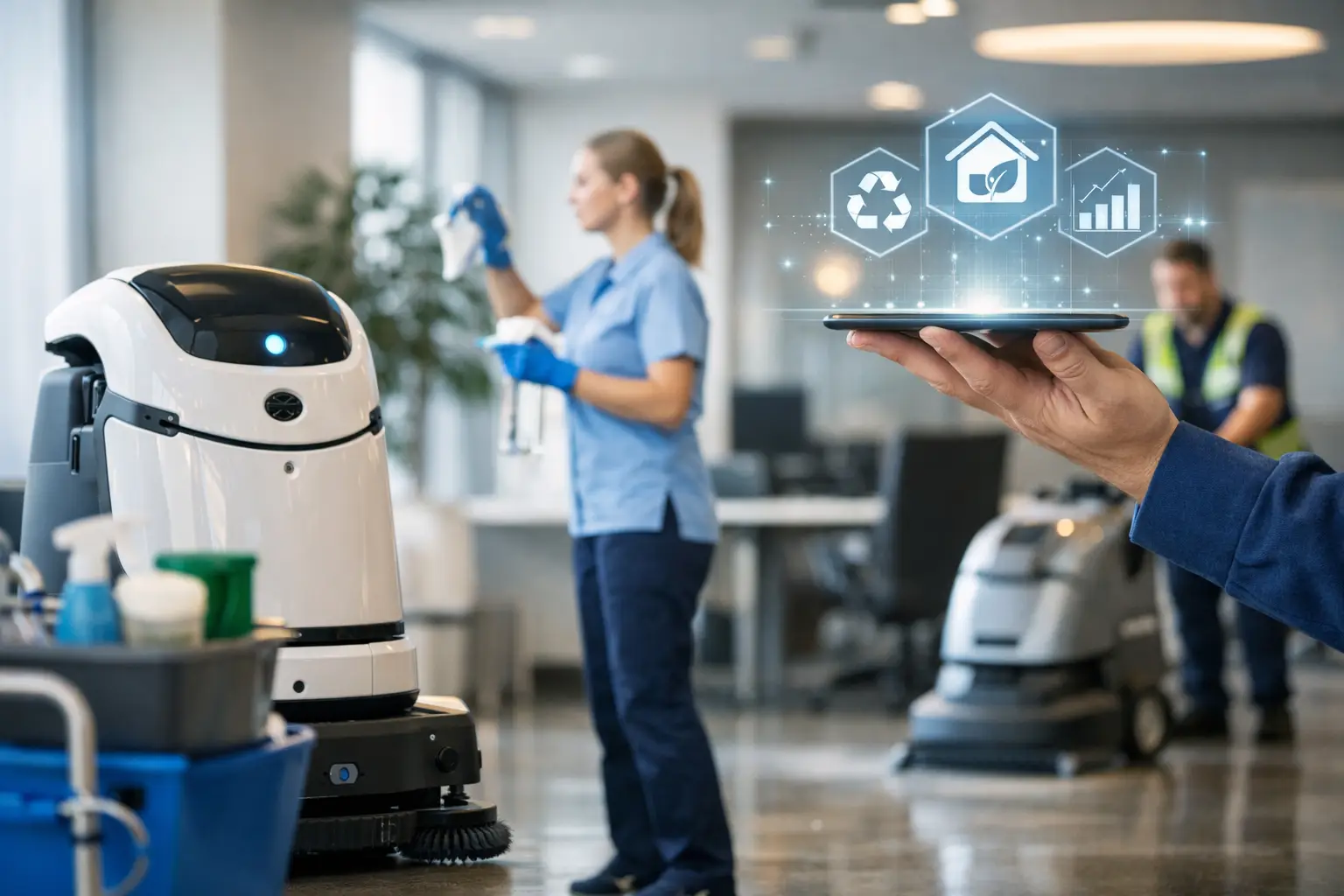
Digital checklists, inspection records, scheduling tools, and service reporting are becoming standard expectations. Used well, they help managers confirm that critical tasks were completed and give cleaning teams a consistent process to follow. They are especially useful for multi-location businesses, larger properties, and facilities with specific compliance or reporting needs.
However, technology does not clean a surface or correct a missed detail by itself. A completed digital checklist has value only when the underlying work is inspected and the team has the training, time, and supplies to do it properly. Businesses should look for a practical quality-assurance process: supervisor checks, clear escalation paths, documented concerns, and timely follow-up.
Automation will also continue to grow in large, open facilities. Robotic floor equipment can support repetitive floor maintenance in suitable environments, particularly where square footage is extensive and layouts are predictable. It is less helpful in cluttered areas, detailed restrooms, tight corners, or spaces requiring careful customer interaction. The best results often come from pairing equipment efficiency with trained personnel who handle detail work and inspection.
Floor Care and Indoor Air Quality Get More Attention
Floors carry the visual burden of a building. Salt, moisture, grit, food debris, and heavy foot traffic can make an otherwise clean facility appear neglected. In 2026, more businesses are treating floor care as an asset-protection program rather than an occasional emergency expense.
That means selecting the right daily maintenance method, placing entry mats strategically, responding quickly to spills, and scheduling periodic deep cleaning before buildup becomes difficult to remove. Carpet cleaning, hard-floor maintenance, grout care, and high-dust removal should be planned according to use, not simply placed on an annual calendar.
Indoor air quality is connected to this work. Dust on high ledges, vents, blinds, and fabric surfaces can affect how a space feels and may aggravate discomfort for occupants. Cleaning teams do not replace HVAC professionals, but they can reduce surface dust and maintain the areas around vents and returns. For facility managers, coordination between cleaning, maintenance, and building operations is becoming more important.
Sustainability Becomes a Practical Purchasing Decision
Sustainable cleaning is becoming more operational and less performative. Businesses want to reduce unnecessary waste, excessive packaging, and avoidable product use, but they still need reliable sanitation and attractive facilities. The practical goal is to choose methods that support both environmental responsibility and cleaning performance.
Concentrated products, correctly sized liners, refillable dispensing systems, microfiber tools, and controlled dispensing can reduce waste when used properly. So can selecting products that match the task instead of applying the same chemical everywhere. The key is training and monitoring. Sustainable supplies do not help if they are overused, stored poorly, or applied without regard to safety instructions.
For many organizations, this trend will depend on procurement requirements, tenant expectations, or corporate reporting goals. Smaller businesses may focus first on changes that reduce supply consumption and improve workplace comfort. Larger organizations may need clearer documentation from vendors. Both approaches can be effective when the plan remains realistic for the facility.
Labor Quality Is a Business Continuity Issue
The most advanced cleaning plan still depends on the people delivering it. Reliable staffing, consistent training, background-appropriate hiring practices, insurance coverage, and active supervision are central to quality. This is especially true in facilities with keys, alarm systems, confidential areas, expensive inventory, or strict operating procedures.
Businesses should expect cleaning staff to understand safe work practices, chemical handling, cross-contamination prevention, and site-specific protocols. They should also expect a provider to have a clear plan for absences and urgent requests. A low quote can become costly if it leads to frequent crew changes, missed visits, poor communication, or recurring rework.
Consistency is not the same as rigidity. A dependable provider keeps standards stable while listening when a building’s needs change. That combination is what allows cleaning to support daily operations instead of becoming another management problem.
What to Ask Before Updating Your Cleaning Program
Before changing vendors or revising a scope, start with the issues that affect your people and your reputation. Are complaints concentrated in certain spaces or times of day? Are high-touch areas receiving enough attention? Is the current schedule aligned with traffic? Are periodic services such as carpet cleaning and deep cleaning being planned before they become urgent?
Then ask how quality is measured. A useful proposal should describe staffing, task frequency, products, supervision, communication, and the process for handling concerns. It should account for your facility rather than relying on generic promises.
HSI Cleaning Services approaches commercial cleaning as an operating partnership: a customized plan, trained and supervised teams, and the flexibility to support routine service or specialized work when your space needs more attention. The right cleaning program should give your staff and visitors confidence every time they walk through the door.

About Author

Recent Posts
Property Turnover Cleaning That Protects Move-In Dates
8 Insured Commercial Cleaning Benefits for Businesses